About Larus californicus Lawrence, 1854
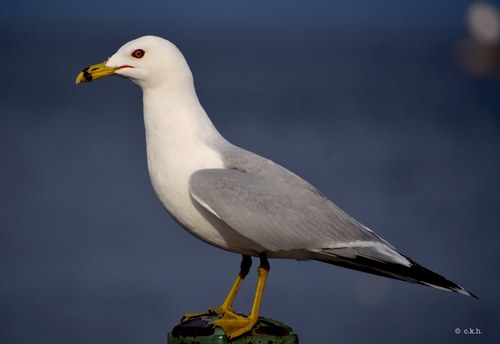
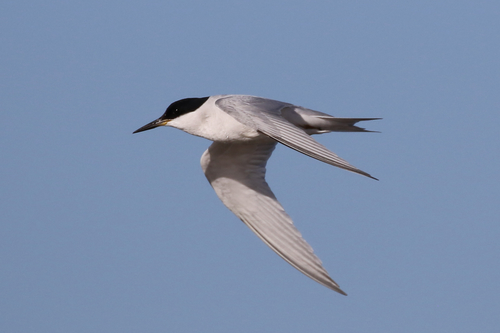
This species, Larus californicus Lawrence, 1854, is commonly known as the California gull. Adult California gulls are similar in appearance to herring gulls, but differ in having brown eyes, yellow legs, and a more rounded head. Their bodies are mainly white, with grey backs and upper wings. The bill is yellow, with a black ring and a red spot near the tip. They have black primary flight feathers that have white tips. Immature California gulls are also similar in appearance to immature herring gulls, and have browner plumage than immature ring-billed gulls. Adult body length ranges from 46 to 55 cm (18 to 22 in), the wingspan ranges from 122 to 137 cm (48 to 54 in), and body mass varies from 430 to 1,045 g (0.948 to 2.304 lb). The breeding habitat of the California gull is lakes and marshes in interior western North America, ranging from the Northwest Territories, Canada south to eastern California and Colorado. They nest in colonies, sometimes alongside other bird species. Their nest is a shallow depression on the ground, lined with vegetation and feathers. Females usually lay 2 or 3 eggs per clutch, and both parents take turns feeding their chicks. California gulls are migratory; most individuals move to the Pacific coast during winter, and can be regularly found in western California in this season.