About Larus argentatus Pontoppidan, 1763
The scientific name of the European herring gull is Larus argentatus Pontoppidan, 1763. Adult male European herring gulls measure 60–67 cm (24–26 in) in length and weigh 1,050–1,525 g (2.315–3.362 lb), while adult females measure 55–62 cm (22–24 in) in length and weigh 710–1,100 g (1.57–2.43 lb). Their total wingspan ranges from 125 to 155 cm (49 to 61 in). Standard measurements for the species are as follows: the wing chord measures 38 to 48 cm (15 to 19 in), the bill measures 4.4 to 6.5 cm (1.7 to 2.6 in), and the tarsus measures 5.3 to 7.5 cm (2.1 to 3.0 in).
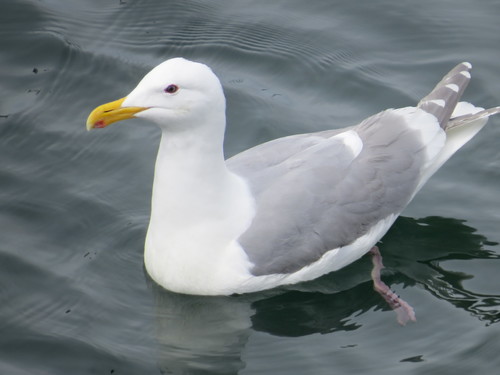
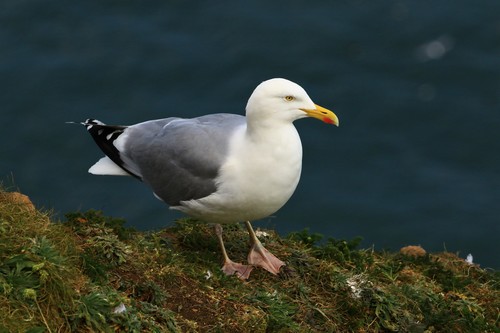
Adults in breeding plumage have a light grey back and upper wings, with white on the head and underparts. Wingtips are black with white spots called "mirrors". The bill is yellow with a red spot, and a ring of bare yellow skin surrounds the pale eye. Legs are normally pink at all ages, but may be yellowish, especially among the Baltic population that was previously considered a separate subspecies, L. a. omissus. Non-breeding adults have brown streaks across their heads and necks. Male and female European herring gulls have identical plumage at all life stages, though adult males are typically larger.
Juvenile and first-winter European herring gulls are mostly brown with darker streaks, and have dark bills and eyes. Second-winter birds have whiter heads and underparts with less streaking, and a grey back. Third-winter individuals resemble adults, but still retain some immature features, such as brown feathers in the wings and dark markings on the bill. This species reaches adult plumage and sexual maturity at an average age of four years.
Herring gulls breed across most of north-western Europe, including Iceland, the United Kingdom, Ireland, and France. Since 2009, herring gulls in the United Kingdom have been included on the red list of birds of conservation concern. They have been recorded along all of Europe's coasts, including the Mediterranean, and are occasionally found inland. Vagrants have been observed in Israel, Cyprus, and Turkey. Most herring gulls in France are resident, while northern populations migrate south for winter, typically to the coasts of north-western Europe.
When forming a pair bond, the female approaches the male on his territory with a hunched, submissive posture, while making begging calls similar to the calls young gulls produce. If the male does not attack or drive her away, he responds by holding an upright posture and giving a mewing call. This is followed by a period of synchronized head-tossing, after which the male regurgitates food for his potential mate. If the female accepts the food, copulation occurs next. Both members of the pair choose a nesting site, which they return to in future breeding years. European herring gulls are almost always sexually monogamous, and may stay paired for life if the pair successfully hatches their eggs.
Clutches hold two to four eggs, most often three, laid on the ground or cliff ledges in breeding colonies. Both parents vigorously defend the nest and eggs. The eggs are typically olive-brown with dark speckles or blotches. Both parents incubate the eggs for 28–30 days. Chicks hatch with open eyes, covered in fluffy down, and are able to walk within hours of hatching. Predators of breeding colonies include great black-backed gulls, harriers, corvids, and herons.
Juvenile gulls peck at the red spot on adult bills to signal hunger, and parents typically disgorge food for their young. Young European herring gulls can fly 35–40 days after hatching, and fledge at five to six weeks old. Chicks are usually fed by their parents until they reach 11–12 weeks old, but feeding may continue for more than six months if young gulls keep begging. Before fledging, the male feeds the chick more often than the female; after fledging, the female feeds the chick more often.
Like most gulls, European herring gulls are long-lived, with a maximum recorded age of 49 years. Raptors (especially owls, peregrine falcons, and gyrfalcons) and seals (especially grey seals) occasionally prey on non-nesting adult European herring gulls.