About Larix sibirica Ledeb.
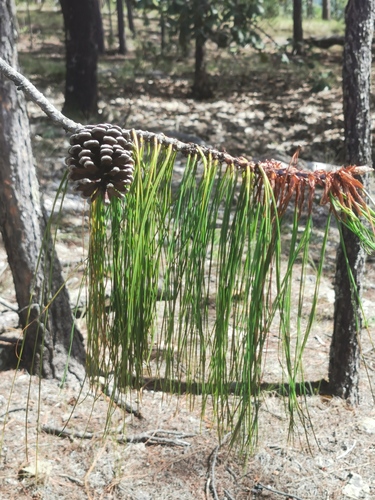
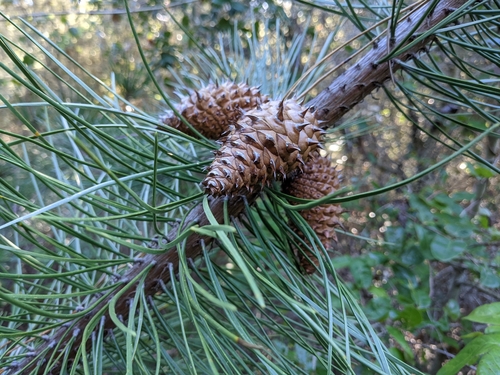
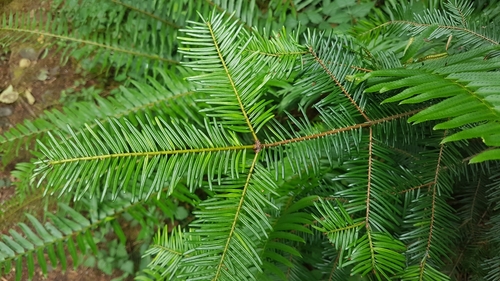
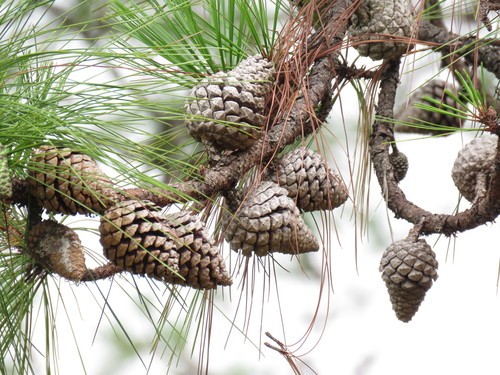
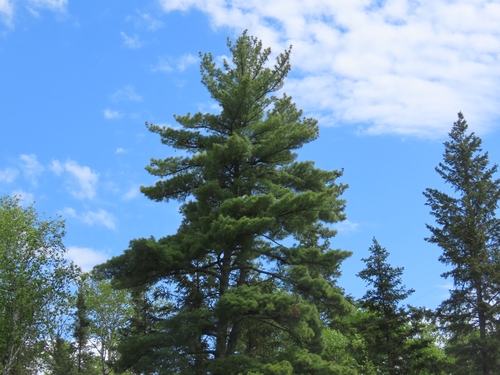
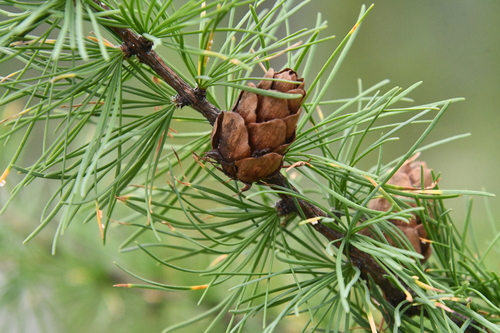
Larix sibirica Ledeb. is a medium-sized to large deciduous coniferous tree that reaches 20 to 50 meters in height, with a trunk that can grow up to 1 meter in diameter. When young, it has a conical crown that broadens as the tree ages. Its main branches grow level to upswept, while its side branches are often pendulous. Shoots are dimorphic: growth is split into long shoots that are typically 10–50 cm long and bear several buds, and short shoots that are only 1–2 mm long and carry just one bud. Needles are bimorphic as well: needles on new growth grow singly and are arranged in a spiral around the branch, while needles on older wood grow in clusters of 15 to 40 on short spurs. This species can be most easily told apart from the closely related European larch by its downy shoots; European larch has hairless shoots. The leaves are needle-like, light green, and 2–5 cm long. They turn bright yellow before falling in autumn, leaving pale yellow-buff shoots bare until the following spring. Male and female cones grow separately on the same tree, and pollination occurs in early spring. Male cones are solitary, yellow, and globose to oblong, with a 4–8 mm diameter, and they produce wingless pollen. Mature female cones are erect and ovoid-conic, 2–5 cm long, with 30 to 70 erect or slightly incurved, not reflexed, downy seed scales. When immature, they are green with variable red flushing; they turn brown and open to release winged seeds when mature, 4–6 months after pollination. Old cones commonly stay on the tree for many years, turning dull grey-black. The minimum age at which this tree produces seed is 10–15 years. Because of its rot resistance, larch wood from Larix sibirica is especially valuable for posts, poles, railroad tie sleepers, and mine props. It is also used as a track surface for velodromes around the world, including the Manchester Velodrome and the Velodrome Krylatskoye in Moscow. This species is grown to a limited extent in Canada and the northern United States, and was first cultivated in this region in 1806. It has also been introduced to Iceland and Greenland. It grows faster than many other coniferous trees in cold regions, but requires full sunlight. When grown in plantations, it needs to be kept widely spaced, and intensive thinning is required. Resin from Siberian larch, along with resin from Siberian cedar, is used as a natural chewing gum, which is commercially produced by several manufacturers in Russia. The caterpillars of the tortrix moth Cydia illutana feed on Larix sibirica cone scales.