About Larinus curtus Hochhuth, 1851
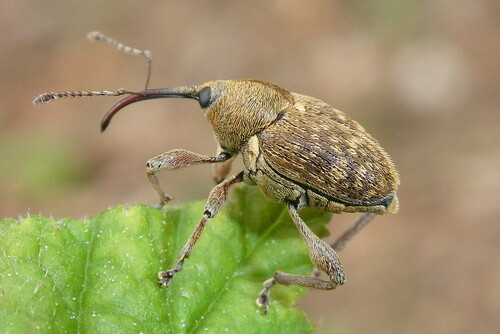
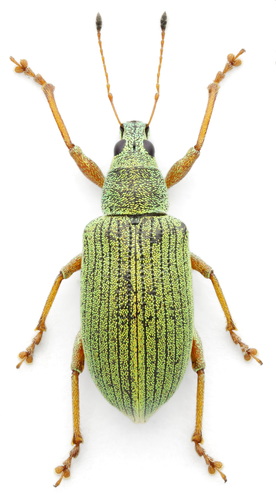
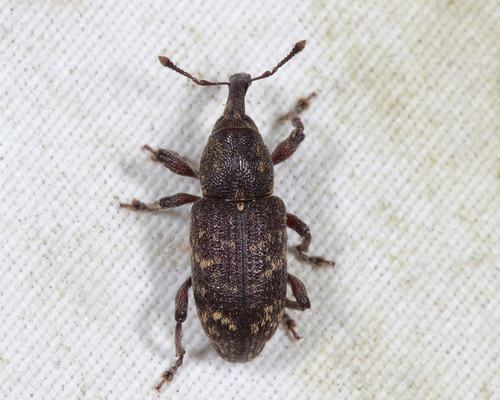
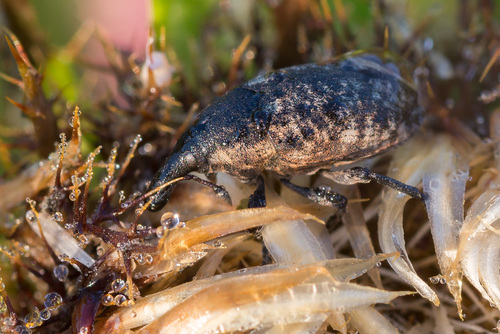
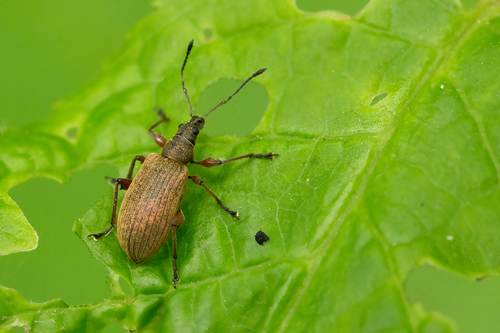
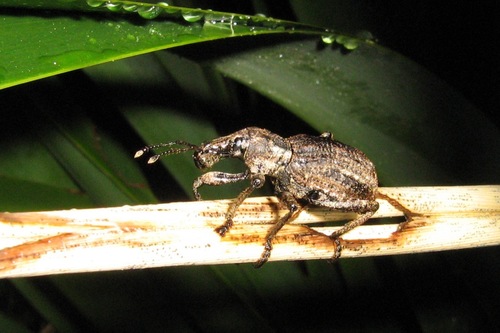
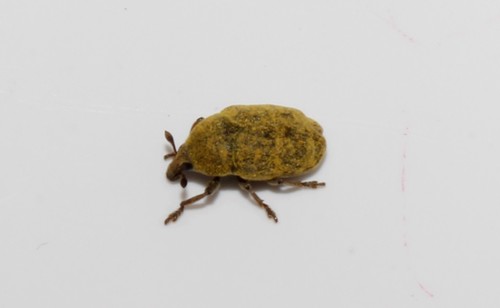
Larinus curtus Hochhuth, 1851 is a species of true weevil commonly called the yellow starthistle flower weevil. It is native to Southern Italy, Southern Europe, the Middle East, the Caucasus, and the Mediterranean region. This weevil is used as a biological pest control agent against the noxious weed yellow starthistle (Centaurea solstitialis) in the United States. It was first introduced to the United States for this biocontrol purpose in 1992, and is now established throughout the Pacific Northwest, though it occurs at relatively low population densities there. The adult weevil is dark brown or black, with light-colored mottled hairs covering its body, and reaches about 6 millimetres (1⁄4 inch) in length. Adult weevils feed on flowers and pollen, and they likely cause very little damage to the host plant. Female Larinus curtus lay glossy, milky white, oval-shaped eggs at the bases of open yellow starthistle flowers. After hatching a few days later, larvae move into the flower head, where they feed on the plant's developing seeds. A single larva can destroy all of the seeds inside a single flower head, with an average seed reduction of 96% per head. It is this negative impact of larval feeding on yellow starthistle seed production that reduces the plant's ability to spread, controlling its population. Field reports have documented large numbers of adult Larinus curtus feeding on safflower (Carthamus tinctorius) flowers, but there is no evidence that larvae can successfully develop on this plant.