About Lanius vittatus Valenciennes, 1826
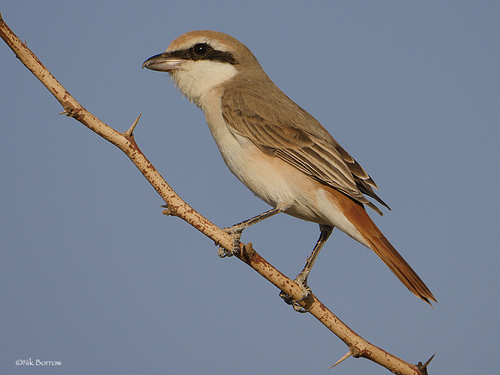
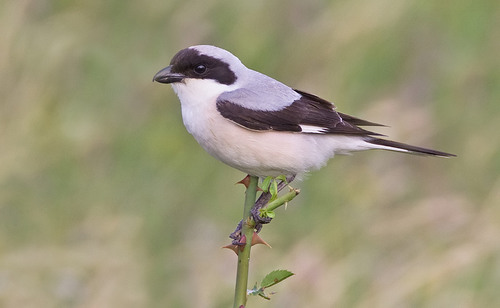
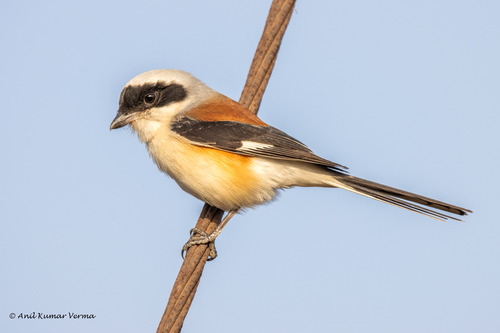
This species is a smallish shrike, measuring 17 cm in length. Its upperparts are maroon-brown, with a pale rump and a long black tail with white edges. Its underparts are white, with buff-colored flanks. The crown and nape are grey, and it has the typical black bandit mask through the eye common to shrikes. It has a small white wing patch, and its bill and legs are dark grey. The sexes have similar plumage, while young birds are paler, washed-out versions of adult individuals. The bay-backed shrike typically perches on bushes in the characteristic upright posture of shrikes, and sallies out from this perch to hunt lizards, large insects, small birds and rodents. It may impale captured prey on a sharp point such as a thorn. This secures the prey so it can be ripped apart with the bird’s strong hooked bill, as its feet are not suited for tearing prey. It is a widespread resident or breeding species across southern Asia, found in Iran, Afghanistan, Pakistan, Nepal, India, and Turkmenistan. It is occasionally recorded in Sri Lanka, Bhutan, Oman, the United Arab Emirates, and Qatar. It nests in bushes located in scrubby areas and cultivated land, and lays clutches of 3 to 5 eggs.