About Lanius meridionalis Temminck, 1820
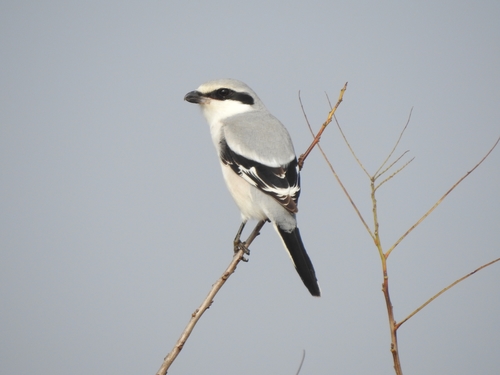
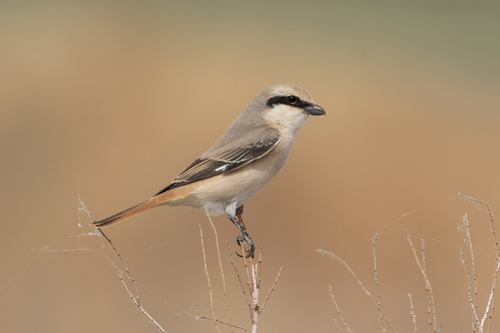
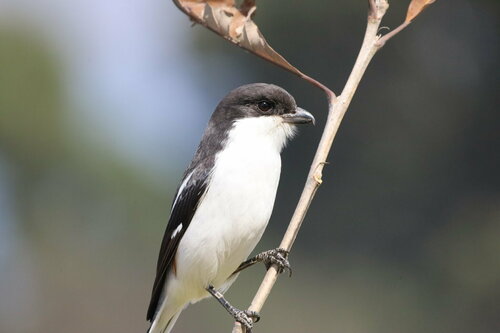
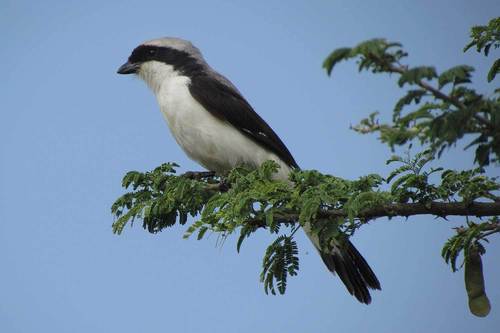
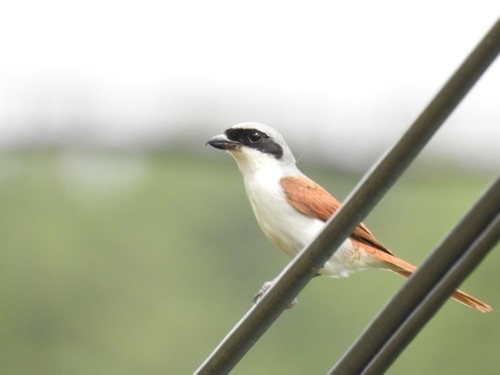
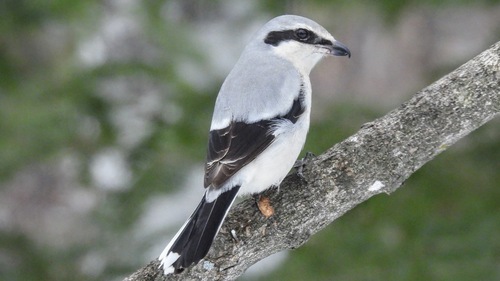
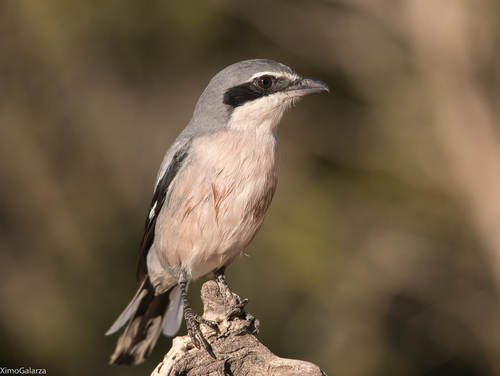
The Iberian grey shrike, scientifically named Lanius meridionalis Temminck, 1820, is similar in size to northern European great grey shrikes, but may have a slightly larger head, a stronger bill, and a thinner tail. Its upperparts are a much darker grey, especially on the crown, nape, and mantle. Its breast and belly carry a greyish-pink hue. The black facial mask is wider, and the white supercilium is more distinct. It has a moderately large white patch on its primaries, and no white markings on its secondaries. Juvenile Iberian grey shrikes have less distinct identifying features. Relevant identification resources are: Jorma Tenovuo & Juha Varrela (1998) Identification of the Great Grey Shrike complex in Europe Alula 4(1): 4 - 11; Clement, Peter, and Tim Worfolk (1995) Southern and eastern Great Grey Shrikes in northwest Europe Birding World 8(8) 300-309. The Iberian grey shrike is endemic to southwestern Europe. It is found across most of the Iberian Peninsula, and its range extends into southern France. It breeds in open dry habitats, most typically limestone heath or stony grassland with scattered scrub, single trees, and bushes. This is a medium-sized passerine bird. Its diet includes large insects, small birds, and rodents. Like other shrike species, it hunts from prominent perches, and impales prey corpses on thorns or barbed wire to store them as a larder.