About Lanioturdus torquatus Waterhouse, 1838
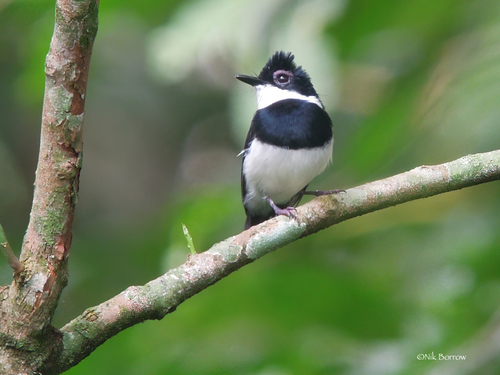
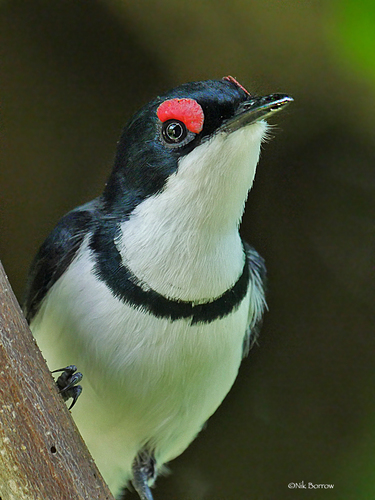
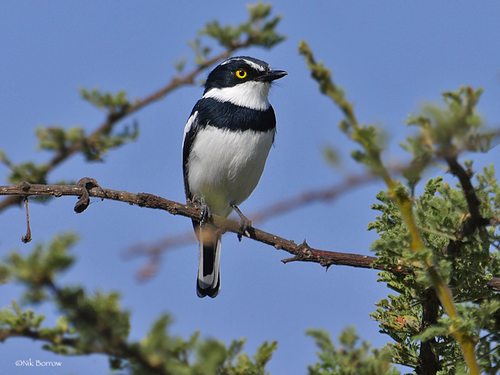
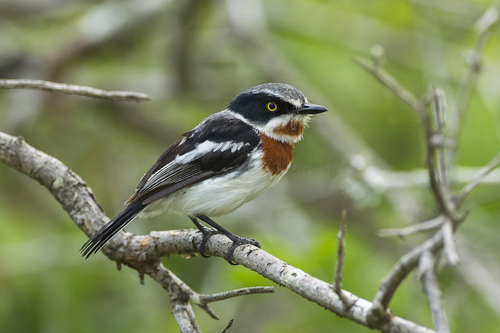
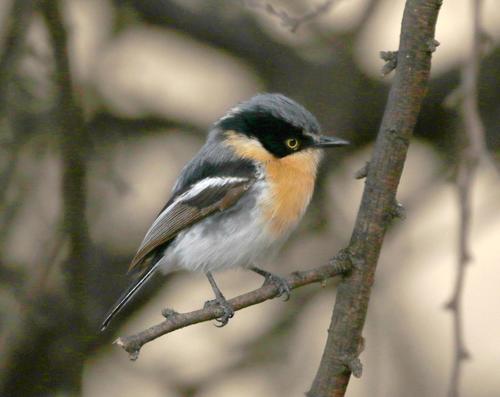
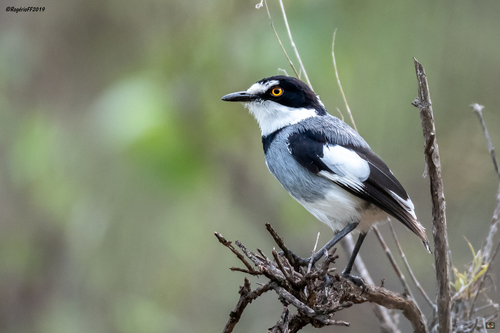
The white-tailed shrike (Lanioturdus torquatus) is a small passerine bird belonging to the family Platysteiridae. It is also commonly called the chatshrike or ground batis. This species is found only in western Angola and Namibia, where it inhabits thorn scrub. It forages for insects from ground level, where it hops in large bounds with an upright posture, up to 25 meters above ground while scanning for prey. It has a very short tail that is always carried pointing downward, never held upright, with a small black mark on the tip of its two central tail feathers. Its vocal repertoire includes loud, ringing territorial whistles. There has been longstanding uncertainty about this bird's classification: some authorities consider it closely related to batises, while others place it close to bushshrikes. The species was first discovered in 1837 by James Edward Alexander in the Naukluft Mountains of Namibia, and formally described by Waterhouse in 1838. The genus name Lanioturdus translates to 'shrike-thrush', a reference to the historical uncertainty over its classification, while the specific epithet torquatus means 'collared'. Male and female white-tailed shrikes have similar outward appearance. The species is a common endemic breeding resident across its range, though it makes small seasonal migrations. Its preferred habitats are scrub-savanna, thornbush, and mopane-veld. It is found singly or in pairs during the breeding season, and forms small groups at other times of year. Like other batises, it is a clumsy flier with shallow, rapid wingbeats. Nests are most often placed in thorny acacia trees, and are built by both adult sexes. Nests are deep, neat, well-shaped cups that incorporate spider web, and are typically positioned around 3 meters above ground. The usual clutch size is 2 to 3 eggs, which are pale green to white with sparse reddish-brown spots. Only the female bird incubates the eggs.