About Laniarius bicolor (Hartlaub, 1857)
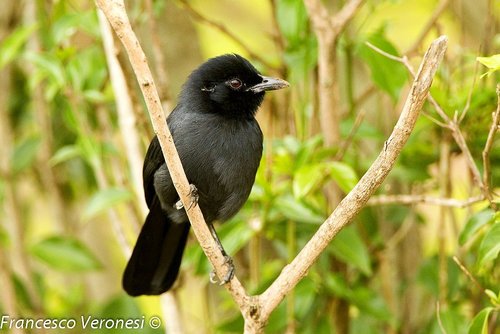
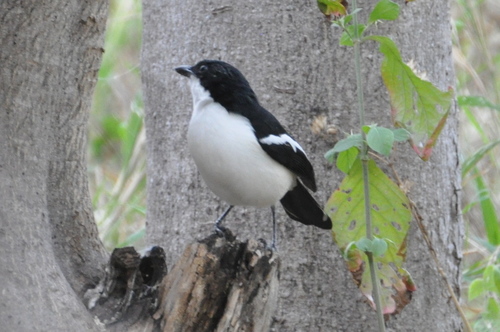
Laniarius bicolor was first described by Hartlaub in 1857. Adult males and females of this species look identical. They are large passerine birds, with a total body length of 23 to 25 cm. Their upperparts are a glossy deep blue-black. Their long, fluffy rump feathers have hidden white spots, which give the rump a pale visual appearance. The wings are black with white wing stripes, and their underparts are entirely pure white. Adult irises are dark brown, the bill and palate are black, and the legs and feet are slate-blue. Juvenile Laniarius bicolor have light dusky barring on their underparts, and their upperpart plumage is both buffy-tipped and barred. Immature birds are duller in color than adults, have buff-tipped wing-coverts, and have browner bills. In areas where Laniarius bicolor occurs alongside the tropical boubou, Laniarius bicolor can be distinguished by its larger body size, more slender bill, fully clean white underparts, and unique vocalizations. Within these overlapping regions, the southern race of Laniarius bicolor is recognized as a valid distinct species, while the northern races are not as clearly distinct; these northern races are sometimes merged into the species Laniarius major. This species is distributed across Angola, Botswana, Cameroon, the Republic of the Congo, the Democratic Republic of the Congo, Gabon, Namibia, Zambia, and Zimbabwe. Its natural habitats include regenerating forest, moist to seasonally dry savannah thicket, coastal scrubland, mangroves, and the ravine forests of the Angolan escarpment. In the southern portion of its range, Laniarius bicolor is restricted to floodplain systems. Along these rivers and in associated swamps, the species most often occupies dense, tangled riparian vegetation, reedbed edges, papyrus stands, and clumps of water fig growing on river islands.