About Lampsilis siliquoidea (Barnes, 1823)
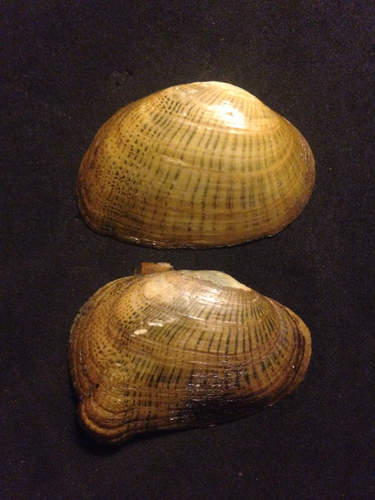
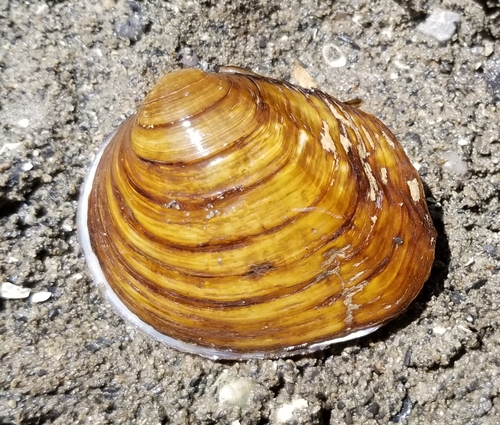
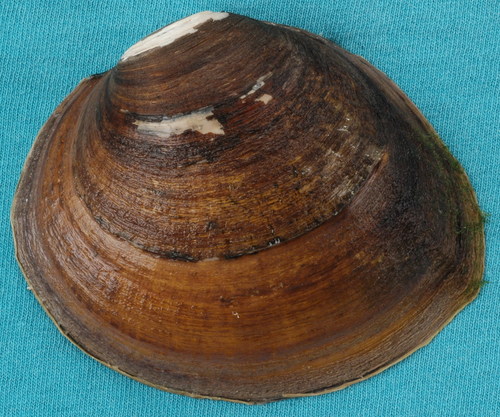
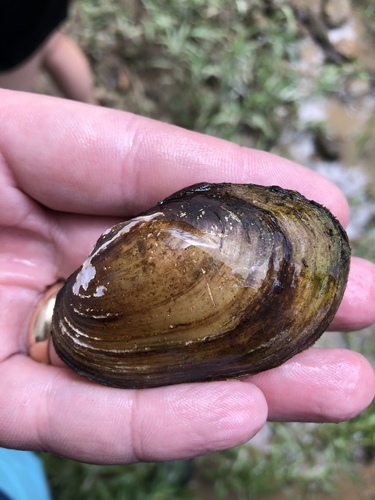
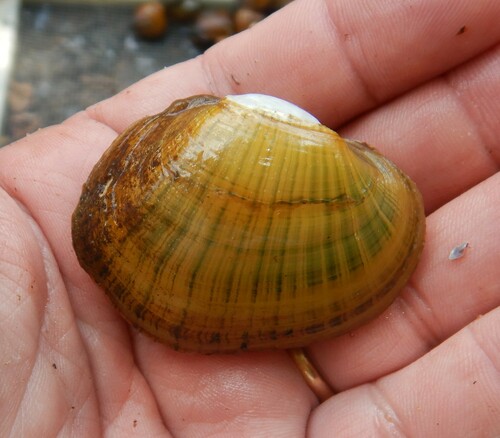
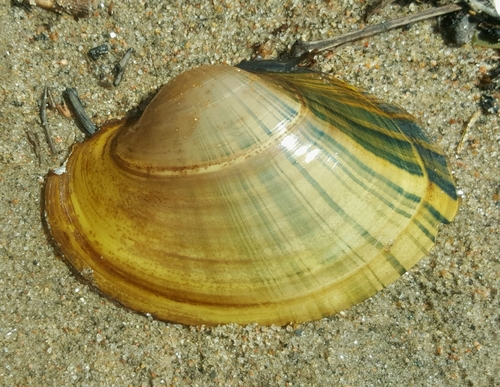
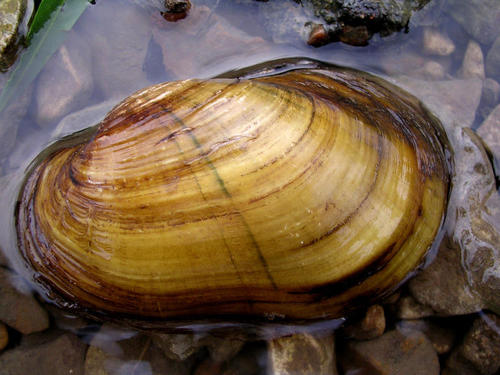
Lampsilis siliquoidea, commonly called the fatmucket clam, can be identified by its brown shell marked with dark rays. Adults of this species typically grow to between 70 millimetres (2.8 inches) and 100 millimetres (3.9 inches). Their shells are oblong to elliptical in shape, with uniform thickness, and may be either compressed or inflated. Fatmucket clams are filter feeders that consume algae, phytoplankton, protozoans, and organic particles. In their parasitic larval glochidial stage, they feed on the blood of host fish species, which include bass, perch, walleye, and sturgeon. This species is widespread across North America. It occurs in the Mississippi River drainage from New York to Minnesota, as well as in the Great Lakes and Hudson Bay drainages. It inhabits lakes, rivers, streams, and other quiet waters, where it is most commonly found on sandy-mud bottoms.