About Lampsilis radiata (Gmelin, 1791)
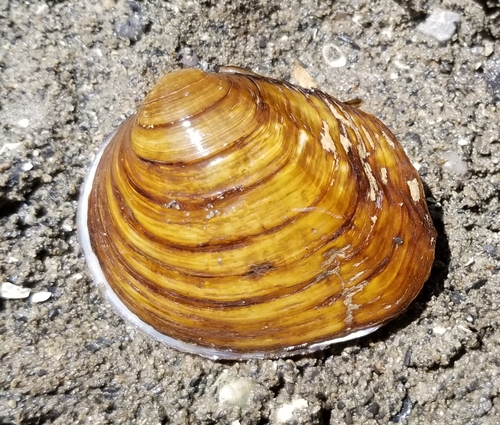
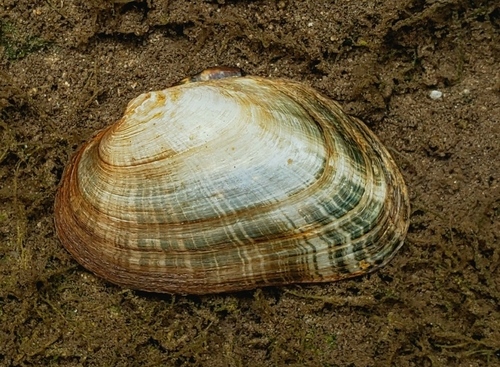
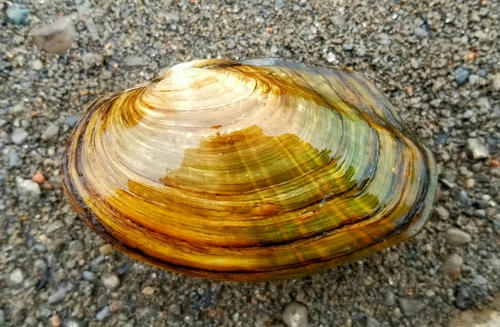
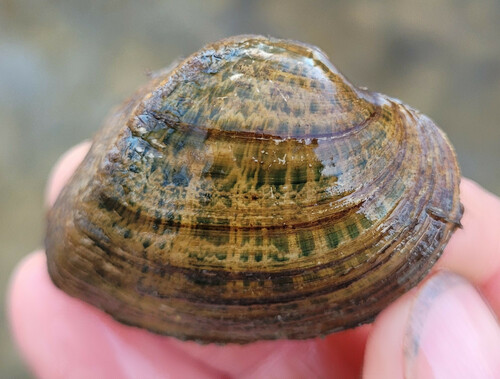
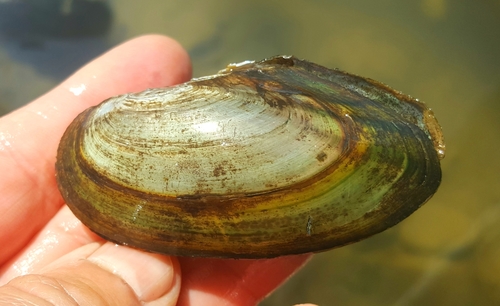
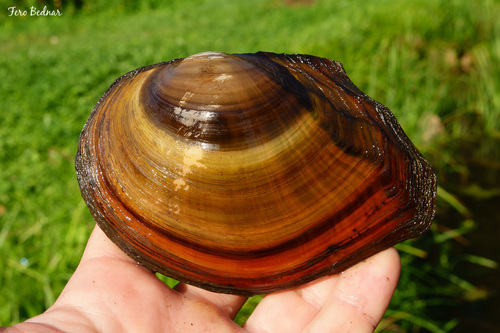
The eastern lampmussel, scientific name Lampsilis radiata (Gmelin, 1791), is a medium-to-large mussel that averages around 3.9 inches (9.9 cm) in length, and rarely exceeds 5 inches (13 cm). Its shell is slightly ovate and elliptical, with moderately inflated valves when viewed in cross-section. Mature females commonly have a more rounded lower posterior shell, and females overall tend to be more inflated and more ovate than males. Juveniles have a yellow-green periostracum, while adult periostracum ranges from green-brown, yellow-brown, to brown-black. Dark green lines cover the entire surface of the shell, extending outward. The interior of the shell is usually white, blue-white, pink, or salmon in color. Visible hinge teeth are present, with four teeth on the left valve and three on the right valve. This species may be confused with the eastern elliptio. The eastern lampmussel is native to the Atlantic Coast of North America, ranging from Nova Scotia to South Carolina, and is also found in the Great Lakes. It inhabits streams, rivers, ponds, and lakes. It prefers substrates of sand or gravel, but can occur on many other substrate types. In lakes, it lives in the wave-exposed littoral zone below 30 feet (9.1 m), in sandy and muddy pools. It tolerates both cool and warm temperatures, while the related freshwater pearl mussel is more common in cold waters.