About Lamproptera curius (Fabricius, 1787)
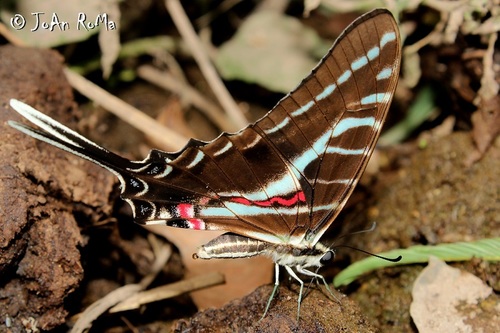
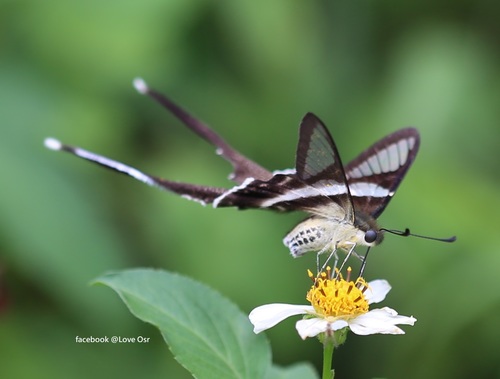
Lamproptera curius (Fabricius, 1787) has the following physical description. The upperside is dull brownish black. On the forewing, a broad outwardly oblique white transverse band crosses from just beyond the basal third of the costal margin to the dorsum; its outer half is hyaline (glass-like). This band is followed by a hyaline triangular area that does not reach the costa or termen, and is crossed by conspicuous black veins. Between the semihyaline transverse band and the hyaline area, black tissue forms a more or less even band that is slightly narrower in the middle. The black edging along the costa and termen is broad, and grows broader toward the apex. The forewing cilia are black. The hindwing has the forewing’s transverse white band continued straight across, ending in a point on the outer half of vein 3, and this band is not hyaline along its outer margin. The posterior half of the hindwing is dull dark brown, sprinkled with white scales toward the base of the long narrow tail at vein 4. The hindwing cilia are black, with white cilia below vein 5 and along the outer side of the tail’s basal half; the tail itself is tipped white. The underside is similar to the upperside, but has an opaque brownish black ground colour. A broad, outwardly ill-defined earthy-grey streak runs along the base of the wings, extending slightly down the dorsal margin of the hindwing and along the forewing costa. The oblique white band on the hindwing is connected to its apex by a short, sinuous white cross line from the dorsal margin. Below this short line, there are a number of irregular white spots on the tornal area. Antennae, head, and thorax are black; the abdomen is dark brownish black. On the underside, the palpi, thorax, and abdomen are greyish. The tarsal claws are bifid. Males have a visible sex mark or brand. This butterfly is distributed from Assam to Burma in India, and also occurs in Thailand, Laos, Vietnam, southern China, Kampuchea, Malaysia, Indonesia, Brunei, and the Philippines. Its recorded food plants are Illigera celebica and Illigera platyandra, both in the family Hernandiaceae.