About Lamprophis aurora (Linnaeus, 1758)
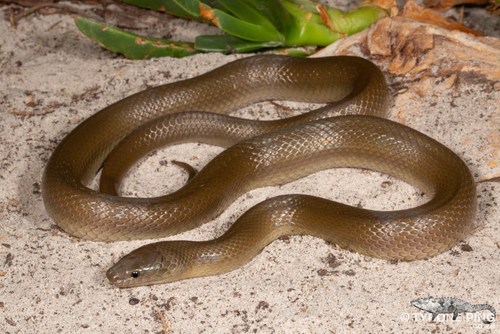
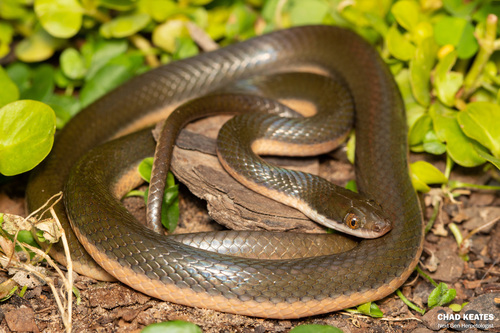
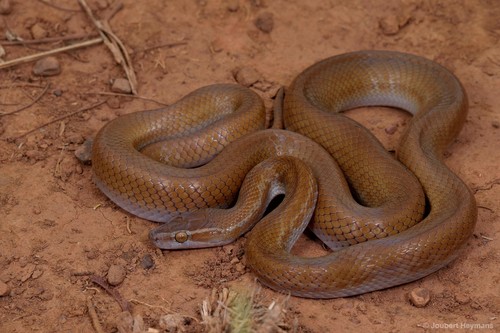
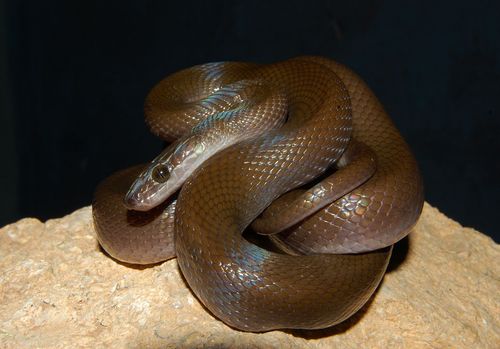
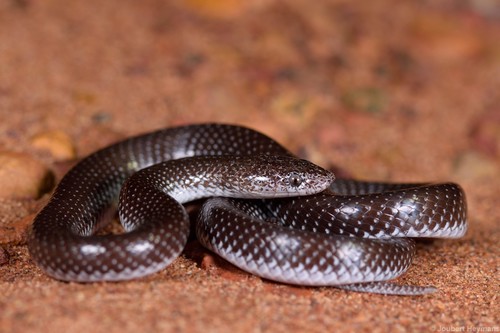
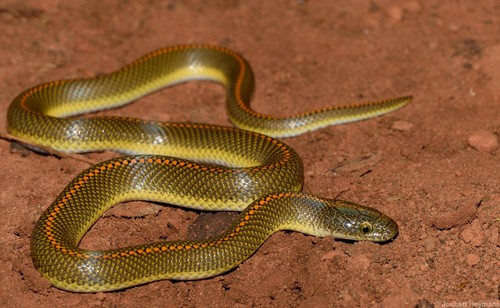
Lamprophis aurora, commonly known as the Aurora house snake, reaches a maximum total length of 90 cm, with an average adult length between 45 and 60 cm. Its dorsal coloration ranges from glossy olive green to a muted dark green, and it has a distinct bright yellow to orange stripe running along the spine from the top of the head all the way to the tip of the tail. This house snake species is widely distributed across South Africa, and is found in all South African provinces apart from most of the Northern Cape. It also occurs in Lesotho, Eswatini, and eastern Botswana, though these populations outside South Africa may be the result of human-mediated translocation. It inhabits grassland, fynbos, and moist savanna habitats, and can be found at elevations up to 1,700 m (5,600 ft) above sea level. Individuals are often found near streams, under rocks, and may also occupy old termite mounds. The species has a secretive lifestyle, but can be common in suitable local habitats. It is strictly nocturnal, active only during the night. Its diet is made up of rodents, lizards, and frogs. Females of this species lay clutches of eggs that can contain up to 12 eggs. The species is non-venomous, and individuals very rarely attempt to bite when disturbed.