About Lampropeltis calligaster (Harlan, 1827)
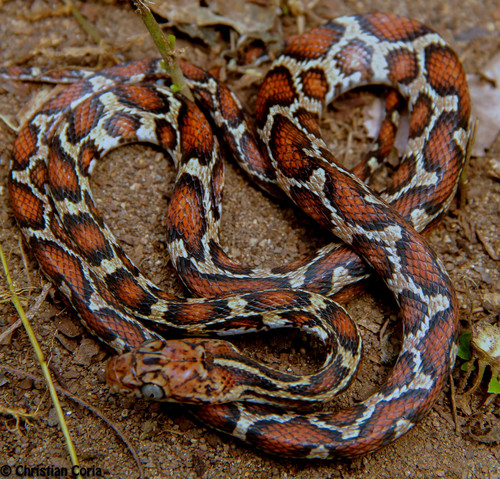
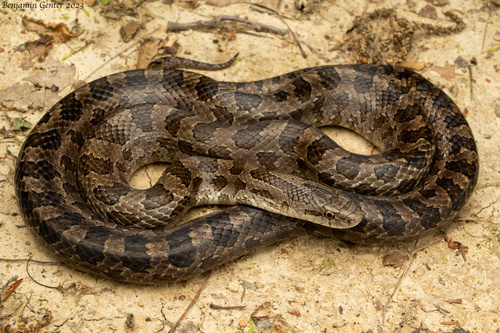
Prairie kingsnakes, with the scientific name Lampropeltis calligaster (Harlan, 1827), are light brown or grey-brown, with dark reddish-brown blotching running along the full dorsal length of their bodies. Their ventral underside is pale or yellowish. Adults can reach total lengths between 76 and 110 cm (30 to 43 in), and on average, males are longer and heavier than females. Prairie kingsnakes are easily confused with certain colubrid snake species from the genus Pantherophis, which have similar body markings. Their dorsal body markings may fade as individual snakes age. The mole kingsnake (Lampropeltis rhombomaculata) and the South Florida mole kingsnake (Lampropeltis occipitolineata) were previously classified as subspecies of Lampropeltis calligaster, but DNA analysis has confirmed they are separate, distinct species. Prairie kingsnakes have a geographic range spanning 13 states across the midwestern and southern United States. For habitat, prairie kingsnakes primarily occupy prairies, pastures, and shrublands. They use forested habitats less often, and have not been observed using croplands or crossing roads. Roads can fragment prairie kingsnake habitat and act as barriers to their movement. They will also use edge habitat between grasslands and either roads or forests. This is especially true for females, which may use warmer road edges to support egg production. For reproduction, many adult female prairie kingsnakes do not breed in any given year. Egg laying has been recorded from June through July. Clutches average 10 eggs, which hatch in late August or September. Prairie kingsnakes typically double in length during their first year of life, and reach sexual maturity between two and three years of age.