About Lampetra richardsoni Vladykov & Follett, 1965
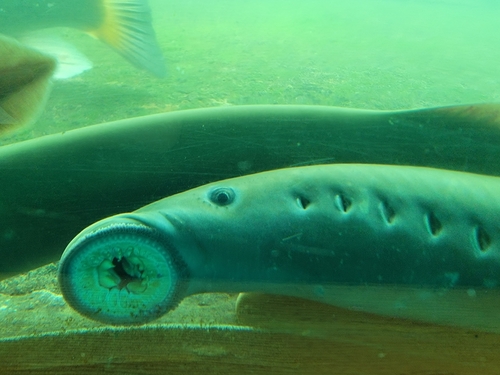
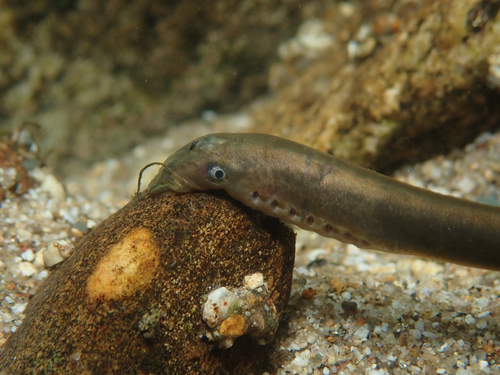
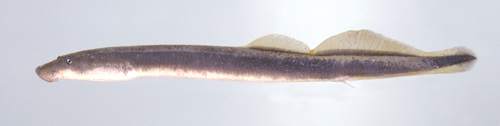
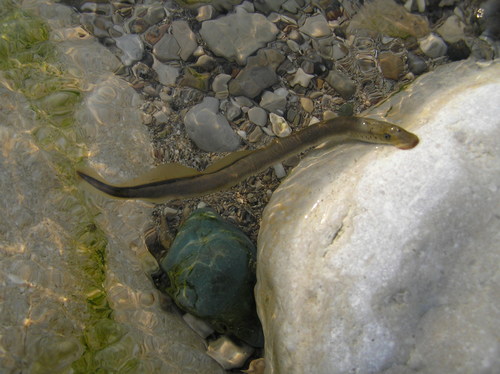
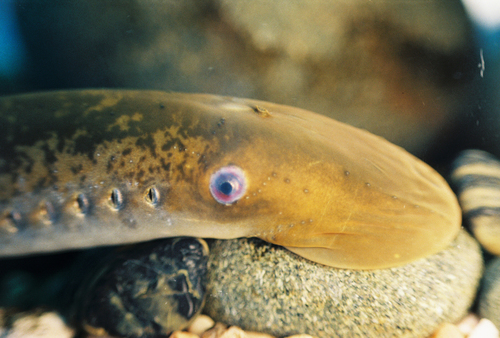
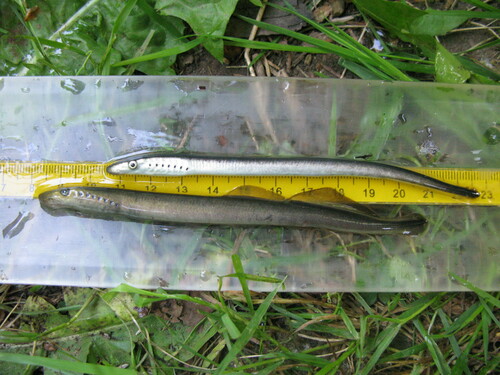
The western brook lamprey, with the scientific name Lampetra richardsoni Vladykov & Follett, 1965, is a small, non-parasitic jawless fish species that is endemic to freshwater coastal waterways of western North America. It grows to less than 18 cm in length, and is widely distributed along the Pacific coast of North America. Its range extends from the Taku River in southern Alaska and Haida Gwaii, through Vancouver Island, down to central California. Major inland populations occur in the Columbia and Sacramento-San Joaquin watersheds.
One endangered parasitic variety of this species, the Morrison Creek lamprey (Lampetra richardsoni var. marifuga), is found only in Morrison Creek, Vancouver Island, British Columbia. This variety is larger than the typical western brook lamprey, reaching 15 to 18 cm in length. Unlike the typical western brook lamprey, which only feeds during its larval stage, the Morrison Creek lamprey is able to feed after reaching adulthood.
The typical western brook lamprey is classified as Not at Risk (Yellow List) and is not covered under the Species at Risk Act. Western brook lampreys spawn from spring through mid-summer, when water temperatures rise above 10 degrees Celsius. They build gravel nests. After hatching, larvae are swept downstream to quieter sections of streams, where they burrow into the substrate. They remain in these quiet areas for approximately four years before developing into adults. Adults emerge from late summer to late fall and do not feed. All western brook lampreys die after spawning.