About Lampetra aepyptera (Abbott, 1860)
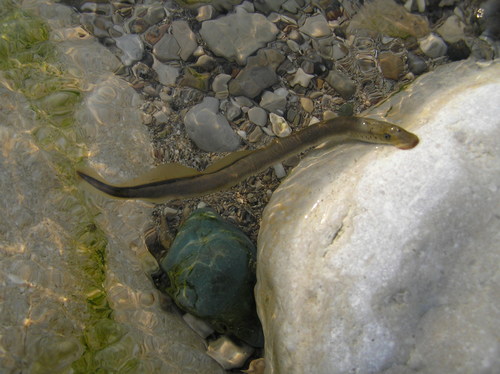
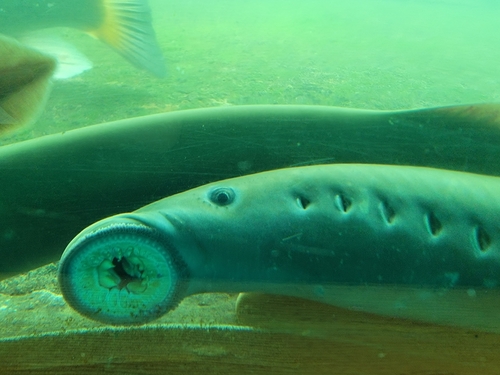
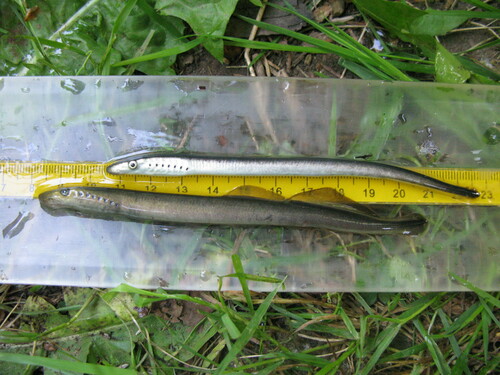
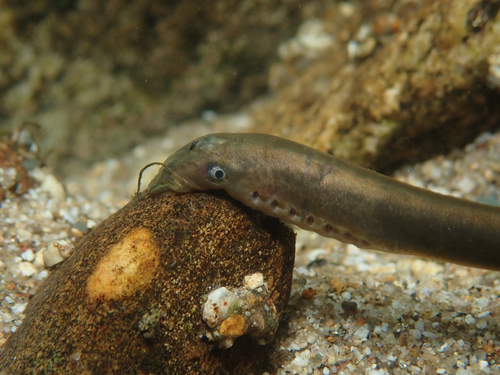
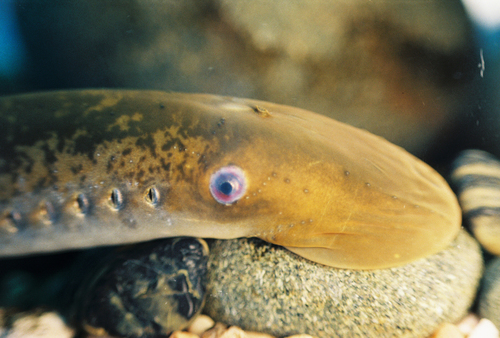
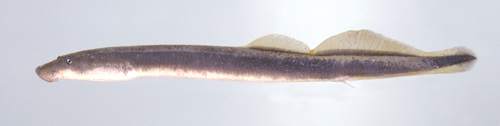
Lampetra aepyptera, commonly called the least brook lamprey, spends most of its life as a worm-like larva known as an ammocoete, like all lamprey species. Ammocoetes range in length from 5 mm to 20 cm. When they are smaller than 5 cm, they are translucent with a pigmented head; as they mature, they darken to a dark or golden brown color. Ammocoetes have pigmented eye spots on their heads that can detect differences between light and dark. After metamorphosing from the ammocoete to the juvenile stage, the lamprey becomes golden with yellow-tinged fins. Teeth, a trait commonly used to identify lamprey species, develop on the oral disk during metamorphosis, and fully developed eyes form from the original eye spots. This species has no separate distinct juvenile period; after metamorphosis, development proceeds directly to the adult stage. Once individuals reach adulthood, their bodies swell as their gonads fully develop. Physical traits of least brook lamprey populations often differ between different localities, so the description provided here is only general. To confirm a species identification, adult tooth arrangement should be used, as this trait varies far less between populations. Ammocoetes can only tentatively be identified based on known species collection history for the area they were found in, unless an expert confirms their identity. The least brook lamprey life cycle follows this pattern: Adult individuals spawn in spring in the headwaters of streams. Males, with assistance from females, build small nests. They use their oral disks to move pebbles, arranging them to form the rims of shallow depressions. Sticky eggs are laid in the nest, where they stick to sand and gravel. Multiple adults may spawn in a single nest, and multiple males may spawn with one female. Like all lamprey species, adult least brook lampreys die after spawning. When embryos first hatch, they stay in the nest for up to one month before developing into ammocoetes. Once they become ammocoetes, they leave the nest and move to slow-flowing sandy areas, where they burrow into the substrate and begin feeding. Ammocoetes live burrowed for 3 to 7 years, feeding on microscopic plants, microscopic animals, and detritus (decaying organic matter). Mature ammocoetes start metamorphosis between late summer and fall, in preparation for spawning the following year. Both metamorphosing individuals and adult least brook lampreys cannot feed, as they have nonfunctional intestines. They only survive for 4 to 6 months after this stage.