About Laevicaulis alte (Férussac, 1822)
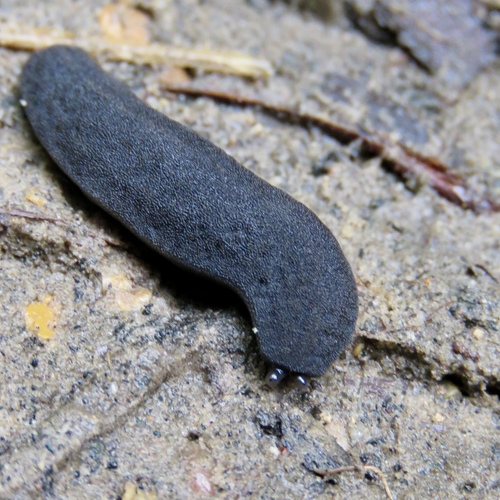
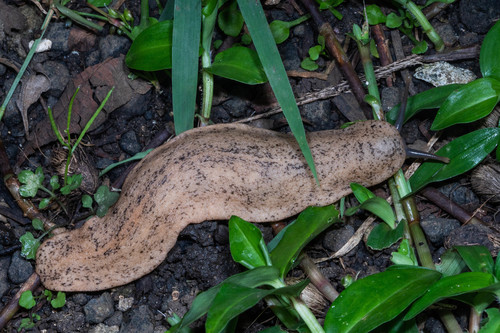
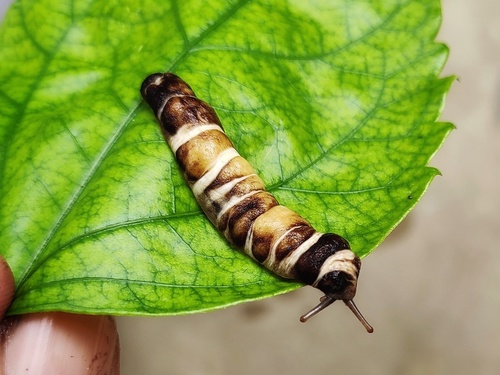
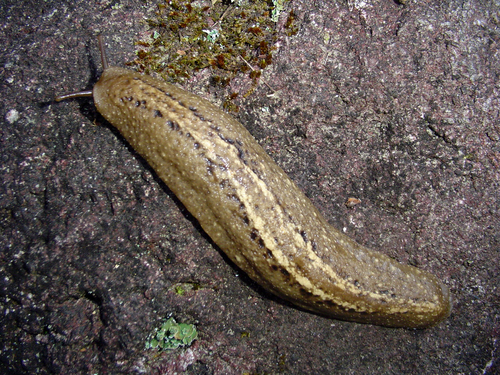
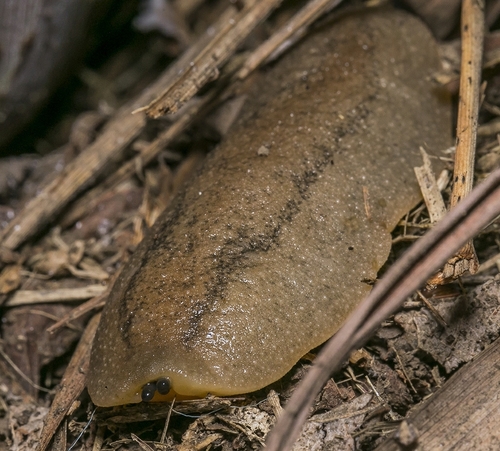
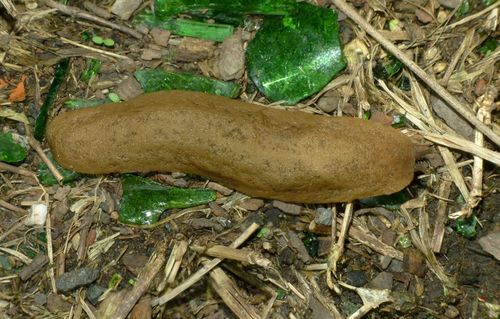
Laevicaulis alte (Férussac, 1822) is a round, dark-coloured shell-less slug that reaches 7 to 8 cm (2.8 to 3.1 in) in length. Its skin is slightly tuberculated, and it has a beige-coloured central keel. This species has a distinctive very narrow foot: juvenile specimens have a foot 1 mm (0.039 in) wide, while adult foot width is only 4 to 5 mm (0.16 to 0.20 in). The tentacles are small, measuring 2 to 3 mm (0.079 to 0.118 in) long, and are only rarely extended beyond the edge of the mantle.
Laevicaulis alte is most likely indigenous to sub-Saharan Africa, including Tanzania, Botswana, and South Africa. It has been introduced and become an invasive species in Southern Asia, Pratas Island (Taiwan), Hawaii (United States), Indian Ocean islands, Australia (present since 1889), and Samoa. The species is already established in the United States, and is considered a potentially serious pest threat that could negatively impact agriculture, natural ecosystems, human health, or commerce. For this reason, it has been suggested that Laevicaulis alte be given top national quarantine significance in the USA.
This slug inhabits dry areas, mostly at lower altitudes. It hatches from eggs, and has several specific adaptations for living in dry conditions: a rounded shape that minimizes its surface area, and a narrow foot that reduces water evaporation. Juvenile specimens almost always forage for food at night, and stay buried in soil during the day. Larger specimens are sometimes active during the day. Over 7 months, a Laevicaulis alte slug can grow from 0.5 cm (0.20 in) to approximately 4 cm (1.6 in) in length.