About Lactuca indica L.
Lactuca indica, commonly known as Indian lettuce, is a plant species belonging to the tribe Cichorieae in the family Asteraceae. It is native to western China (specifically Xinjiang and Tibet), the Himalayas, and southwest Asia, with its native range extending west to Turkey. It has been widely introduced to other regions, including as far as east Africa. In Japan, it is considered an archaeophyte, thought to have been brought to the area alongside rice cultivation.
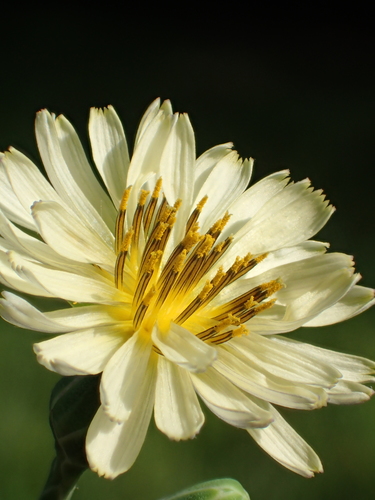
Lactuca indica is a biennial herb that grows from a taproot. It reaches at least 40 cm in height, and often grows as tall as 2 m. Its flowers bear white to pale yellow ray florets, with yellower centers at the flower head. The width of its leaf blades and the level of spikiness of its leaf lobes vary widely depending on the region the plant grows in.
In Asia, Lactuca indica is cultivated – or more precisely, its growth is actively encouraged – to be used as fodder for rabbits, pigs, poultry, and even fish. Its young leaves are commonly eaten as a leaf vegetable in salads, in the same way that other dandelion greens are used. It is also used in traditional medicine to support digestion.