About Lactophrys triqueter (Linnaeus, 1758)
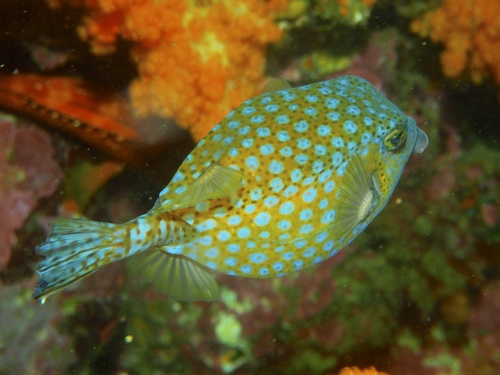
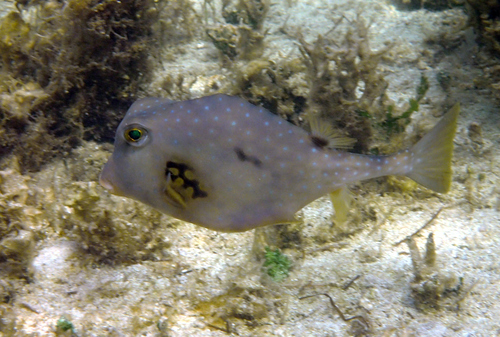
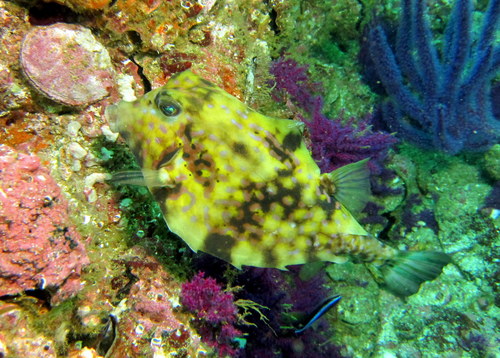
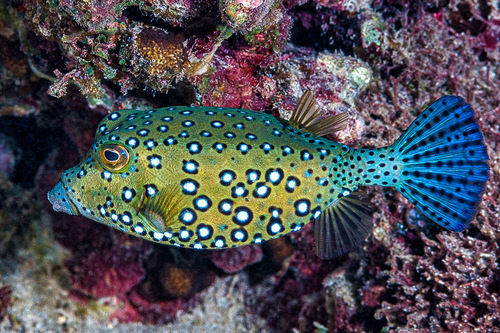
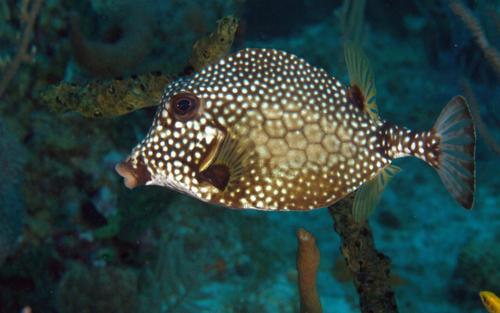
The smooth trunkfish, scientifically known as Lactophrys triqueter (Linnaeus, 1758), has an angular body covered in plate-like scales. It reaches a maximum length of 47 centimetres (19 inches), while a more typical adult size is 20 cm (8 inches). Its body is enclosed within a bony carapace, and when viewed from the front, it is triangular, with a narrow top and wide base. This fish has a pointed snout with protruding lips that surround a small mouth, and its tail is shaped like a brush. The species generally has a dark base body color patterned with small white spots, which often form hexagonal groups that create a honeycomb-like appearance on the middle section of the body. The tip of the snout and the area around the pectoral fins are dark with few spots, and the eyes are black. The fins are usually yellowish, with dark bases and dark tips, and they only contain soft rays with no spines. Juvenile smooth trunkfish have dark bodies covered in large yellow spots. As they age, a pale area develops where honeycomb markings will later appear. The smooth trunkfish occurs at depths down to approximately 50 m (164 ft), where it inhabits coral reefs and sandy seabeds in the Caribbean Sea, Gulf of Mexico, and western Atlantic Ocean. Its range extends from Canada and the Gulf of Maine southward to Brazil. In some regions, smooth trunkfish are caught for human consumption, and they are also sometimes kept in reef aquaria. However, caution is required because this species produces a toxic substance called ostracitoxin in the mucous secretions of its skin. When the fish is stressed, this toxin is released into the surrounding water, and there have been cases where aquarium tanks and systems were poisoned, resulting in the death of all other animal inhabitants.