About Lactarius scrobiculatus (Scop.) Fr.
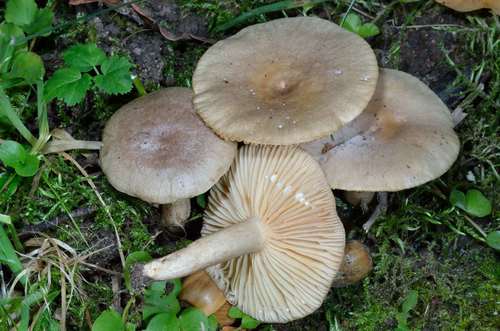
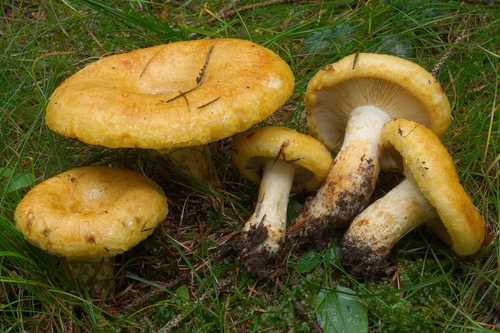
Lactarius scrobiculatus (Scop.) Fr. produces large, agaricoid fruiting bodies that grow from soil. Its cap has a striking orange to yellow color, and is covered in small scales arranged in faint concentric rings. The cap surface is wet, glossy, and slimy, particularly in wet weather. Mature caps can reach around 15 centimetres (6 inches) wide, with a depressed center and a slightly rolled-in margin. The gills are crowded, range in color from cream to yellow, and sometimes develop darker patches. When cut, the gills release large amounts of white to cream-colored milk (latex) that quickly darkens to yellow. Relative to the cap, the stem is quite short and stubby, and it is hollow. The stem surface matches the cap's color, and a key identifying feature is the presence of small fluid-filled pits on its surface. The spores are creamy-colored and have an elliptical-globular shape. When a small piece of the mushroom's flesh is chewed, it tastes bitter to acrid. One researcher reported developing mouth numbness after nibbling a small piece. The mushroom has no noticeable smell. Several varieties are currently recognized, including var. canadensis, var. montanus, and var. pubescens. Lactarius scrobiculatus occurs across Europe, and is rare and less widespread in North America. It grows primarily in coniferous and birch forests, forming mycorrhizal relationships, and prefers damp, shady, boggy areas. Its fruiting bodies grow in groups, sometimes forming fairy rings, and only rarely occur alone. Fruiting takes place from summer to autumn.