About Lactarius quietus (Fr.) Fr.
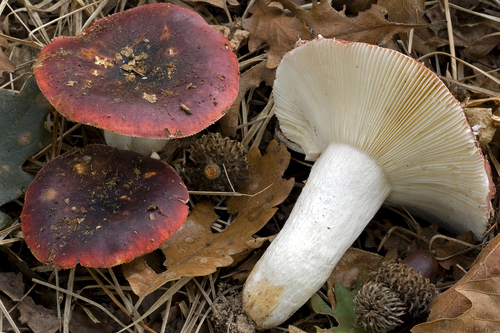
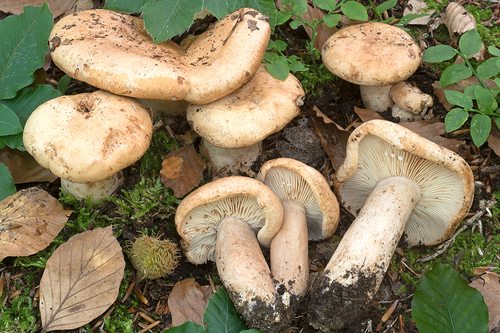
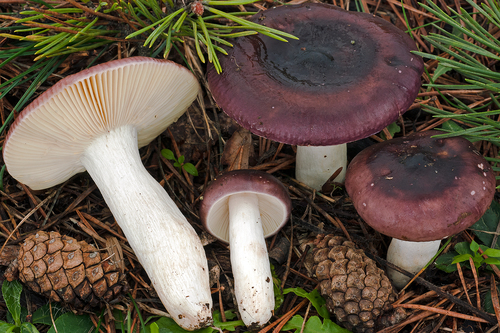
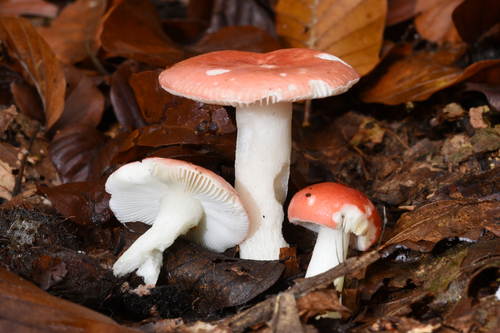
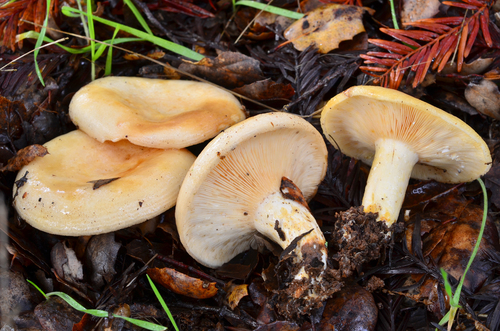
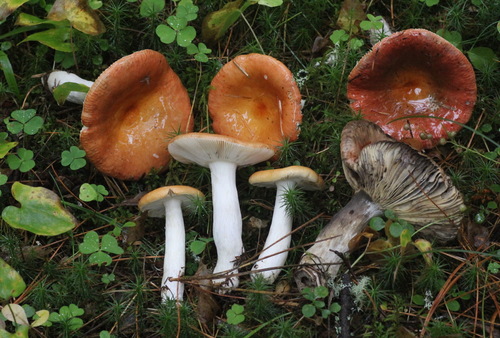
Lactarius quietus (Fr.) Fr. typically has a convex cap 5 to 8 centimetres (2.0 to 3.1 in) across, which later flattens or develops a small depression at its centre. The cap is dull reddish brown with a cinnamon tint, and sometimes has darker concentric bands or spots; this distinct zoning is one of the species' most recognizable features. The cap surface is dry and matt, and does not become sticky when moist. It contains a thick layer of firm, whitish-buff flesh. The stem measures 4 to 9 centimetres (1.6 to 3.5 in) in height, and is typically 10 to 15 millimetres (0.39 to 0.59 in) thick. It is cylindrical, sometimes with lengthwise furrows, and lacks a ring. It matches the cap's colour or is slightly darker, and is sometimes hollow. The brownish-white gills are slightly decurrent, and change colour with age to pale reddish brown with hints of mauve. The mushroom's milk is white or cream-coloured. It has a distinctive, strong oily odour, which has also been compared to the smell of bedbugs or wet laundry. Its spores are oval, with abundant warts connected by numerous ridges that form a well-developed network. Spores typically measure 7.5 to 9 by 6.5 to 7.5 μm, and produce a cream-coloured spore print.
Lactarius quietus grows exclusively at the base of oak trees, either solitarily or in scattered groups, in soil. It is very common throughout the autumn months. It forms ectomycorrhizae, feeding symbiotically exclusively with oak, though studies have suggested it can also feed saprotrophically on organic matter in soil. Lactarius quietus is only found in Europe; in the United Kingdom, it is among the one hundred most commonly encountered mushroom species. Lactarius quietus var. incanus is commonly found in eastern North America.