About Laccotrephes tristis (Stål, 1854)
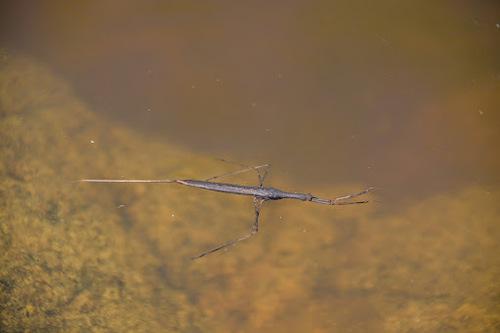
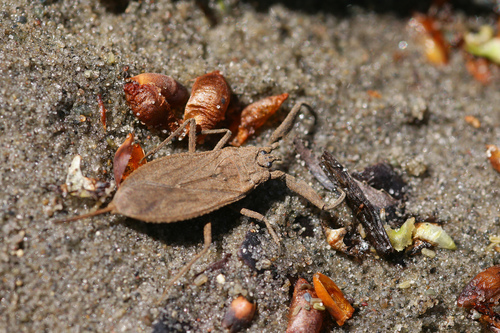
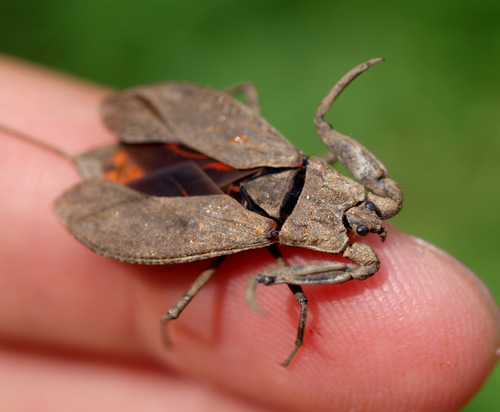
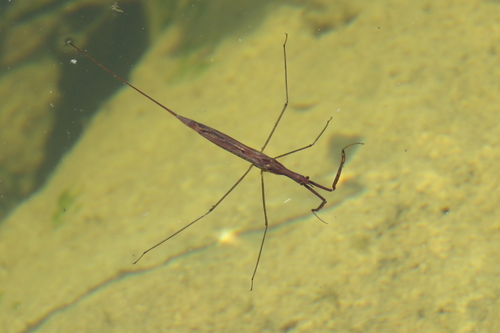
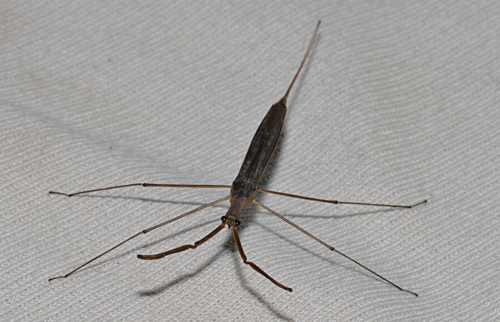
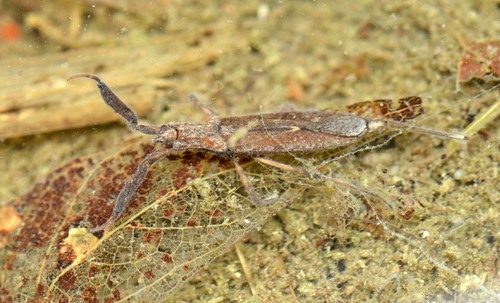
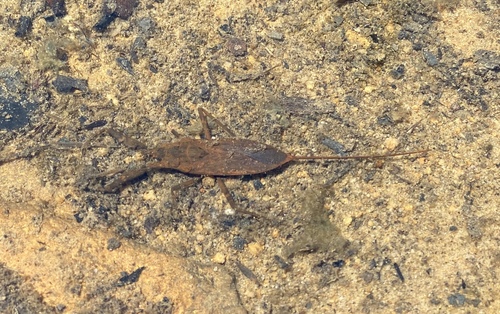
Laccotrephes tristis is a species of Australian water scorpion that has a brownish coloration, a broad, oval-shaped, flat body, and a total body length ranging from 11–45 mm (0.43–1.77 in). Adult males are smaller in body length, measuring 26–32 mm (1.0–1.3 in), while adult females measure 31–35.5 mm (1.22–1.40 in). Like other water scorpions, this species has six legs: the two front forelegs are modified into pincer-like structures used to grasp aquatic prey, and the hind legs are used for locomotion. It has a relatively short, pointed head with small eyes. Its antennae have 3 segments and a finger-like projection, and are hidden in a groove beneath the eyes. The common name 'water scorpion' comes from the tail-like respiratory siphon located at the end of the abdomen. For this species, the respiratory siphon is at least three-quarters the length of the body, and the insect uses it much like a snorkel to access air. Laccotrephes tristis breathes air from an air bubble trapped beneath its wings, which is held in place by very small water-repellent hairs. Oxygen from the air bubble is taken in through abdominal spiracles on the abdomen. When the air bubble is nearly depleted, the water scorpion uses its respiratory siphon to break the surface of the water. Air then seeps into the siphon through diffusion to replenish the air bubble under the wings. Nymphs have much shorter respiratory siphons than adult individuals. Laccotrephes tristis occurs in all Australian states except Tasmania, and is also found across the Indonesian region. In Central Australia, it can be found in many waterholes and gorges. Water scorpions are poor swimmers, and prefer slow-moving or stagnant water where they crawl through the water. They typically hide in or on top of mud and/or submerged vegetation. They have often been observed covering their backs with mud to conceal themselves, and wait with their heads pointed toward deeper water. Water scorpions can walk on land during cloudy days, particularly after rain. Laccotrephes tristis is a strong flier with well-developed wings, though flight is very rarely observed. Eggs of this species are approximately 3 mm (0.12 in) in length, and have between 8 and 10 slender respiratory horns on the front end of the egg. These horns are arranged in a circular formation and are around 1.4 mm (0.055 in) long. Females deposit eggs so that the respiratory horns are exposed to the air, allowing respiration even when the rest of the egg is submerged in mud or water. Eggs are placed at the boundary of the species' habitat, and covered with mud by the female. Immediately after hatching, nymphs move into the water.