About Laccaria laccata (Scop.) Cooke
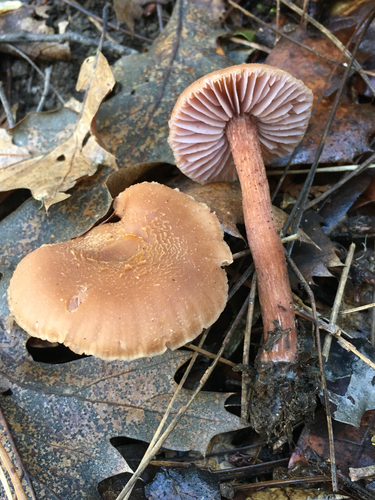
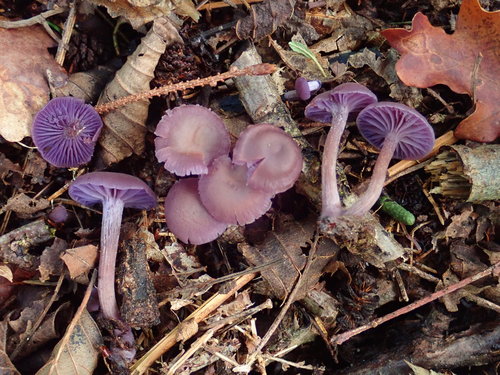
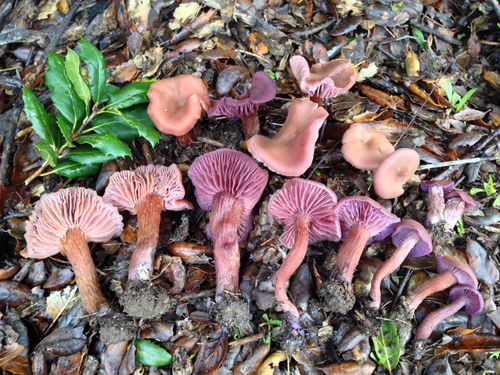
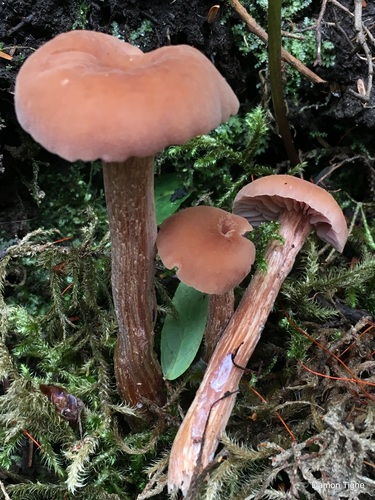
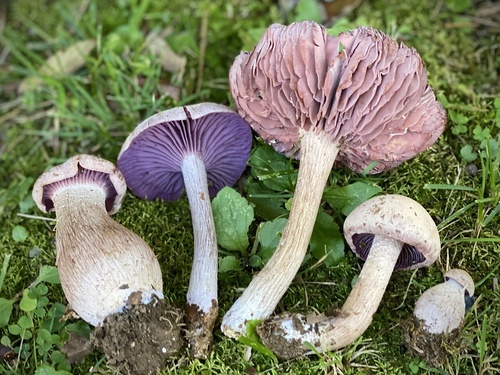
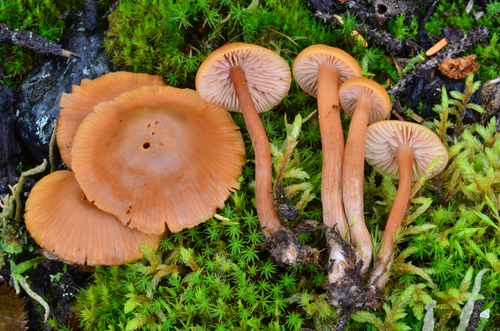
Commonly known as the deceiver, Laccaria laccata (Scop.) Cooke is a small mushroom. Its cap ranges from 2 to 6 cm (1 to 2.5 in) in diameter, starting convex when young, before flattening out or even becoming depressed in the center as it ages. When moist or young, the cap can show various shades of salmon pink, brick-red, orange, or brown; it fades to a duller, paler color when dry. The fibrous stipe measures 2–10 cm (1–4 in) in height and 3–10 mm (0–0.5 in) in width. The irregular gills are widely spaced, can be either decurrent or adnexed, and share a similar color to the cap, turning white as spores develop as the mushroom matures. This species produces a white spore print, with round, spiny spores that measure 7–10 μm in diameter. Its flesh is thin and has very little distinct taste. Laccaria laccata grows in scattered groups in wooded areas and heathland, often occurring in poor soil. It is very common throughout the northern temperate zones and generally favors cool weather. It forms mycorrhizal relationships with multiple types of trees, including species in Pinaceae (pines), Fagaceae (beech), and Betulaceae (birch); in Great Britain, it also uses the roots of Corylus avellana (hazel) as a host. It can be found across Europe and North America, ranging south into Mexico and Costa Rica. All Laccaria species are mycorrhizal, and some experts consider them to be pioneer species.