About Labrus merula Linnaeus, 1758
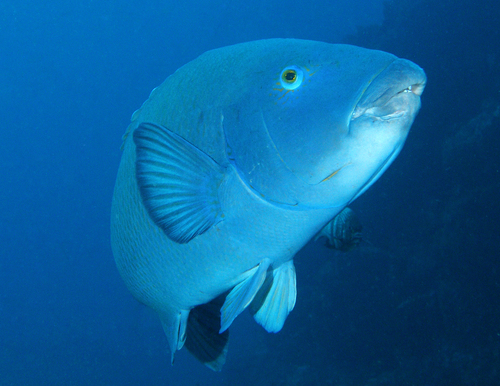
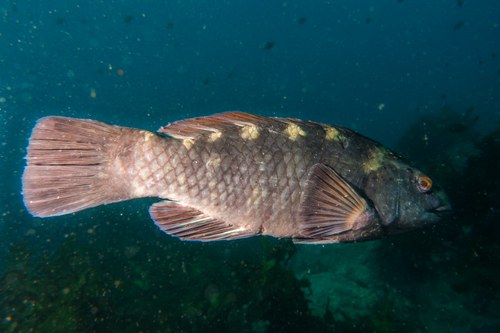
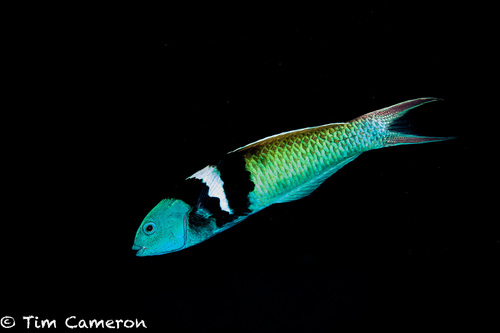
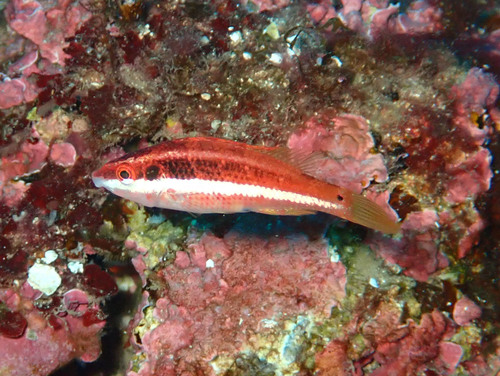
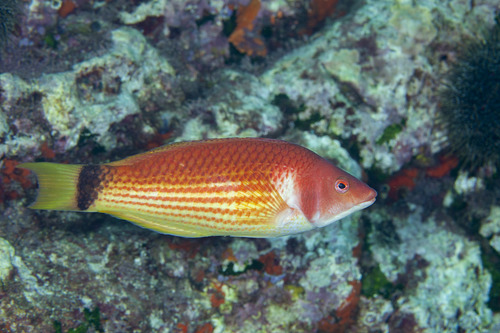
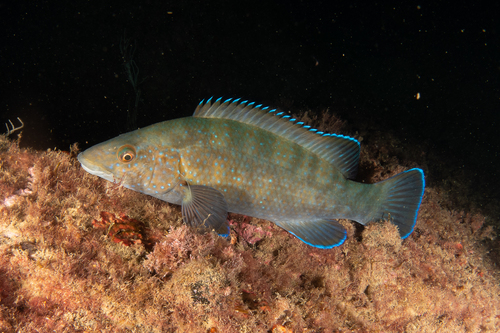
Labrus merula reaches a maximum total length of 45 cm (18 in). Its body is moderately elongated, and it has a broad head that is shorter than or equal to its body depth, marked with light blue spots. This species has strong, canine-like teeth that become rounded in older individuals. Young Labrus merula are green or brownish with light spots, and have a paler, yellow-grey belly. Some individuals have a blue-white longitudinal stripe along their sides. Older specimens are dark blue, and sometimes dark green or brownish. The soft portions of the dorsal, anal, and caudal fins are edged with a light blue stripe. Smaller individuals form small, loose schools, while larger older individuals live solitarily. It feeds on sea urchins, ophiuroids, mollusks, crabs, and worms. Individuals reach maturity after two years, at lengths between 15 cm (5.9 in) and 20 cm (7.9 in). At 7 years old, males measure around 31.5 cm (12.4 in) and females measure around 30 cm (12 in). The maximum recorded lifespan for this species is around 16 to 17 years. In the western Mediterranean Sea, this species spawns from February to May. Males protect demersal eggs that are laid among rocks and seagrasses. Labrus merula is an important food fish for local human populations, and is also sold in the aquarium trade. This species, commonly called the brown wrasse, is distributed in the Eastern Atlantic from Portugal to Morocco, including the Azores, and across almost the entire Mediterranean Sea. It is absent from the eastern Levantine region and the Black Sea. It inhabits reefs near rocks, areas within seaweed growth, and seagrass beds, found from shallow waters down to 50 m (160 ft) depth. The main threat to Labrus merula is habitat degradation, particularly the loss of Posidonia seagrass beds, but the global population has not shown any serious signs of decline.