About Labroides dimidiatus (Valenciennes, 1839)
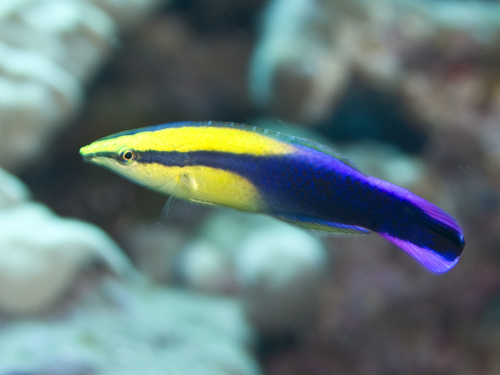
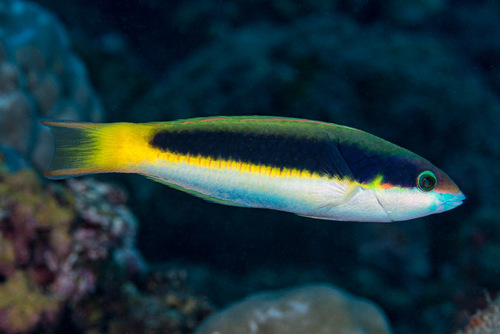
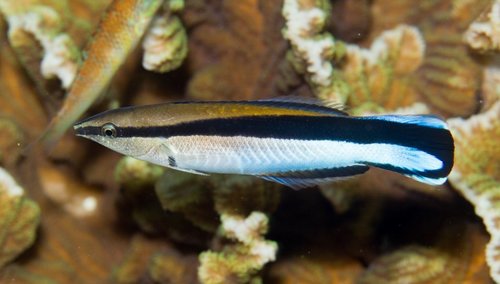
Labroides dimidiatus (Valenciennes, 1839), commonly known as the bluestreak cleaner wrasse, is a small species of wrasse. Adults average 10 cm (3.9 in) in length, and reach a maximum length of 14 cm (5.5 in). Adults can be identified by a wide, longitudinal black stripe that runs along their side and through their eye; their back and belly are white, sometimes with a faint yellowish tint. This white coloration shifts to bright blue on the front of the fish, while the black band widens at the tail. Juvenile individuals are black with an electric-blue stripe. This species lives on tropical coral reefs, with a distribution ranging from the Red Sea and Indian Ocean to the western Pacific, including Papua New Guinea, Japan, Fiji, and French Polynesia. It was first recorded in the Kermadec Islands Marine Reserve north of New Zealand in 2015, after researchers reviewed hundreds of hours of unused documentary film footage. For reproduction, male cleaner wrasse defend specific territories against other males, and maintain control over the females that reside within these territories. If the dominant male in a territory disappears, one of the larger females in the group will change sex to take over the territory and its role as dominant male.