About Labrichthys unilineatus (Guichenot, 1847)
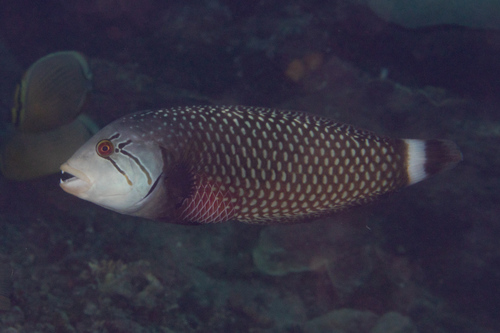
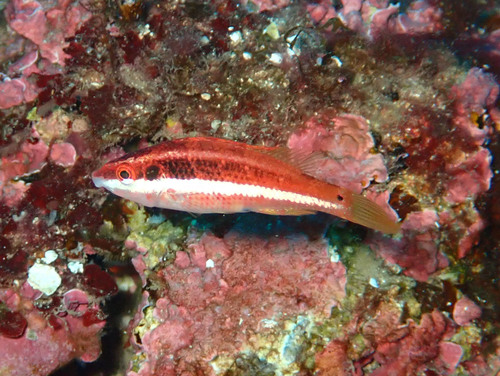
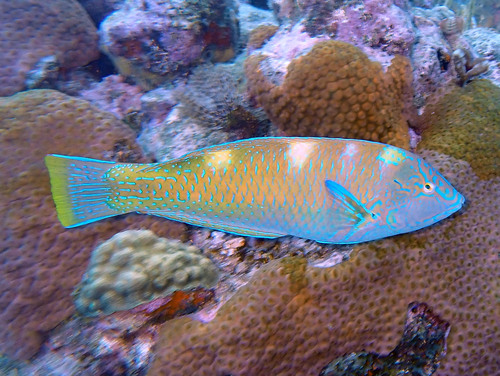
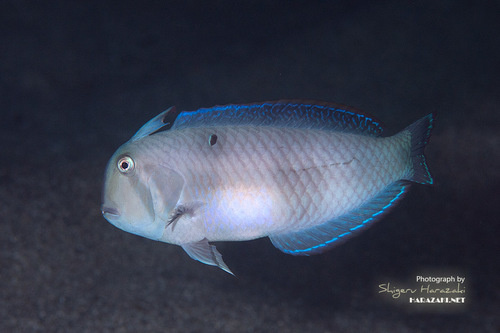
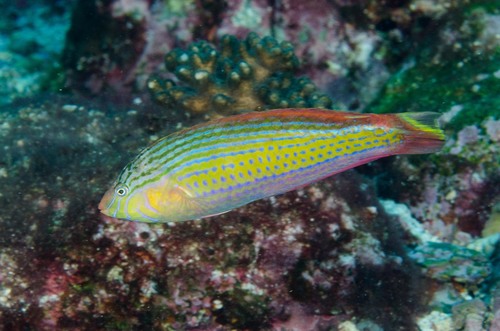
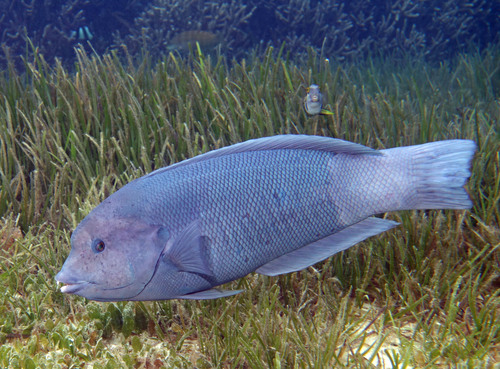
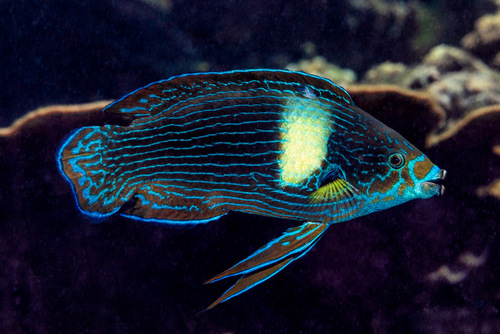
Labrichthys unilineatus, commonly called the tubelip wrasse, shows distinct coloration across its different life stages and sexes. Juveniles are brown with two bluish white stripes running along their body; these stripes fade as the fish grows larger. Females are yellowish brown with faint stripes. Males have more intense, brighter coloration than females, and feature a large yellow patch around the base of the pectoral fin. This species has thick, fleshy yellow lips that form a short tube when the mouth is closed. The head is mostly covered in scales, with the exception of the sheath over the base of the upper lip, the area in front of the eyes, and the chin. In the upper jaw, there are no teeth between the two forward pairs of canines and the large canine located at the corner of each jaw. The dorsal fin has 9 spines and 11 to 12 soft rays, while the anal fin has 3 spines and 10 to 11 soft rays. The maximum recorded total length for males of this species is 17.5 centimetres (6.9 in).
Labrichthys unilineatus was first formally described in 1847 as Cossyphus unilineatus by French naturalist Alphonse Guichenot, with the type locality recorded as Guam. In 1854, Dutch ichthyologist Pieter Bleeker moved C. unilineatus into the newly created monotypic genus Labrichthys. The generic name combines the Greek word labrax, which can be translated as "voracious", and ichthys, which means "fish". The specific name unilineatus means "one lined", and refers to the lateral stripe present on juveniles.
This tubelip wrasse has a wide distribution across the Indo-Pacific region. It occurs along the East African coast in Tanzania and Mozambique, extends through the Indian Ocean including its major islands, and reaches as far east as Micronesia and Samoa in the Pacific Ocean. Its range extends north to the Ryukyu Islands and Taiwan, and south to the Great Barrier Reef and Lord Howe Island off Australia.
The species inhabits shallow lagoon reefs and semi-protected seaward reefs with high coral cover. It is most often found near branching corals, particularly staghorn corals of the genus Acropora. The polyps of these corals make up the main component of this wrasse's diet.