About Labidesthes sicculus (Cope, 1865)
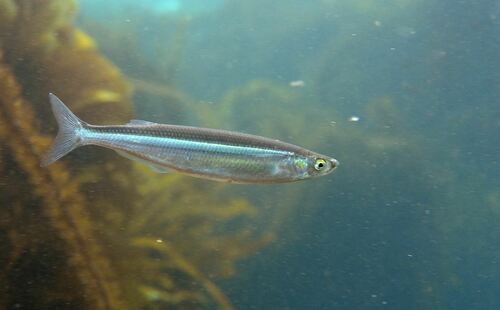
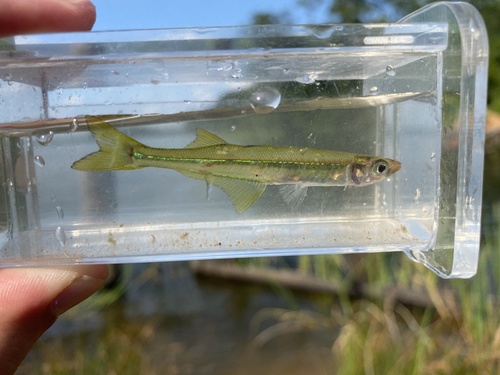
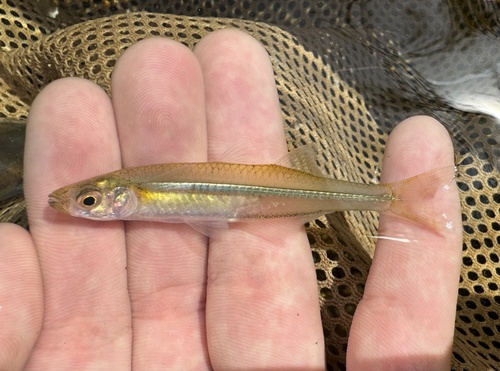
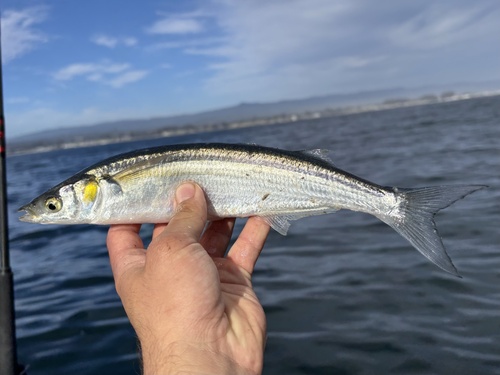
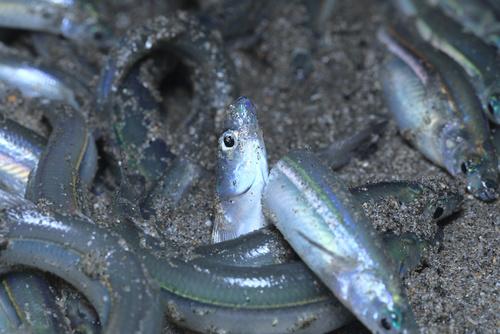
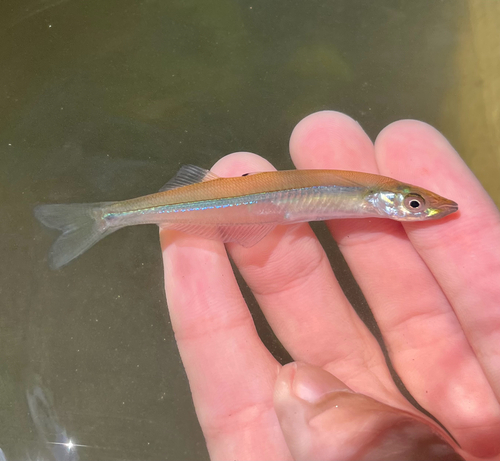
Labidesthes sicculus, commonly called the brook silverside, is a North American species of Neotropical silverside. Brook silversides inhabit slow-moving rivers, lakes, ponds, quiet pools and small rivers, ranging from the Great Lakes south through the Mississippi Basin and Gulf Coastal Plains. This range covers 27 U.S. states and parts of Canada; the species is native to most of this area, but has also been stocked outside its natural range to serve as forage for sport fish. Brook silversides survive and prefer clear water with low substrate concentrations and aquatic vegetation, and their habitat can include cool to warm water with varying gradient and vegetation levels. They are vulnerable to turbid waters. Their populations decreased shortly after the construction of the Tennessee-Tombigbee Waterway in Tennessee, most likely due to introduced competition. Brook silversides sit near the bottom of the food chain and are preyed on by many larger fish. Their diet consists primarily of zooplankton, and they are highly specialized feeders: cladocerans make up 80% of their diet, small flying insects make up 40%, and midge larvae make up 20%. Diet also varies by life stage and season. Young brook silversides mostly prey on smaller prey, shifting to feed on immature insects as they mature. In winter, they eat mostly planktonic crustaceans; broader documented prey items include copepods, insect larvae, and winged insects. Both intentional and unintentional species introductions have forced brook silversides to compete for food resources. In particular, they must compete with the non-native Menidia audens, which was introduced via waterway construction, and this competition for resources has led to reduced brook silverside populations. The survival of freshwater fish like the brook silverside is increasingly threatened, and monitoring turbidity in their natural habitats is recommended to help support their continued survival.