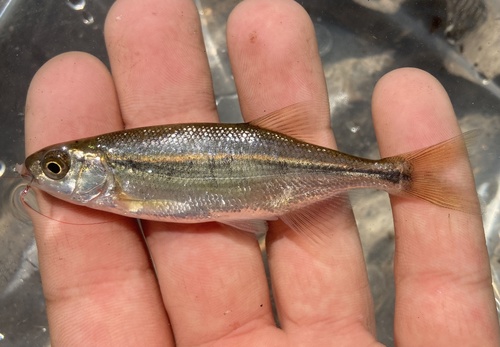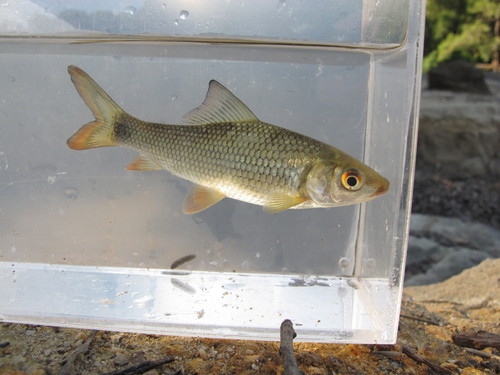
About Labeo rohita (Hamilton, 1822)
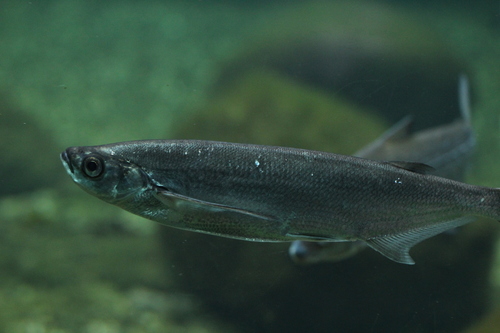
The rohu, with the scientific name Labeo rohita (Hamilton, 1822), is a large silver-colored fish that has the typical cyprinid shape, plus a noticeably arched head. Adult rohu can reach a maximum weight of 45 kg (99 lb) and a maximum length of 2 m (6.6 ft), though adults average around half a meter (1.6 ft) in length. Rohu are naturally found in rivers across most of northern, central, and eastern India, Pakistan, Vietnam, Bangladesh, Nepal, and Myanmar. The species has also been introduced to some rivers in Peninsular India and Sri Lanka. This species is omnivorous, and it has different food preferences at different life stages. During its early life stages, rohu eats mainly zooplankton, and shifts to eating mainly phytoplankton as it matures. Rohu are herbivorous column feeders, eating mostly phytoplankton and submerged vegetation. They have modified, thin, hair-like gill rakers that they use to sieve food out of water. Rohu reach sexual maturity between two and five years of age. They usually spawn during the monsoon season, and their spawning season generally coincides with the southwest monsoon. When spawning, they stay in the middle of flooded rivers located above tidal reach. Rohu spawn can be collected from rivers and then reared in tanks and lakes. Rohu can be infected by the acanthocephalan parasite Paraechinorhynchus kalriai, which attaches to the inner lining of the fish's small intestine. Rohu is a very commonly eaten fish in Bangladesh, Bhutan, Nepal, Pakistan, and the Indian states of Tripura, Nagaland, Bihar, Odisha, Assam, West Bengal, Andhra Pradesh, Telangana, Tamil Nadu, and Uttar Pradesh. A fried rohu recipe appears in the Manasollasa, a 12th-century Sanskrit encyclopedia compiled by Someshvara III, who ruled from what is now Karnataka. In this historical recipe, the fish is skinned, then marinated in asafoetida and salt. It is next dipped in turmeric mixed with water before frying. Rohu caught in Mithila are called Mithila Rohu Machh in Maithili, and are considered to have a better flavor than rohu varieties found in coastal areas. The state government of Bihar is currently working to get a geographical indication (GI) tag for this fish.