About Kunzea linearis (Kirk) de Lange & Toelken
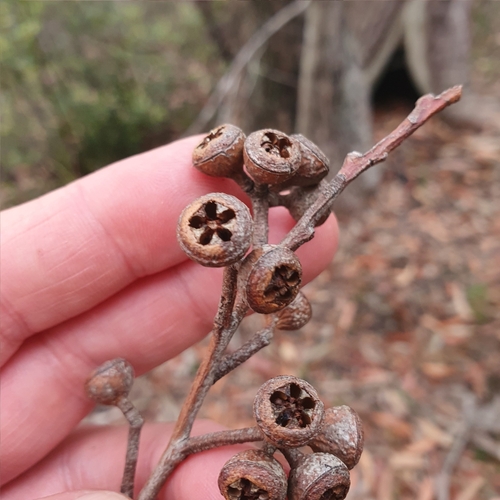
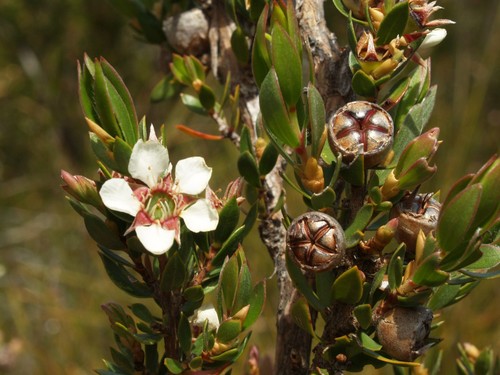
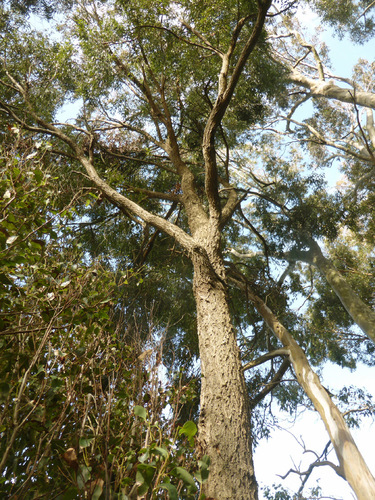
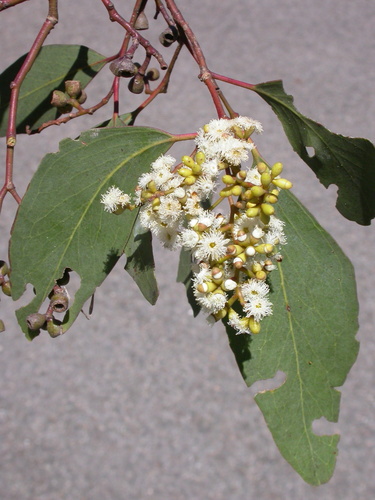
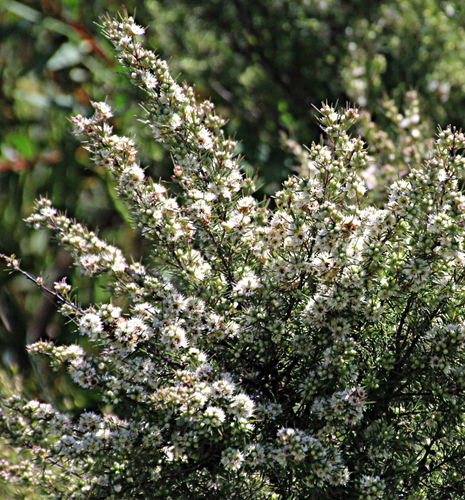
Kunzea linearis (Kirk) de Lange & Toelken, commonly known as rawiri manuka, is a densely-branched shrub or tree that typically grows up to 12 metres (40 feet) tall. It forms a rounded canopy usually up to 2 metres (7 feet) in diameter. Its leaves are densely crowded along branches, especially near branch ends; they are hairy, lack a petiole, and measure around 9–20 millimetres (0.4–0.8 inches) long by 0.5–1 millimetre (0.02–0.04 inches) wide. The flowers are arranged in more or less cylindrical clusters that contain between 3 and 40 individual flowers, each 2–6 millimetres (0.08–0.2 inches) in diameter. The floral cup is 2–4 millimetres (0.08–0.2 inches) long, 2.5–4 millimetres (0.1–0.2 inches) in diameter, cup-shaped or barrel-shaped, and usually covered in silvery white hairs. Five sepal lobes 1–2 millimetres (0.04–0.08 inches) long grow on the rim of the floral cup. It has five or six white, cream, or pale pink petals that are egg-shaped to almost round, about 2–4 millimetres (0.08–0.2 inches) long and wide. Between 40 and 50 cream-coloured stamens, which are longer than the petals, are also present. Flowering occurs between October and February, and is followed by woody, barrel-shaped capsule fruits. The fruits measure 1.5–3 millimetres (0.06–0.1 inches) long by 2.5–4 millimetres (0.1–0.2 inches) wide, and retain persistent sepal tips. Kunzea linearis is endemic to New Zealand and is considered the most distinctive of New Zealand kunzeas. In terms of distribution and habitat, it mostly grows in coastal to lowland shrubland on impoverished soils and in peat bogs. It occurs mainly in the northern North Island, from North Cape south to Ahipara and the Karikari Peninsula, and grows sporadically further south. For horticultural use, rawiri manuka is most easily propagated from fresh seed.