About Kuhlia xenura (Jordan & Gilbert, 1882)
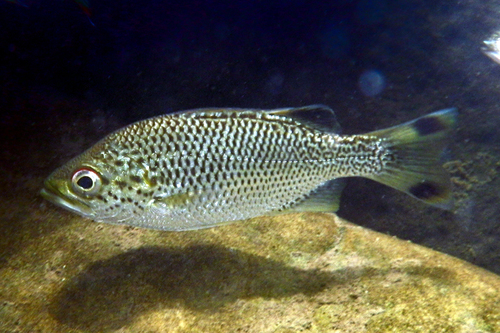
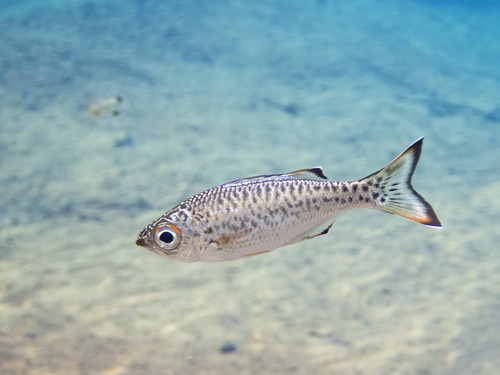
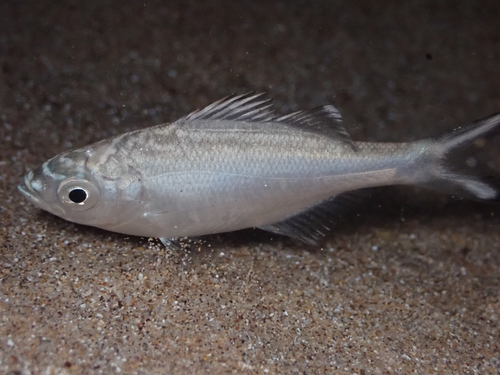
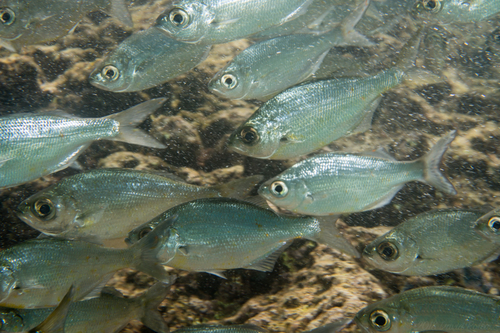
Kuhlia xenura is a fish species first described by Jordan & Gilbert in 1882. In adult individuals, the dorsal profile of the head is slightly concave, and the eye is large. The second spine of the anal fin measures approximately 90% of the length of the third anal spine, and the caudal fin is deeply forked. The body of this species is silver, with a dark grey or dusky caudal fin that has a thin black rear margin and often features a pale submarginal band. The dorsal fin has 10 spines and 10 soft rays, while the anal fin has 3 spines and 10 to 11 soft rays. This species reaches a maximum standard length of 22.2 cm (8.7 in). Kuhlia xenura is endemic to the Hawaiian Islands. It is commonly found in schools, and inhabits fresh water, brackish habitats, and shallow coastal shore waters. In fresh water, this species feeds primarily on algae, insects, planktonic crustaceans, and foraminiferans. In brackish or salt water, its diet includes copepods, amphipods, insects, mollusc larvae, algae, spiders, and annelids. Medium-sized fish with a total length between 75 and 150 millimetres (3.0–5.9 in) live in deeper water at the base of exposed cliffs, large tidal pools, rivers, or ponds. For medium-sized individuals, the diet is dominated by crustacean larvae, particularly late-stage larvae of crabs and stomatopods, with small amounts of insects and algae also consumed. Fish larger than 150 millimetres (5.9 in) in total length are found at surf-exposed cliffs, outer reef caves, and other exposed localities, and feed mainly on crustaceans and polychaete worms. This species is primarily nocturnal. Spawning takes place throughout the year, with a peak between December and June, and spawning is thought to occur at sea.