About Kuhlia sandvicensis (Steindachner, 1876)
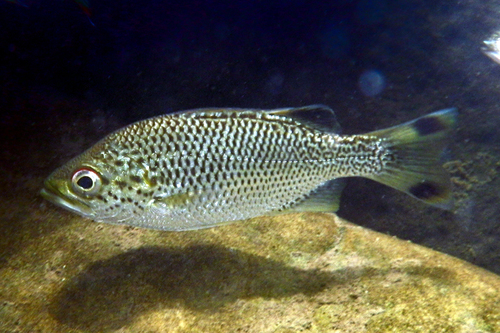
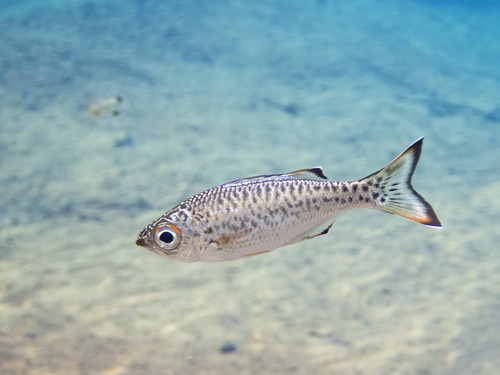
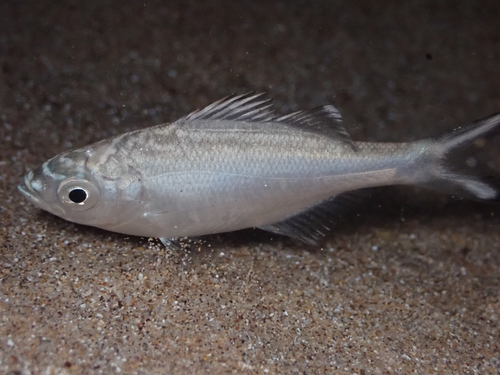
Kuhlia sandvicensis (Steindachner, 1876) has a relatively small eye, an almost straight dorsal profile of the head, and a strongly forked caudal fin. On its anal fin, the third spine is slightly longer than the second. The species is overall silvery, with a silver-and-black reticulated pattern on the top of its head and a blackish margin on the caudal fin. Its dorsal fin has 10 spines and 11 to 12 soft rays, while the anal fin has 3 spines and 11 to 12 soft rays. The maximum recorded total length for this species is 25 centimetres (9.8 in).
Kuhlia sandvicensis occurs in the Pacific Ocean, around Hawaii, Pitcairn Island, Tuamotu, Wake Island, Rapa, the Society Islands, and Kiribati.
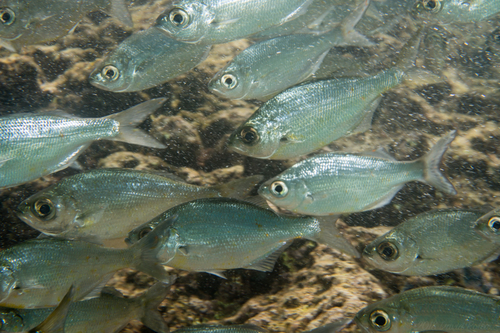
This species is common in Hawaii. Young Kuhlia sandvicensis are abundant along rocky shores, in tide pools, and in and around the mouths of streams that connect to the sea. Juveniles are often found under wharves, in larger tide pools, and in brackish ponds, freshwater ponds, and streams. Adults live in caves on wave-swept coral reefs, in the surf zone at the base of cliffs, and in wrecks. They only infrequently form schools in more open water. While Kuhlia sandvicensis can live in both marine and freshwater habitats, it does not need to spend any part of its life cycle in freshwater to fully develop. This species feeds on fishes, aquatic invertebrates, and insects.