About Krynickillus melanocephalus Kaleniczenko, 1851
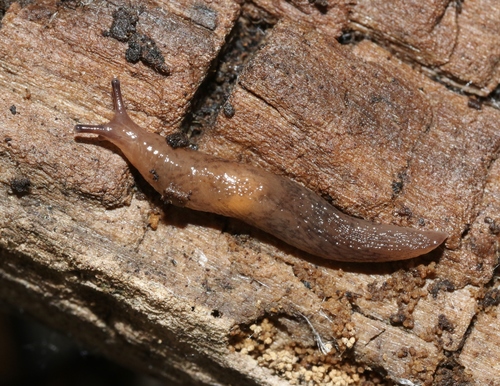
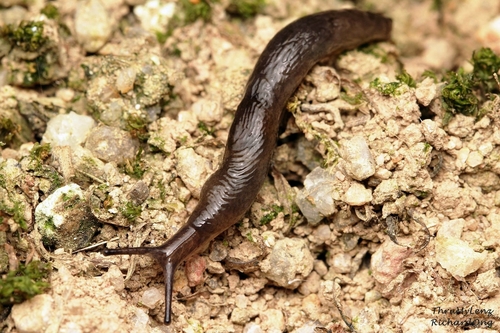
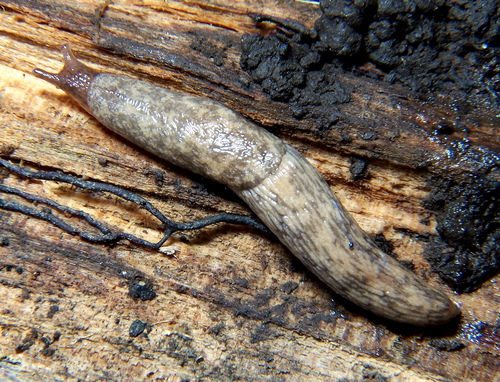
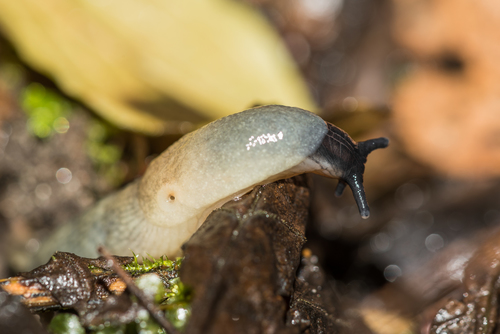
Identification. Krynickillus melanocephalus shares a similar body form with other agriolimacid slugs, particularly the genus Deroceras. Like these related slugs, it has its pneumostome located in the rear half of the mantle, and a tapering tail with no distinct keel. Unlike most Deroceras species, K. melanocephalus grows larger, reaching 60 mm in length, and occasionally growing even bigger. Its most defining characteristic is the deep black colour of its tentacles, head, and nape; this dark colour is also visible under the front portion of the mantle. This distinguishes it from the closely related congener Krynickillus urbanskii, which occurs in Romania, Bulgaria and Turkey, and has a paler black head and a pale nape.
Distribution. The natural range of Krynickillus melanocephalus covers the Caucasus, Crimea, eastern Turkey, and northern Iran. It has been introduced to many other areas across Europe, including additional regions of Ukraine (such as Kyiv, where it was first recorded in 1998), additional regions of Russia (Moscow, Novgorod, and Tverskaya oblasts), Germany (recorded since 1994), Latvia (recorded since 1997), Belarus (recorded since 2009), Sweden (recorded since 2015), Lithuania (recorded since 2017), Finland (recorded since 2017), Hungary (recorded since 2019), Slovakia (recorded since 2020), Poland (recorded since 2022), Czech Republic (recorded since 2024), and Estonia.
Ecology. In its introduced range, K. melanocephalus reaches adulthood in autumn and dies off over winter. It has spread out from gardens into adjacent habitats, including woodlands and meadows. While it has sometimes been reported as a crop pest, other sources note that its diet consists of algae, fallen fruit, and fungi, so it poses less of a threat than other pest slug species. In its native range, this is a forest-dwelling species. Experimental studies have found that these slugs lay far more eggs in leaf litter than in moss, soil, or gravel.