About Krameria bicolor S.Watson
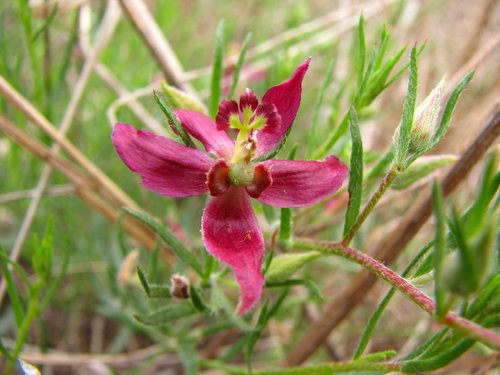
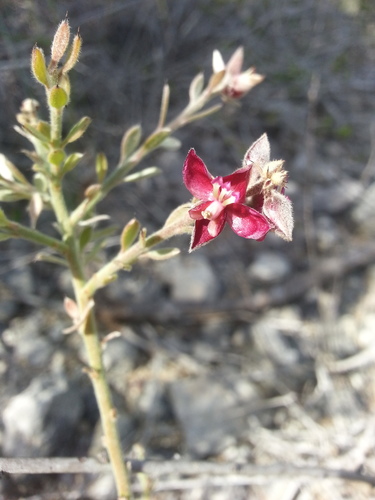
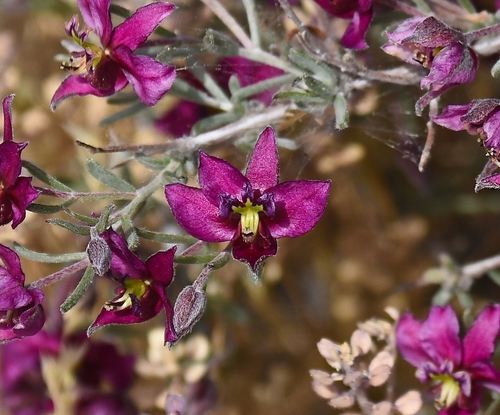
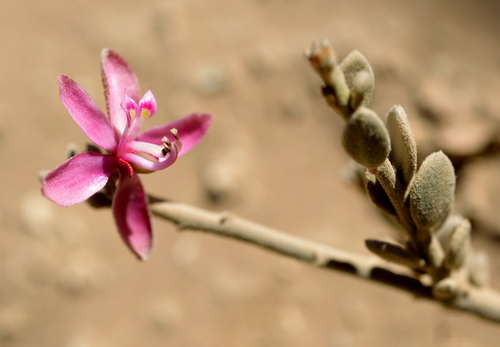
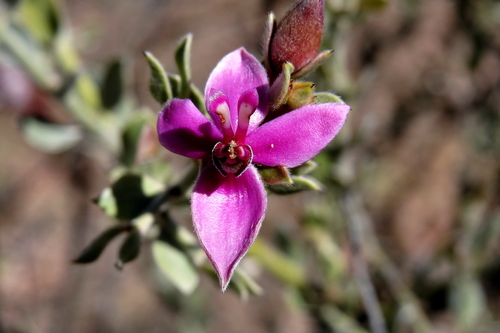
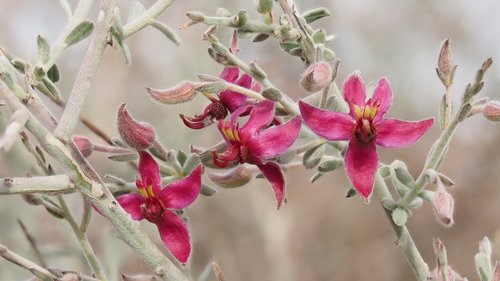
Krameria bicolor S.Watson is a perennial shrub or subshrub in the Krameriaceae family, also known as the rhatanies. Its common names include white rhatany, crimson-beak, and chacate in Spanish; in the Mexican state of Sonora, it is called cosahui. It grows in drier habitats across the southwestern United States, ranging from California to Texas, and in northern Mexico. This is a low-lying, densely branched shrub that usually reaches up to 2 feet (1 m) in height, though it can exceptionally grow beyond 5.0 feet (2 m). Its branches spread outward, and end in thornlike tips. The leaves are grey-green to greenish, covered in fine hairs, narrow, and only 0.5 to 0.75 of an inch long. The overall plant and its branches range in color from grayish-green to gray, whitish-gray, or dull brown, and may be tinged with red. Flowers are often sparse and sometimes inconspicuous, but plants growing in some locations can bloom prolifically with red flowers. The Seri people of Mexico use this plant to create dyes for basketry. This shrub is adapted to dry desert environments, but it is able to utilize areas of high soil moisture. It is partially parasitic, and commonly parasitizes the creosote bush, Larrea tridentata.