About Korthalsella salicornioides Tiegh.
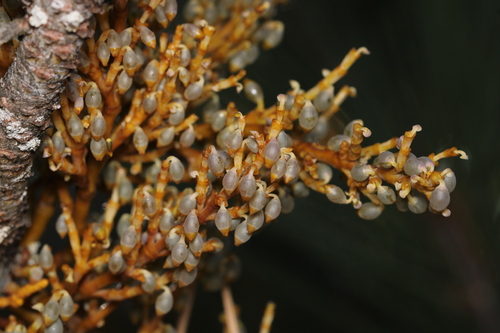
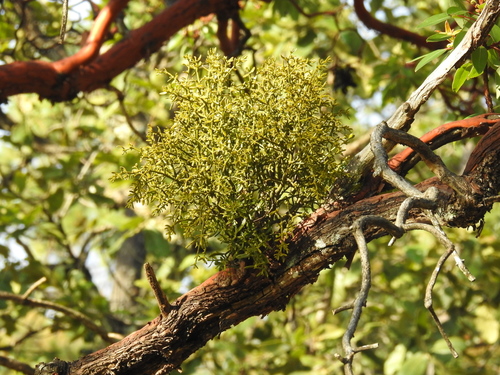
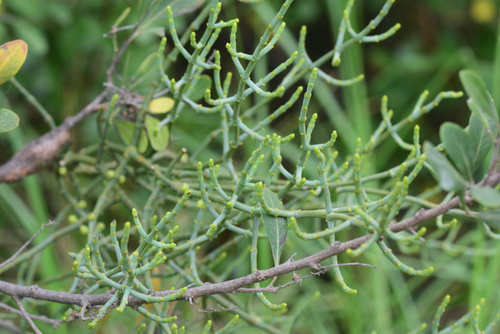
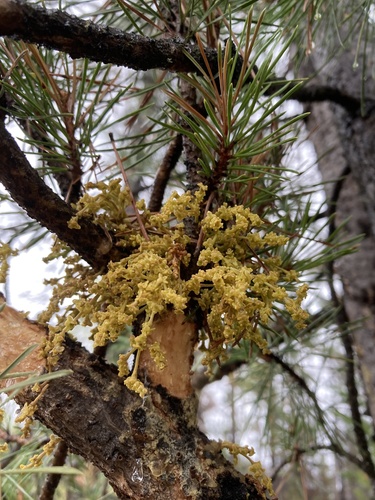
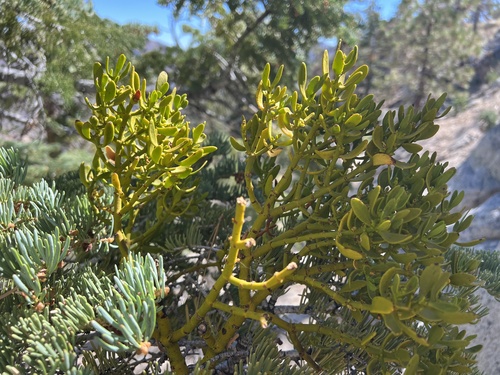
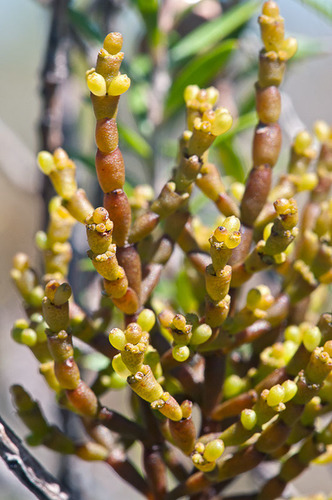
Korthalsella salicornioides (originally misspelled as Korthalsella salicornicoides in the source text) gets its scientific name from Salicornia, a succulent coastal plant, because it shares the characteristic of having succulent stems. This plant forms a dense mass of small, fleshy, leafless twigs that reach up to 10 centimetres (3.9 inches) in total length. It most commonly grows as a mistletoe on two host plant species: mānuka (Leptospermum scoparium) and kānuka (Kunzea ericoides). Its colour ranges from reddish-yellow to green. It produces very small flowers and small yellow fruits between October and May each year. It is one of three leafless New Zealand mistletoe species in the genus Korthalsella, and can be distinguished from the other two by its denser stems that grow at a narrower angle from the plant body.