About Korscheltellus lupulina (Linnaeus, 1758)
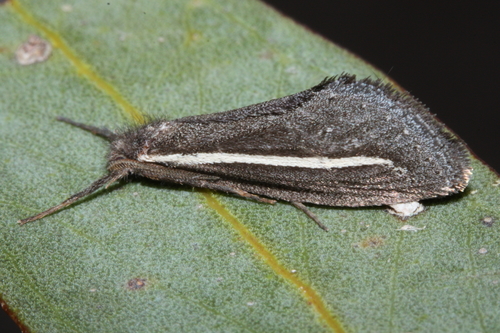
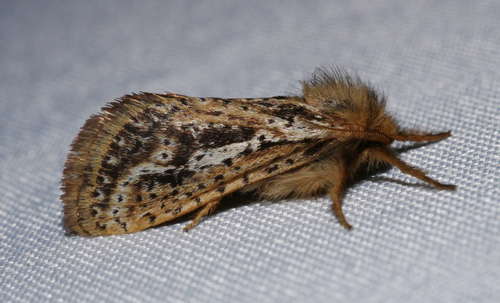
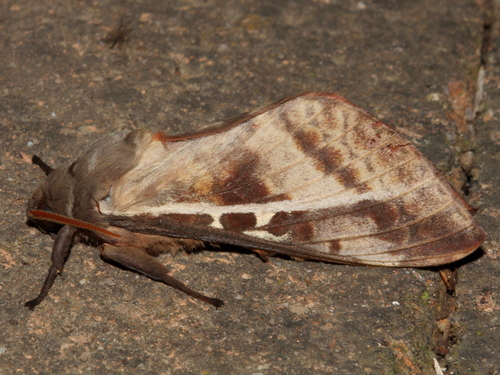
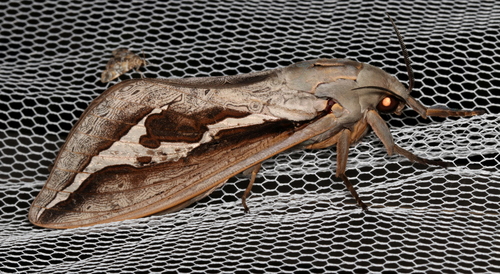
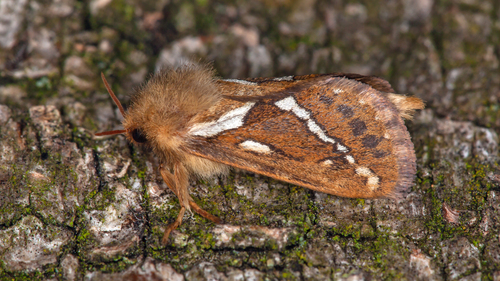
Korscheltellus lupulina (Linnaeus, 1758) males have a wingspan of roughly 30 millimeters. Their forewings are dark brown, with white streaks at the apex and base that meet to form a V shape, and an additional spot close to the costa. Their hindwings are solid plain brown. Females are larger, with a wingspan of roughly 40 millimeters, and have similar patterning to males but are generally paler with less distinct markings. The moth's overall patterning is highly variable, ranging in color from whitish to grey to pale brown. Females are consistently slightly larger and have less strongly marked patterning than males. Some individuals of both sexes are plain buff or brown with no pattern at all. These moths do not have a proboscis and cannot feed, so they are not usually found at flowers. Adult moths fly at dusk during May and June. Females broadcast their eggs during a hovering flight just above vegetation, while males also fly with a hovering pattern. This species overwinters in the larval stage. It looks similar to the orange swift (Triodia sylvina) and the gold swift (Phymatopus hecta), but the orange swift flies later in the year.