About Korscheltellus fusconebulosus (De Geer, 1778)
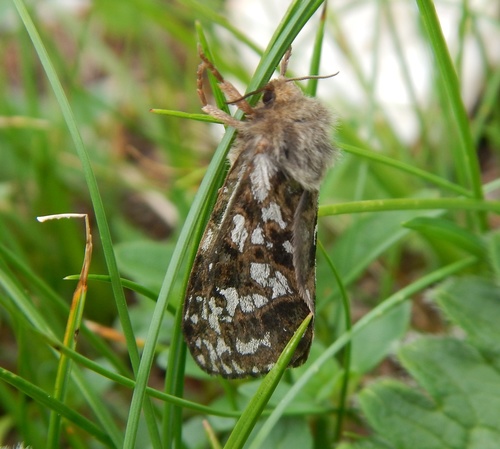
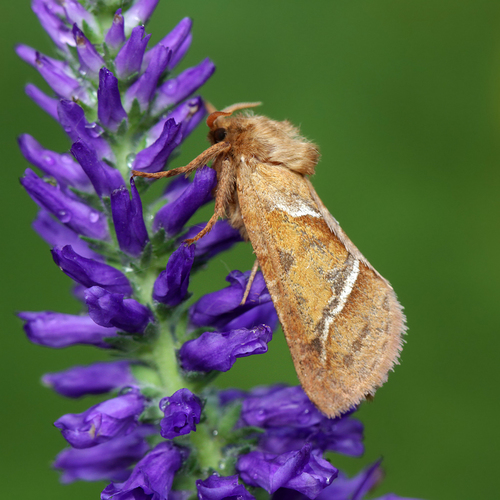
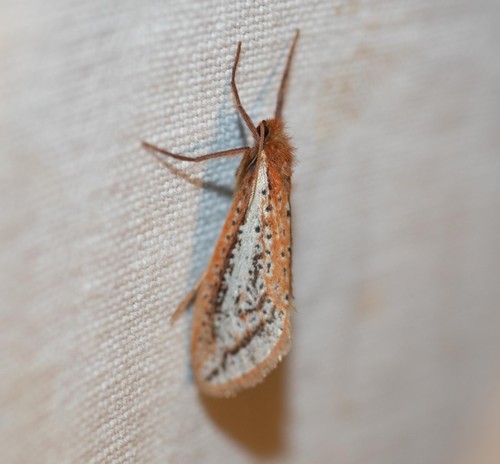
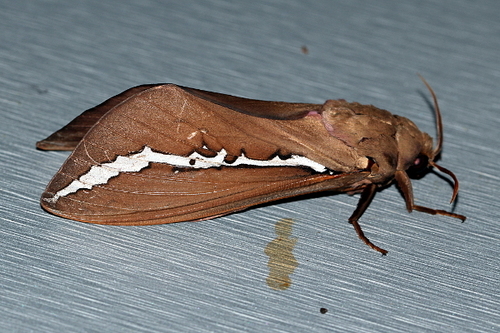
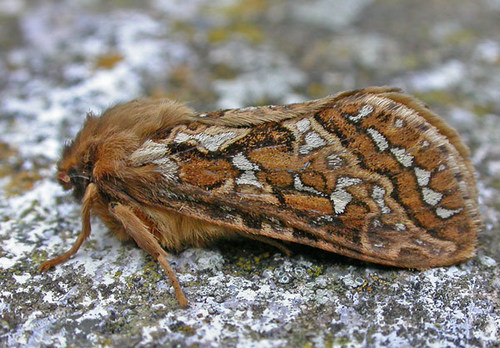
This species is commonly known as the map moth, named for the variegated pattern of its forewings. The forewings display a mix of black, brown, and white shades that resemble a map, though plainer color forms also exist. Unlike most other hepialid moths, males and females have very similar patterning. Females are typically larger, reaching a maximum wingspan of 50 mm. Adult moths fly from May to July, with flight extending to August in the northern parts of their range, and they are attracted to light, sometimes very strongly. This species spends two winters in its larval stage. It is strongly associated with bracken of the genus Pteridium, and is most often found in habitats where bracken grows, including moorland, heathland, and open woodland. Its larvae feed on roots, and have been recorded feeding on other ferns such as Polystichum, grasses such as red fescue, and potatoes. They likely feed on a wide variety of other plant species.