About Koenigia polystachya (Wall. ex Meisn.) T.M.Schust. & Reveal
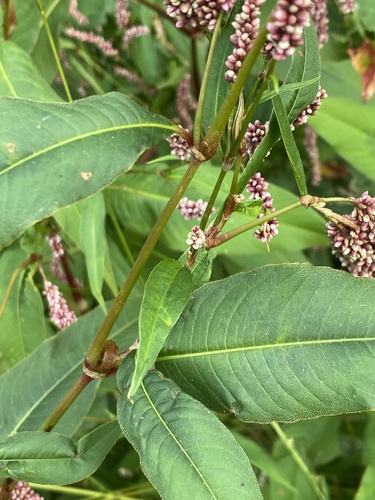
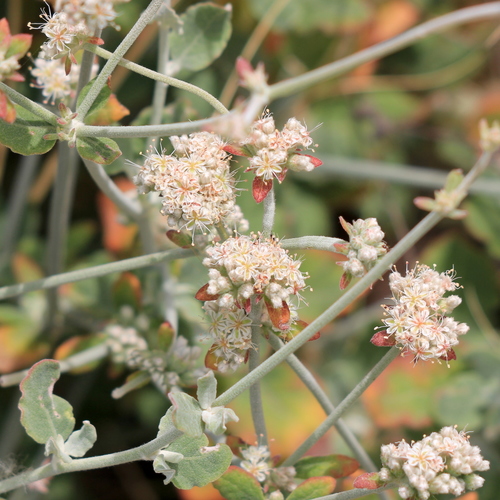
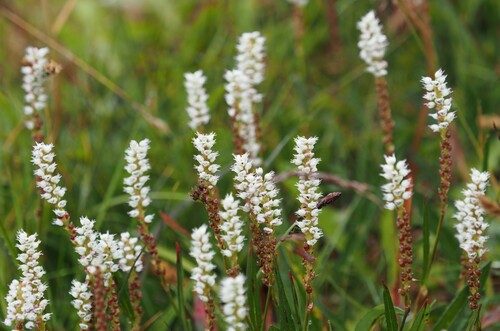
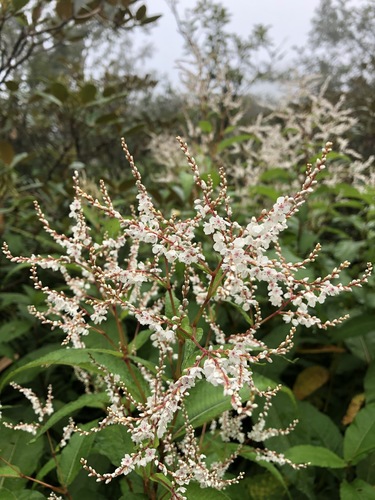
Koenigia polystachya is a flowering plant species that belongs to the knotweed family. It is commonly known as Himalayan knotweed and cultivated knotweed. It has several widely accepted synonyms, including Polygonum polystachyum, Aconogonon polystachyum, and Persicaria wallichii. This species is native to Asia, with its native range covering southwestern China, the Indian Subcontinent, Myanmar, and Afghanistan. It is cultivated as an ornamental plant in many locations around the world. It is capable of becoming an invasive species, and has already become established in parts of North America, mainly along the Pacific Coast of the United States and Canada. It also grows as an invasive weed in the mountains of Sri Lanka. Koenigia polystachya is a rhizomatous perennial herb. It grows thick, hollow, erect stems that can easily grow longer than one meter (40 inches). Through its rhizomes, it can form dense colonies. It can also spread asexually: if stem sections with rooting nodes become separated and moved to new locations, they can grow into new plants. Chopping the plant into small pieces does not always prevent it from regrowing. Its leaves are hairy and can grow up to 20 centimeters (8 inches) long. It produces a branching inflorescence made up of lacy clusters of many small white flowers. In the Sikkim and Darjeeling regions of India, this plant is called thothnay. Its pleasantly sour-tasting edible shoots and stems are eaten as a vegetable, or used to make piquant condiments and meal accompaniments.