About Kobus vardonii (Livingstone, 1857)
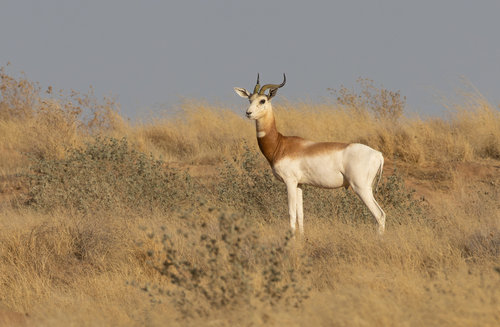
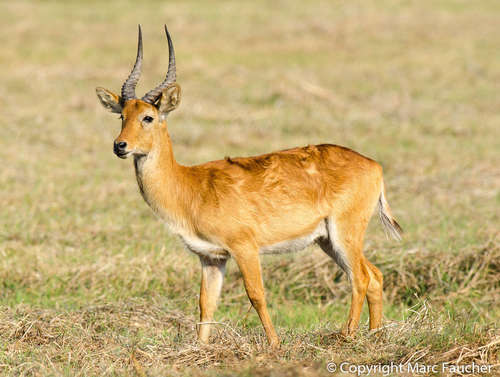
Puku (Kobus vardonii) stand approximately 80 cm (31 inches) at the shoulder, and weigh between 70 and 80 kg (150 to 180 pounds). Their body color is sandy brown, with a slightly lighter brown underbelly. Their coat is rougher than the coats of similar-sized southern reedbuck, lechwe, and impala, as well as the smaller oribi. Male puku have lyre-shaped, ridge-structured horns that reach 50 cm (20 inches) in length. Puku are found almost entirely in marshy grassland and dambos, where they feed on grasses. Their diet can include a wide range of grass types, so there is little dietary competition between puku and other bovid species. This species is crepuscular, meaning it is active during the early morning and late afternoon. When frightened, puku repeatedly produce a high, sharp whistle sound. Female puku form herds that can include up to 20 individuals. During the rainy season, these smaller herds gather into larger groups for safety, which typically contain around 50 females. Male puku establish and hold territories, and attempt to convince female herds to remain within their territories for as long as possible. In the wet season, large floods in their native habitat force puku to migrate to higher elevation; in the dry season, they stay close to water.