About Kobus leche Gray, 1850
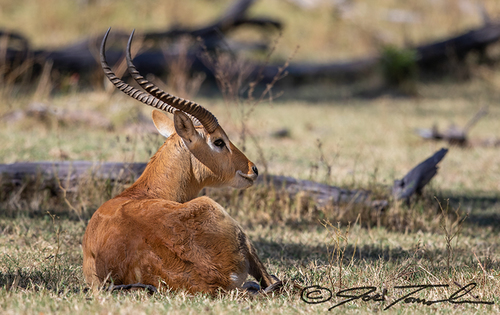
Adult lechwe (Kobus leche) typically measure 90 to 100 cm (35 to 39 in) at the shoulder and weigh 50 to 120 kg (110 to 260 lb), with males larger than females. Their base coat is golden brown, with white underbellies; males have a darker overall coat, and the exact hue, plus the amount of blackish marking on the front legs, chest, and body, varies by subspecies. Only males grow long, spiral horns that are vaguely lyre-shaped. Compared to other antelopes, lechwe have proportionally longer hind legs, an adaptation that makes long-distance running on marshy soil easier. Lechwe are native to Botswana, Zambia, southeastern Democratic Republic of the Congo, northeastern Namibia, and eastern Angola, and they occur most heavily in the Okavango Delta, Kafue Flats, and Bangweulu Wetlands. The species is fairly commonly held in zoos and wild animal farms. Lechwe mate during the rainy season, which runs from November to February. Their gestation period lasts seven to eight months, so most calves are born between July and September. Hybrids between lechwe and waterbuck have been observed, though such occurrences are rare.