About Kirinia roxelana (Cramer, 1777)
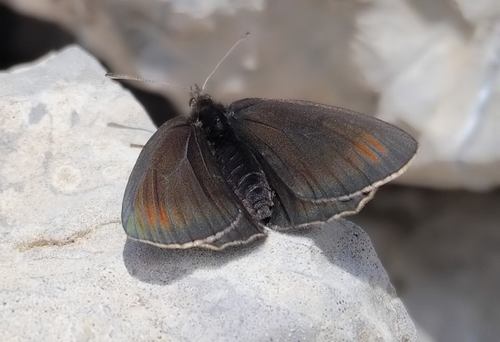
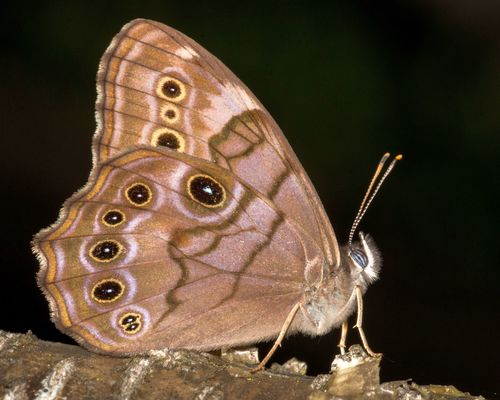
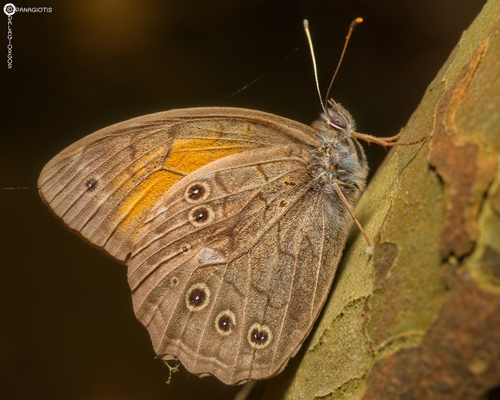
This species, known as the lattice brown butterfly, has a scientific name of Kirinia roxelana (Cramer, 1777). Forewing length measures 29 to 31 mm, or 1.1 to 1.2 inches. In Seitz's description, it is the largest species in the Pararge group, with strongly dentate hindwing margins that are especially pronounced in females. Males are black-brown, while females are grey-brown with a reddish-yellow forewing disc. The underside of the forewing is a fiery yellowish red with grey-brown margins; the underside of the hindwing has dark dentate lines and a curved row of unequal ocelli past its center. Early records note it occurs from Southeast Hungary to the Black Sea, across the Balkan Peninsula, Cyprus, Asia Minor, and Mesopotamia, found in both plains and mountains in June and July, and is not uncommon. It can be confused with the closely related lesser lattice brown (Kirinia climene), which shares part of its range. The overall distribution of the lattice brown covers southeastern Europe and the Near East, with a range extending from Bulgaria and southern Croatia through the Balkans to northern Iran, Turkey, and Israel, including many Aegean Sea islands. It occupies a variety of habitats: warm dry grassland, scrubland with rocks near woodland, forest verges, vineyards, and olive groves with stone walls. This butterfly produces one generation per year, with adults flying between April and September, and are most frequently seen from May to July. Eggs are laid on broad-leaved grasses, most often at the base of walls or rocks. Caterpillars are fusiform, green, with longitudinal yellowish and pale green stripes. They overwinter in the caterpillar stage, then pupate among vegetation in spring before emerging as adult butterflies.