Fungi — 1,980 Species
Top Families in Fungi
All Fungi Species
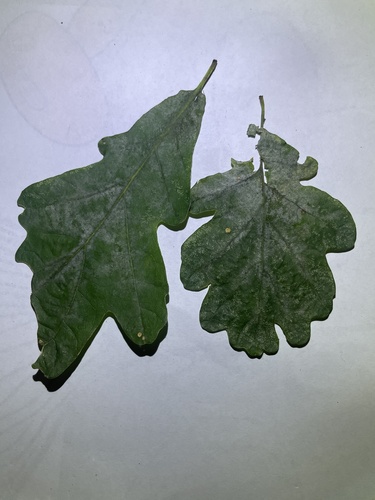
Erysiphe alphitoides (Griffon & Maubl.) U.Braun & S.Takam.
Erysiphe alphitoides (Griffon & Maubl.) U.Braun & S.Takam.
Erysiphe alphitoides is a mostly oak-specific powdery mildew fungus found worldwide that causes moderate disease in oaks.
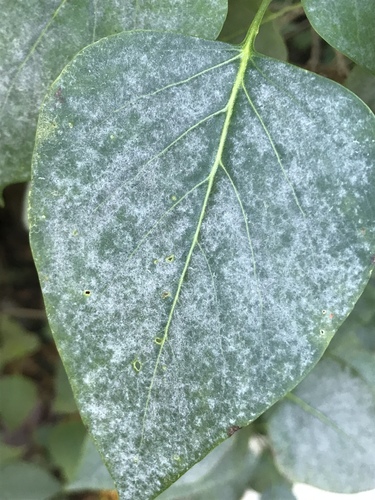
Erysiphe syringae Schwein.
Erysiphe syringae Schwein.
Erysiphe syringae, the cause of lilac powdery mildew, is a fungal pathogen of lilac plants.
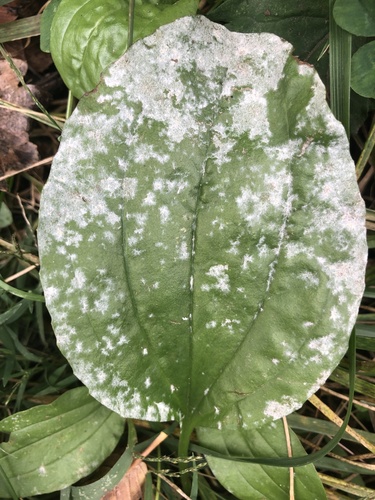
Golovinomyces sordidus (L.Junell) V.P.Heluta
Golovinomyces sordidus (L.Junell) V.P.Heluta
Golovinomyces sordidus is a common widespread fungus that infects plantains, best identified by microscopy on shared hosts.
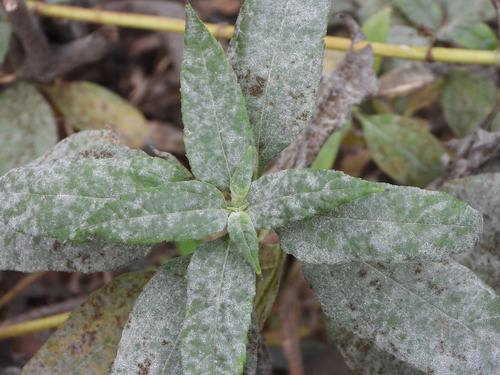
Golovinomyces latisporus (U.Braun) P.L.Qiu & S.Y.Liu
Golovinomyces latisporus (U.Braun) P.L.Qiu & S.Y.Liu
Golovinomyces latisporus is a powdery mildew plant pathogen that infects sunflowers and likely Heliopsis.
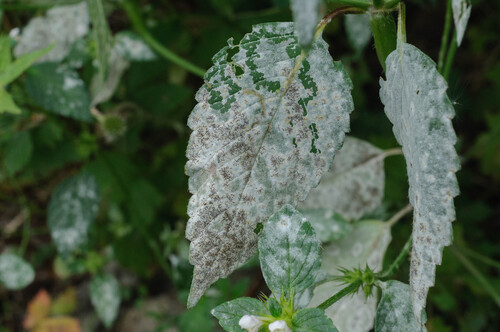
Neoerysiphe galeopsidis (DC.) U.Braun
Neoerysiphe galeopsidis (DC.) U.Braun
Neoerysiphe galeopsidis is a fungus that forms white fuzzy leaf patches, infects many plant genera and may be split taxonomically.
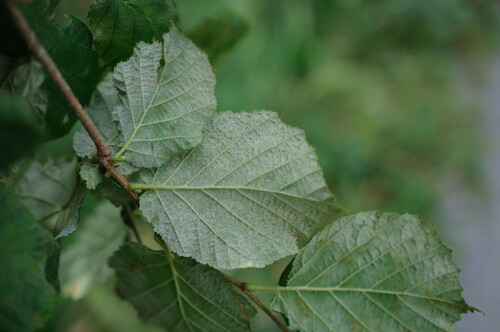
Phyllactinia guttata (Wallr.) Lév.
Phyllactinia guttata (Wallr.) Lév.
Phyllactinia guttata is a fungus species with unique penicillate cell branchlets, found in temperate regions worldwide.
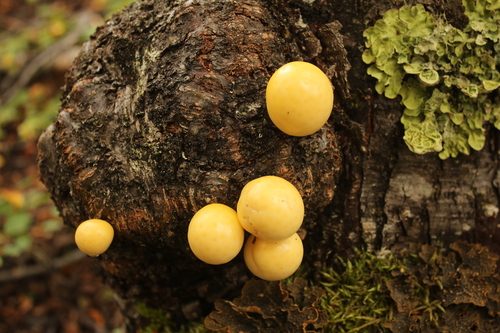
Cyttaria darwinii Berk.
Cyttaria darwinii Berk.
Cyttaria darwinii Berk. is an 8-spored ascomycete that grows on Nothofagus exclusively in the Southern Hemisphere.
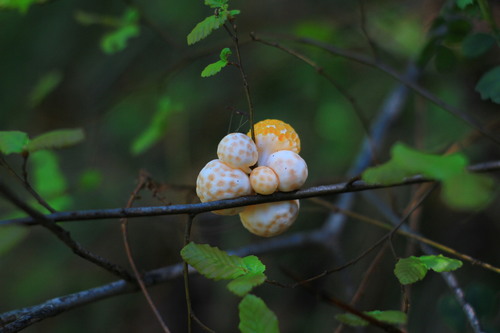
Cyttaria espinosae Lloyd
Cyttaria espinosae Lloyd
Cyttaria espinosae (digüeñe) is a Nothofagus parasite from southern South America, traditionally eaten by the Mapuche.
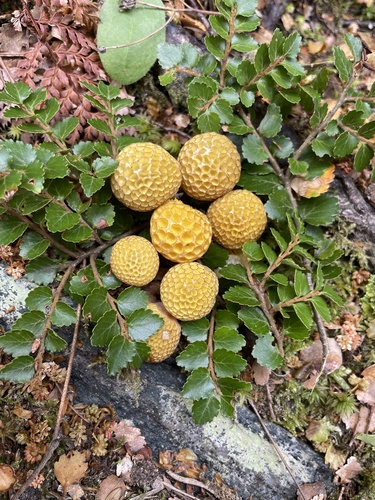
Cyttaria gunnii Berk.
Cyttaria gunnii Berk.
Cyttaria gunnii is an edible parasitic fungus native to Australia that grows on myrtle beech trees.
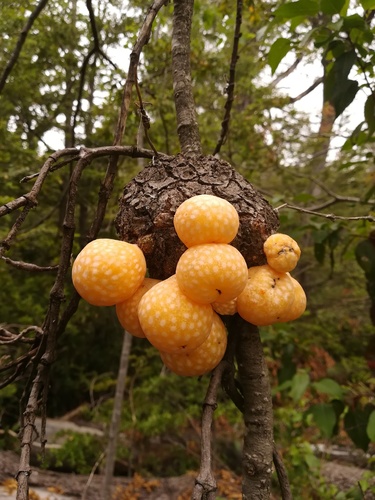
Cyttaria hariotii E.Fisch.
Cyttaria hariotii E.Fisch.
Cyttaria hariotii is an edible parasitic fungus found in Patagonia, grown on southern beeches and used to make sweet foods.
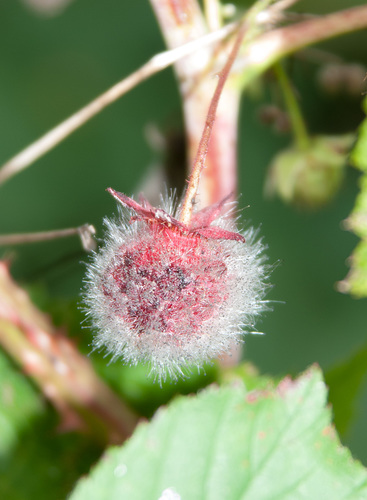
Botrytis cinerea Pers.
Botrytis cinerea Pers.
Botrytis cinerea is a necrotrophic plant pathogenic fungus that causes both destructive grey rot and desirable noble rot in grapes.
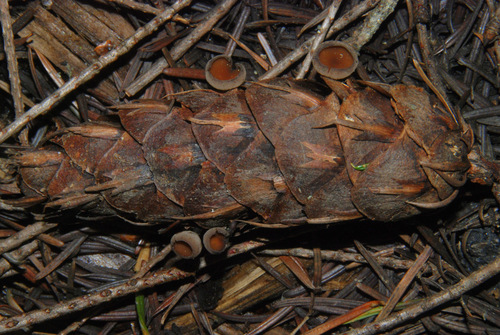
Ciboria rufofusca (O.Weberb.) Sacc.
Ciboria rufofusca (O.Weberb.) Sacc.
Ciboria rufofusca is an ascomycete cup fungus that grows exclusively on fallen conifer cone scales.
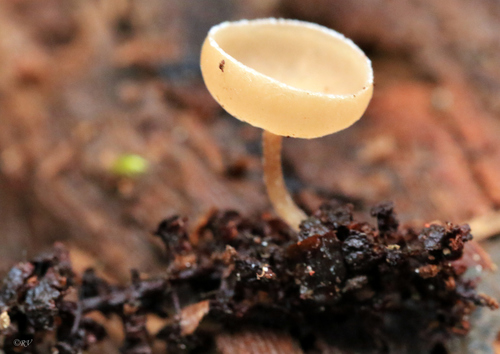
Ciboria amentacea (Balb.) Fuckel
Ciboria amentacea (Balb.) Fuckel
Ciboria amentacea, the catkin cup, is a widespread ascomycete fungus that grows on willow and alder catkins.
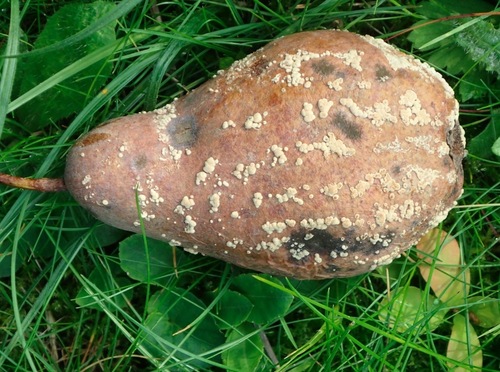
Monilinia fructigena (Pers.) Honey
Monilinia fructigena (Pers.) Honey
Monilinia fructigena is a pathogenic fungus that causes fruit rot in several common fruit tree species.
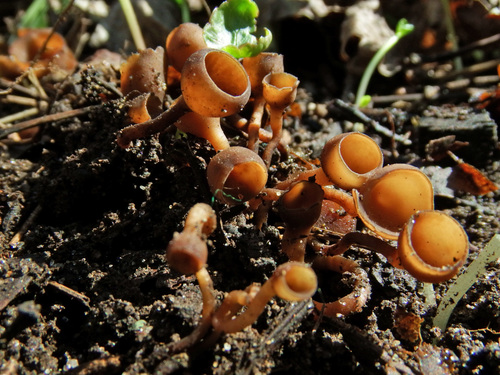
Dumontinia tuberosa (Bull.) L.M.Kohn
Dumontinia tuberosa (Bull.) L.M.Kohn
Dumontinia is a monotypic fungal genus in Sclerotiniaceae holding one European species, Dumontinia tuberosa, named for Kent Parsons Dumont.
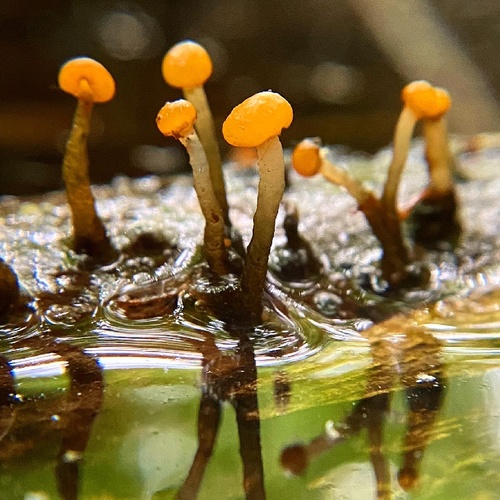
Vibrissea truncorum (Alb. & Schwein.) Fr.
Vibrissea truncorum (Alb. & Schwein.) Fr.
Vibrissea truncorum, the water club mushroom, is a small Northern Hemisphere fungus that grows on submerged stream wood.
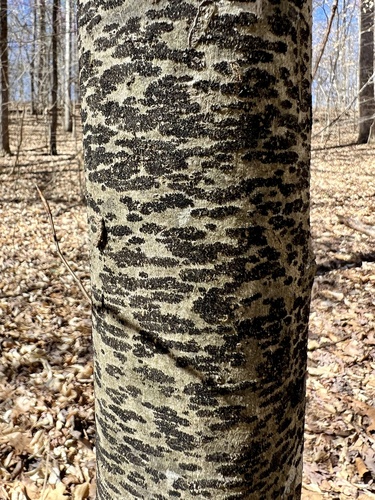
Ascodichaena rugosa Butin
Ascodichaena rugosa Butin
Ascodichaena rugosa is a fungus in Ascodichaenaceae, first described in 1753, reclassified to its current genus in 1977 as the type species.
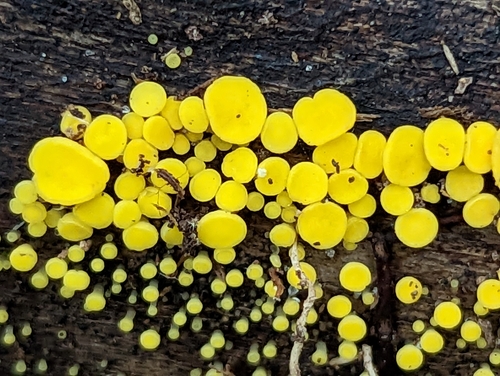
Calycina citrina (Hedw.) Gray
Calycina citrina (Hedw.) Gray
Calycina citrina is a widespread common small yellow saprobic fungus growing on rotten deciduous wood, not edible.
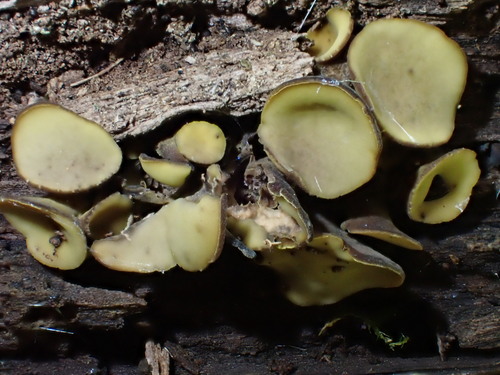
Chlorencoelia versiformis (Pers.) J.R.Dixon
Chlorencoelia versiformis (Pers.) J.R.Dixon
Chlorencoelia versiformis is a fungus in the Hemiphacidiaceae family, first described in 1798 and reclassified to its current genus in 1975.
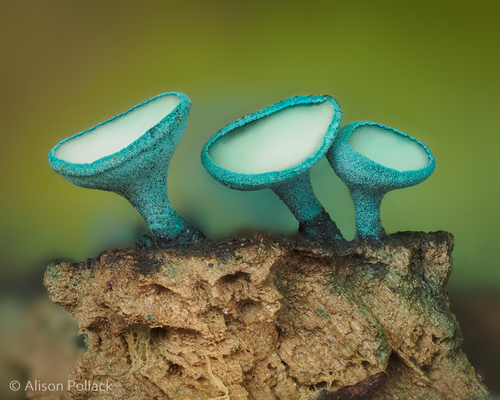
Chlorociboria aeruginosa (Oeder) Seaver
Chlorociboria aeruginosa (Oeder) Seaver
Chlorociboria aeruginosa is a greenish cup fungus that grows on bark-free hardwood, differing from C. aeruginascens in spore size and hyphae texture.
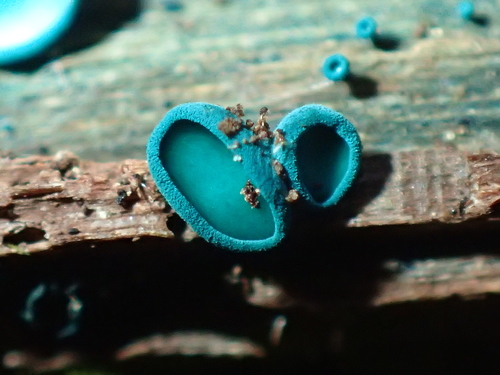
Chlorociboria aeruginascens (Nyl.) Kanouse
Chlorociboria aeruginascens (Nyl.) Kanouse
Chlorociboria aeruginascens is a fungus that forms small green-staining apothecia on debarked wood, with defined microscopic features.
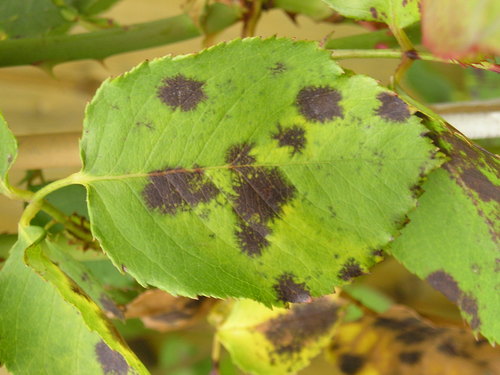
Diplocarpon rosae (Lib.) F.A.Wolf
Diplocarpon rosae (Lib.) F.A.Wolf
Diplocarpon rosae is the fungus that causes rose black spot, thriving in warm, wet conditions with prolonged leaf wetness.
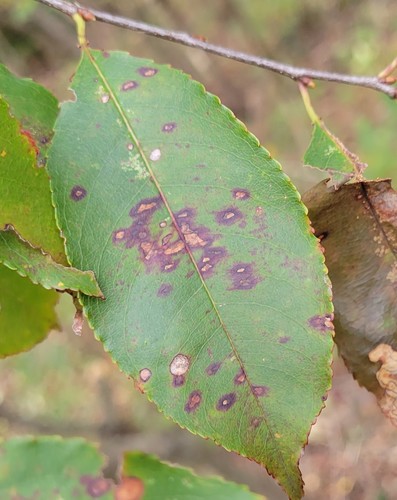
Blumeriella jaapii (Rehm) Arx
Blumeriella jaapii (Rehm) Arx
Blumeriella jaapii is a fungus that causes the serious cherry and plum disease cherry leaf spot.
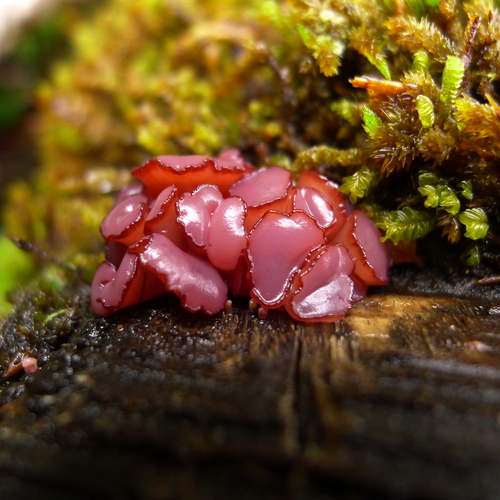
Ascocoryne sarcoides (Jacq.) J.W.Groves & D.E.Wilson
Ascocoryne sarcoides (Jacq.) J.W.Groves & D.E.Wilson
Ascocoryne sarcoides is a pinkish-purple gelatinous fungus, saprobic on decaying wood with a broad global distribution, not considered edible.
Start Exploring Nature Today
Download iNature for free. 10 identifications on us. No account needed. No credit card required.
Download Free on App Store
