Animals — 36,937 Species
Top Families in Animals
All Animals Species
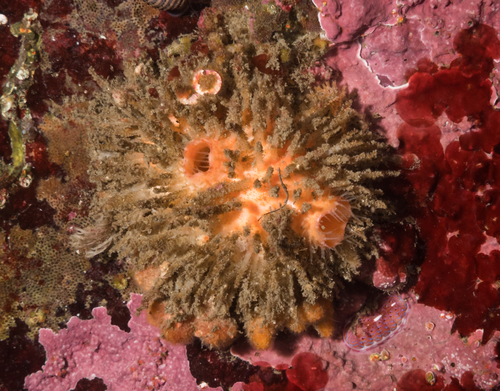
Halocynthia igaboja Oka, 1906
Halocynthia igaboja Oka, 1906
Halocynthia igaboja (the sea hedgehog) is a large spiny solitary tunicate found in the northern Pacific.
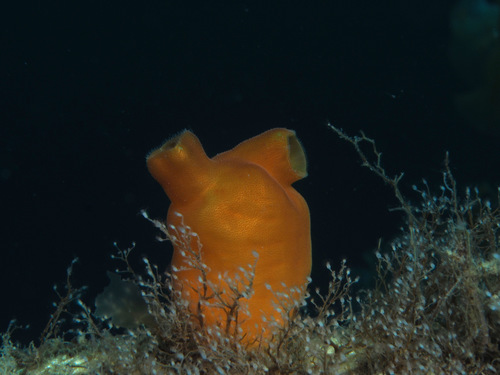
Halocynthia aurantium (Pallas, 1787)
Halocynthia aurantium (Pallas, 1787)
Halocynthia aurantium, the sea peach, is a northern Pacific tunicate species preyed on by crabs and sea stars.
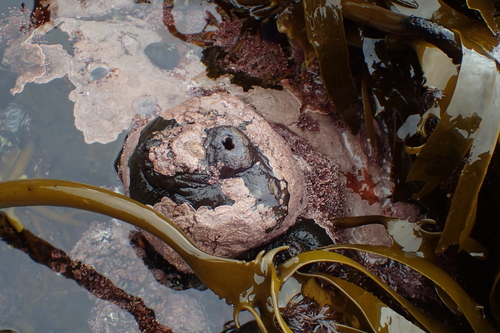
Pyura stolonifera (Heller, 1878)
Pyura stolonifera (Heller, 1878)
Pyura stolonifera is a large solitary ascidian found in temperate southern African coastal marine waters from intertidal to 10m depth.
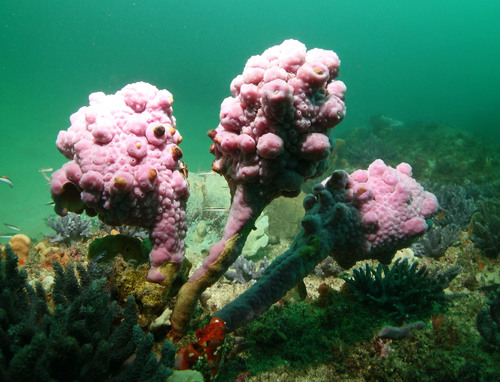
Pyura spinifera (Quoy & Gaimard, 1834)
Pyura spinifera (Quoy & Gaimard, 1834)
Pyura spinifera, the sea tulip, is a colorful sessile filter-feeding ascidian found in coastal waters up to 80m deep.
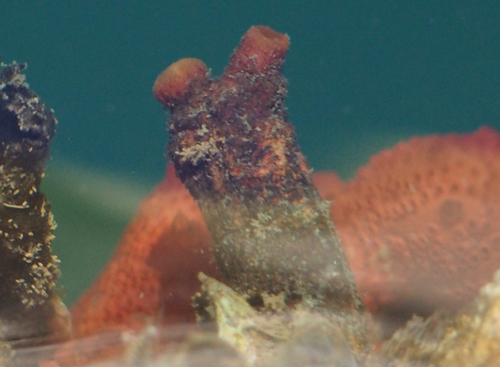
Pyura haustor (Stimpson, 1864)
Pyura haustor (Stimpson, 1864)
Pyura haustor is a globular sea squirt native to the northeastern Pacific, found from Alaska to Southern California.
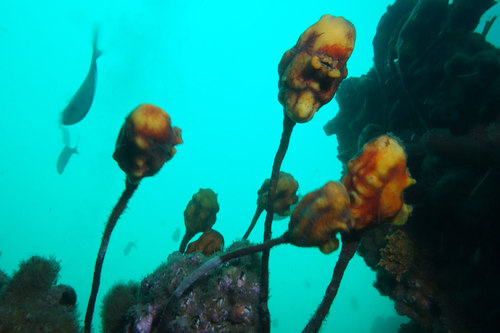
Pyura gibbosa (Heller, 1878)
Pyura gibbosa (Heller, 1878)
Pyura gibbosa is a sessile subtropical Australian sea squirt in the family Pyuridae, first described in 1878 by Camill Heller.
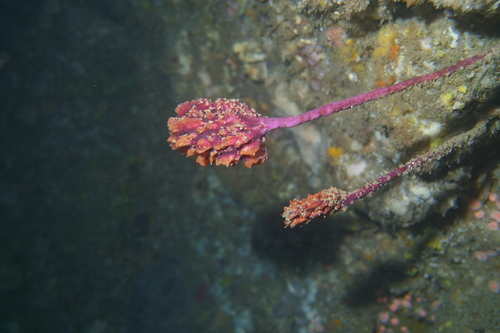
Pyura pachydermatina (Herdman, 1881)
Pyura pachydermatina (Herdman, 1881)
Pyura pachydermatina is a large, club-shaped tunicate native to the shallow cool seas around New Zealand.
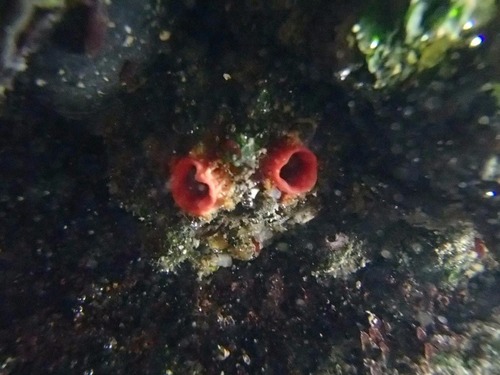
Pyura chilensis Molina, 1782
Pyura chilensis Molina, 1782
Pyura chilensis is a vanadium-accumulating tunicate found off the coasts of Chile and Peru with unconfirmed claims of effects on human reproduction.
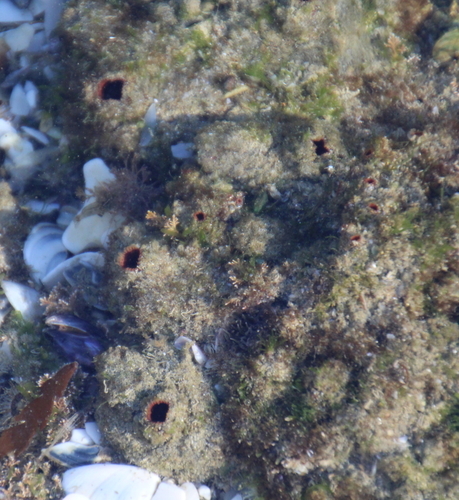
Pyura praeputialis (Heller, 1878)
Pyura praeputialis (Heller, 1878)
Pyura praeputialis, the cunjevoi tunicate, is native to Australian coasts and a notable ecosystem engineering marine species.
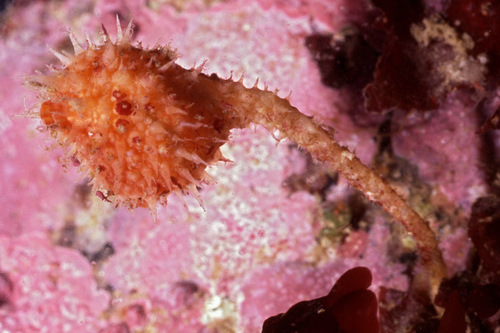
Boltenia villosa (Stimpson, 1864)
Boltenia villosa (Stimpson, 1864)
Boltenia villosa is a solitary barrel-shaped tunicate found in the northeastern Pacific and Arctic Oceans.
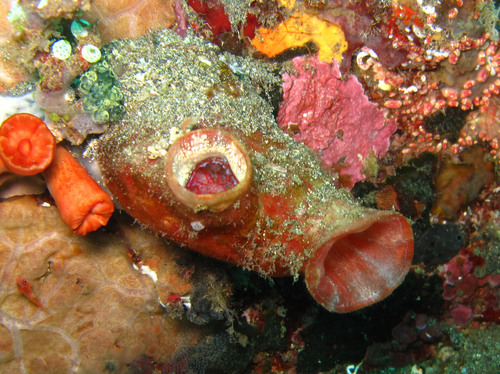
Herdmania momus (Savigny, 1816)
Herdmania momus (Savigny, 1816)
Herdmania momus, the red-throated ascidian, is a common sessile filter-feeding solitary ascidian found on rocks at 3–50m depth.
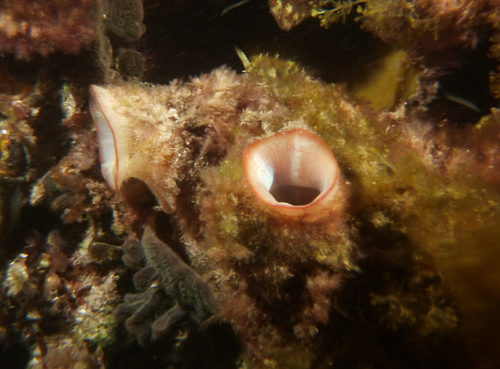
Herdmania grandis (Heller, 1878)
Herdmania grandis (Heller, 1878)
Herdmania grandis is a sea squirt species in the family Pyuridae, first described in 1878 with current synonymy based on 2002 work.
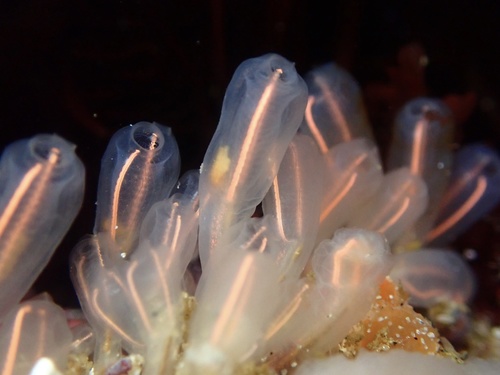
Clavelina huntsmani Van Name, 1931
Clavelina huntsmani Van Name, 1931
Clavelina huntsmani, the lightbulb tunicate, has transparent zooids in large clusters, named for its pink light bulb filament-like lines.
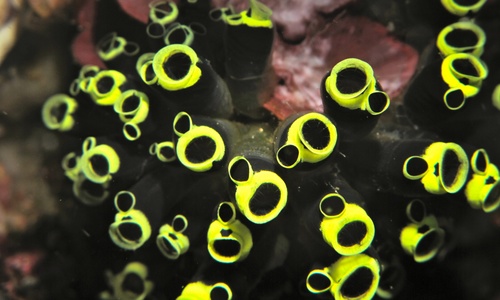
Clavelina robusta Kott, 1990
Clavelina robusta Kott, 1990
Clavelina robusta is a clustered colonial tunicate with colored ringed siphons found in the Western Pacific region.
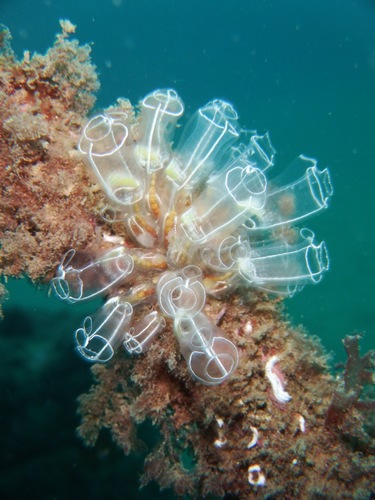
Clavelina lepadiformis (Müller, 1776)
Clavelina lepadiformis (Müller, 1776)
Clavelina lepadiformis is a common shallow-water European ascidian with a transparent tunic and cryptic species in the Mediterranean.

Clavelina moluccensis (Sluiter, 1904)
Clavelina moluccensis (Sluiter, 1904)
Clavelina moluccensis is a blue tunicate with dark blue markings found across the Western Pacific that grows in clusters on hard substrates.
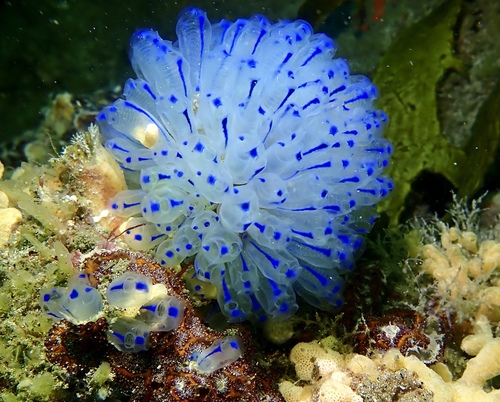
Clavelina australis (Herdman, 1899)
Clavelina australis (Herdman, 1899)
Clavelina australis is a sessile colonial filter-feeding ascidian found in shallow waters off southeastern Australia.
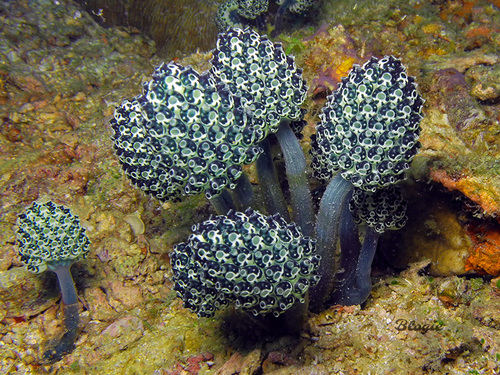
Nephtheis fascicularis (Drasche, 1882)
Nephtheis fascicularis (Drasche, 1882)
Nephtheis fascicularis is a single-species genus Indonesian shallow reef tunicate, unrelated to true corals despite common names like blue palm coral.
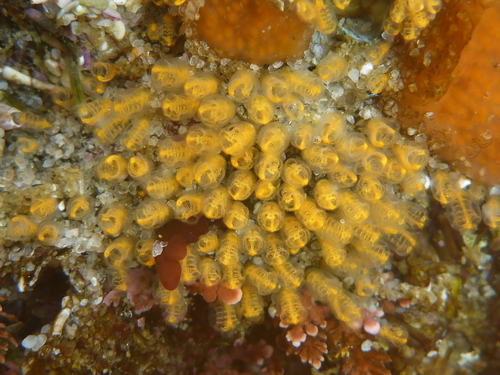
Pycnoclavella stanleyi Berrill & Abbott, 1949
Pycnoclavella stanleyi Berrill & Abbott, 1949
Pycnoclavella stanleyi is a small sessile colonial tunicate found in shallow Eastern Pacific waters from British Columbia to Baja California.
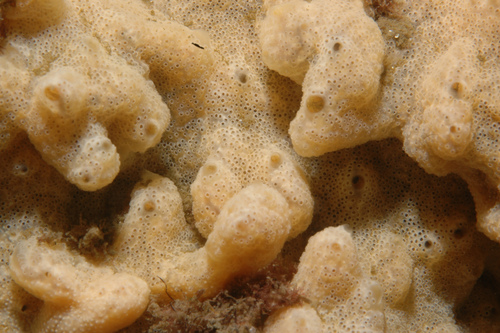
Didemnum vexillum Kott, 2002
Didemnum vexillum Kott, 2002
Didemnum vexillum, the colloquial "sea cheese", is an invasive tunicate spread globally through shipping and aquaculture.
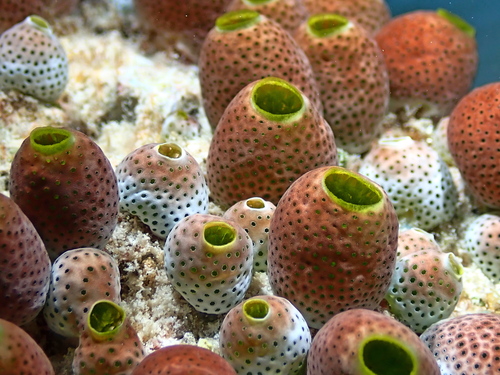
Didemnum molle (Herdman, 1886)
Didemnum molle (Herdman, 1886)
Didemnum molle is a common colonial tunicate native to the western Indo-Pacific, hosting symbiotic cyanobacteria in its tissues.
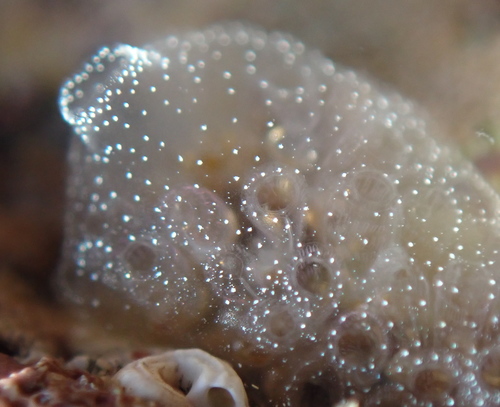
Diplosoma listerianum (Milne Edwards, 1841)
Diplosoma listerianum (Milne Edwards, 1841)
Diplosoma is a cosmopolitan genus of tunicates in the tunicate family Didemnidae.
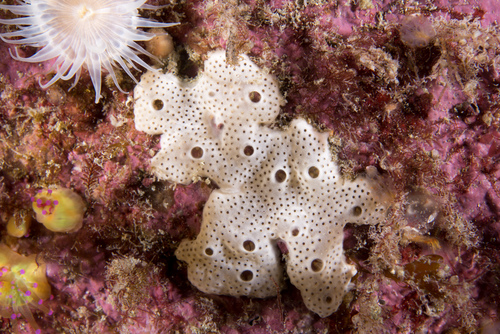
Lissoclinum perforatum (Giard, 1872)
Lissoclinum perforatum (Giard, 1872)
Lissoclinum perforatum is a species of tunicate first described by Alfred Mathieu Giard in 1872.
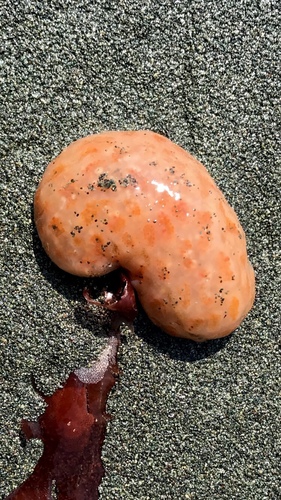
Aplidium californicum (Ritter & Forsyth, 1917)
Aplidium californicum (Ritter & Forsyth, 1917)
Aplidium californicum is a compound tunicate found along the Pacific coast of North America and the Galapagos Islands.
Start Exploring Nature Today
Download iNature for free. 10 identifications on us. No account needed. No credit card required.
Download Free on App Store
