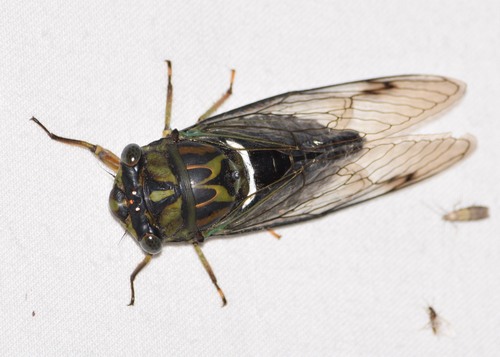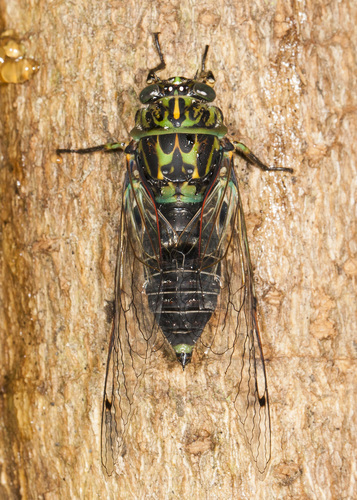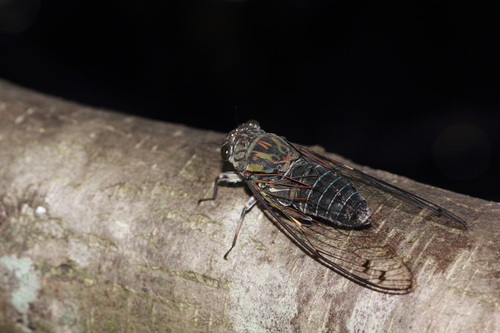
About Kikihia ochrina (Walker, 1858)
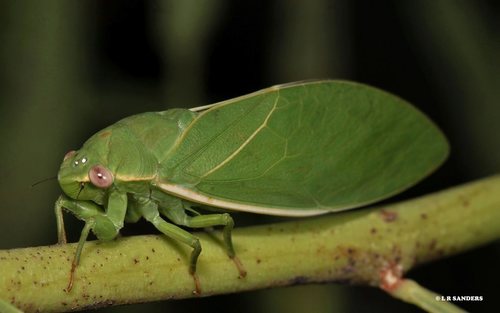
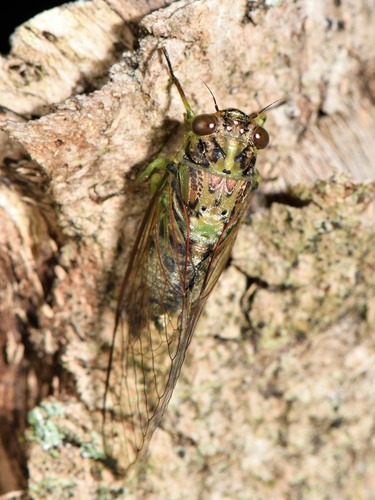
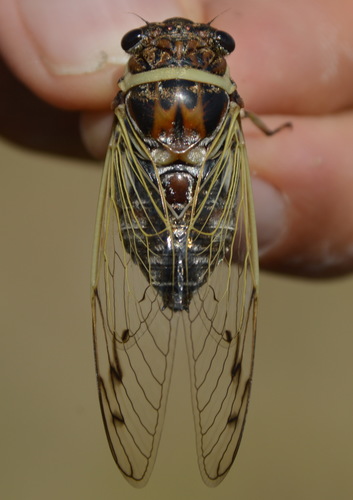
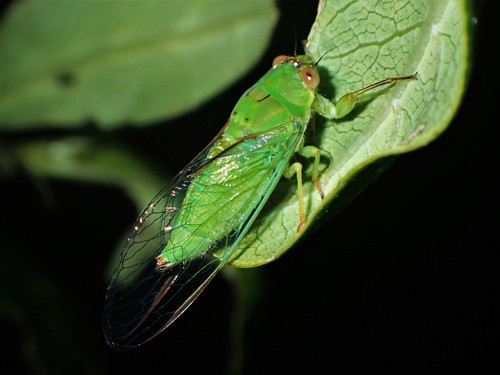
Kikihia ochrina is bright green in color, with only a few dark markings. The most prominent of these markings are two sickle-shaped lines and two dots on the middle section of the thorax. This species can be told apart from its close relative Kikihia dugdalei by its green legs, which do not have the pink patches that mark K. dugdalei's legs. Male K. ochrina also always lack the pair of small black spots on the underside that are present on most male K. dugdalei specimens. Noted New Zealand entomologist George Hudson considered this species the most beautiful of New Zealand cicadas, and described its song as "very quick and shrill".
K. ochrina is found in the North Island and the Three Kings Islands of New Zealand, and also in Canterbury, where it was likely introduced. It lives in evergreen trees and shrubs, particularly broad-leaf native species such as Coprosma, Hebe and Myoporum, as well as introduced trees like poplars. It commonly emerges from soil underneath the mahoe tree.
K. ochrina, commonly called the April green cicada, is present each summer. Its eggs are likely laid between January and May, with egg-laying peaking in March. Eggs develop over winter, and nymphs hatch in summer, most probably sometime in December. This means eggs take 7 to 11 months to mature. Once hatched, nymphs immediately bury themselves underground, where they develop for a further two years before emerging. After emerging, they shed their exoskeleton and moult into adults. This species has a median total life cycle of approximately three years. Hudson observed that adult K. ochrina first appear around February, and are most abundant in April.