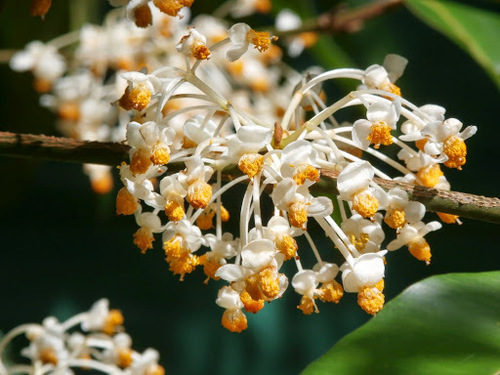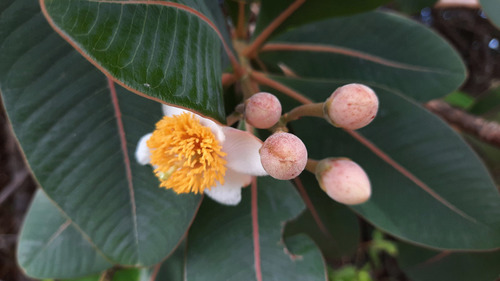
About Kielmeyera coriacea Mart.
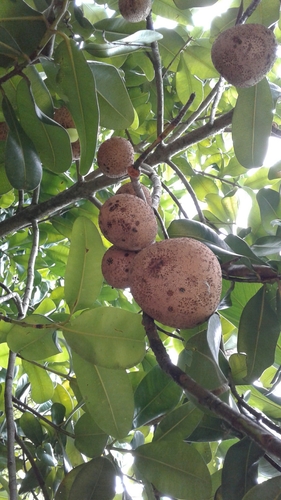
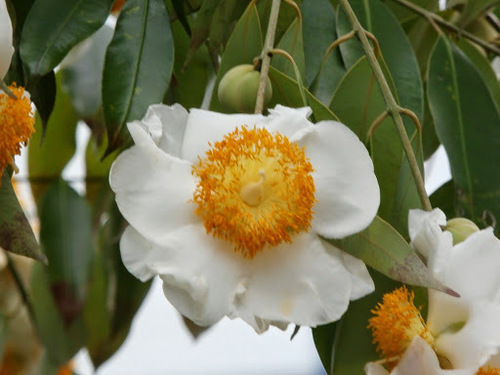
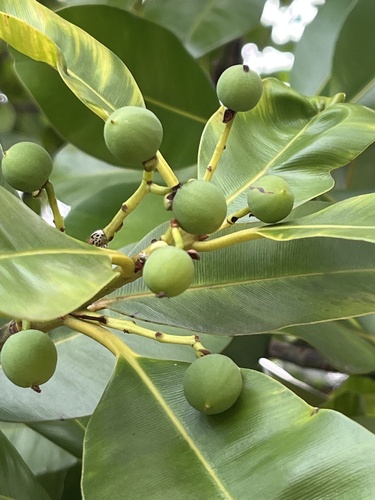
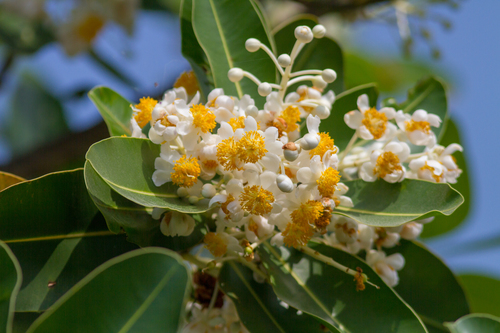
Kielmeyera coriacea Mart. is a species in the botanical family Calophyllaceae. It grows as a small deciduous tree or shrub, typically reaching 1 to 4 meters in height, though it has also been described as a small evergreen tree with a cylindrical but contorted trunk. Its stem is covered in a prominent cork bark that can reach several centimeters thick; the periderm contains 1.1–1.8 cm of cork with only a few phloem inclusions, and the full bark is approximately 3 cm thick. The bark yields a yellow resin that is characterized as emollient and tonic. This species is notably quite common in cemeteries of Brazil’s Federal District, and its flowering coincides with All Souls’ Day. K. coriacea is native from eastern Bolivia through Brazil to Paraguay, growing primarily in the seasonally dry tropical biome. Within Brazil, it is native to the states of Goiás, São Paulo, Rondônia, Pará, Maranhão, Mato Grosso, Distrito Federal, Minas Gerais, Bahia, Paraná, Tocantins, Mato Grosso do Sul, and Piauí. It is native to the savannah-type ecosystems of the Brazilian Cerrado, and has been described as one of the most peculiar species of this Central Brazilian savanna-like vegetation. Traditionally, the native population of Brazil uses K. coriacea to treat several tropical diseases, including malaria, schistosomiasis, leishmaniasis, and fungal or bacterial infections. It is also used to treat toothache, and was once widely sought after for use in fomentations. It is added to bath water, and its yellow resin is reputed to be emollient and tonic. Studies on rats have found that the hydroethanolic extract of K. coriacea appears to act on the central nervous system, producing anxiolytic and antidepressant effects. In the scientific literature, K. coriacea is noted as the main tree species that produces cork in the Brazilian Cerrado. It has been studied as a potential source of industrial cork, since all current commercial cork comes from just one species, Quercus suber (cork-oak), which only grows in the western Mediterranean region. The cork cells of K. coriacea have a similar distribution to those of Q. suber: they have 4 to 8 sides, with hexagonal cells predominating. Cell walls have an average height of 40 to 70 μm and an average thickness of 1.5 to 2.0 μm. Cork tissue can be detached from the stem, and the tree has a high capacity to regenerate its periderm and cork. This has led to suggestions that the species could be exploited via successive cork removals on 5- to 6-year rotations. K. coriacea also holds economic interest for the production of wood, cellulose, and tannin for the leather industry.