About Khaya senegalensis (Desv.) A.Juss.
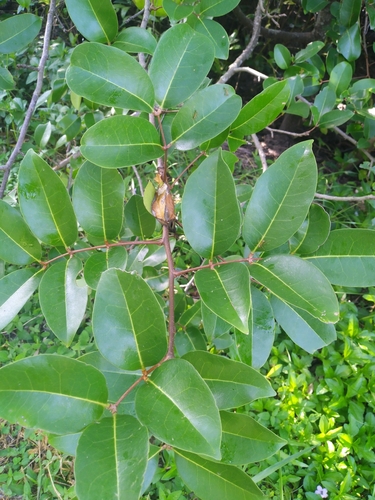
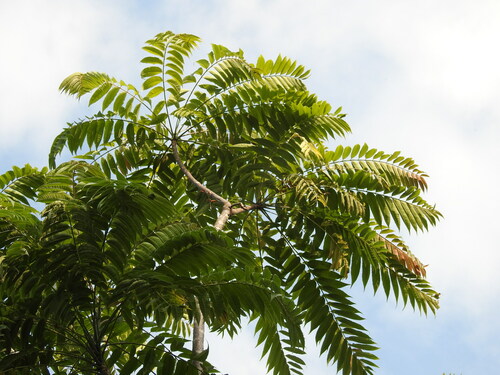
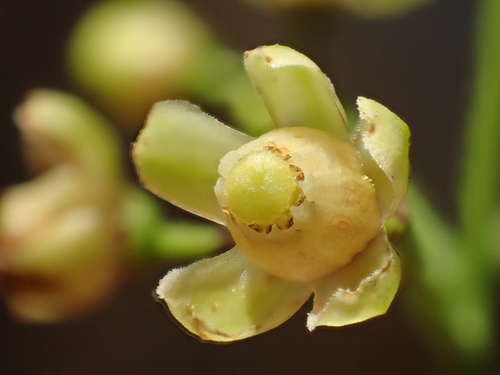
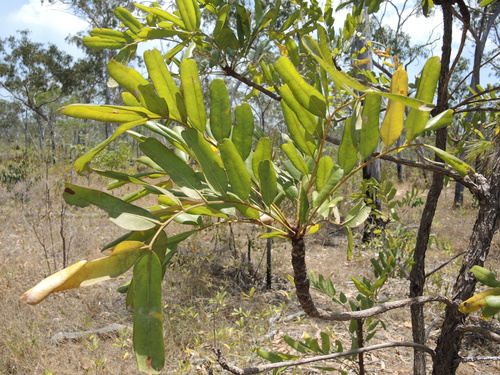
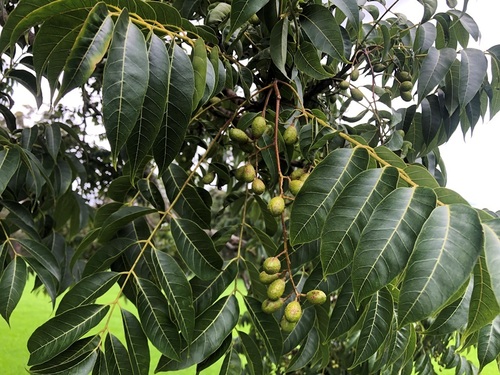
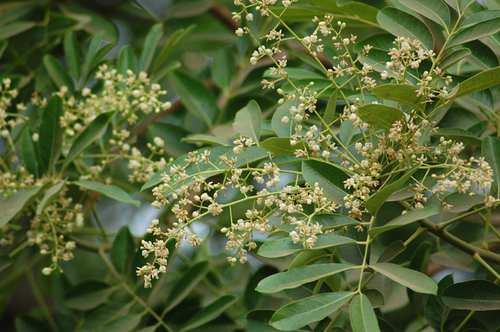
Khaya senegalensis, commonly called African mahogany, is a fast-growing medium-sized tree that reaches heights of 15–30 m (49–98 ft) and trunk diameters up to 1 m (3 ft 3 in). Its bark is dark grey to grey-brown, while its heartwood is brown with a pink-red tint and features coarse interlocking grains. This species is distinguished by its leaves, which grow in a spiral arrangement and cluster at the ends of branches. It produces sweet-scented white flowers, and its fruit changes color from grey to black when it ripens. This tree is native to Benin, Burkina Faso, Cameroon, the Central African Republic, Chad, Ivory Coast, Gabon, the Gambia, Ghana, Guinea, Guinea-Bissau, Mali, Niger, Nigeria, Senegal, Sierra Leone, Sudan, Togo, and Uganda. It grows naturally in riparian forests and higher-rainfall savannah woodlands, and occurs on higher ground in moist regions. Seedlings develop a deep root system within their first year, making this species the most drought-resistant member of its genus. K. senegalensis has been extensively studied for trypanocidal activity. Multiple studies published between 2003 and 2013 (Atawodi et al 2003, Wurochekke and Nok 2004, Mikail 2009, Aderbauer et al 2008, Umar et al 2010, Adeiza et al 2010, Ibrahim et al 2008, Ibrahim et al 2013a) investigated stem bark extracts both in vitro and in vivo in rats, against Trypanosoma evansi, T. congolense and T. b. brucei. All studies found promising results, and a few identified an effective dose for the extracts. The wood of K. senegalensis is used for many purposes. It is commonly used conventionally for carpentry, interior trim, and construction. Traditional uses of the wood include making dugout canoes, household implements, and djembes, as well as use as fuel wood. The tree's bitter-tasting bark has a range of traditional medical uses: it is taken internally to treat malaria-induced fever, stomach issues, and headaches, and applied externally to treat skin rashes, wounds, and other skin abnormalities. This species has been exported from West Africa (the Gambia) to Europe since the first half of the 19th century, and was heavily exploited for its timber. Today it is mostly used locally, and is also planted as an ornamental roadside tree.