About Kalmia polifolia Wangenh.
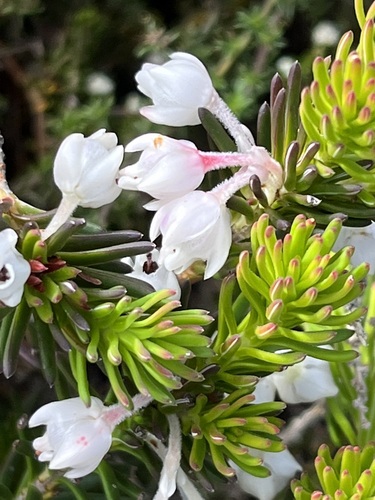
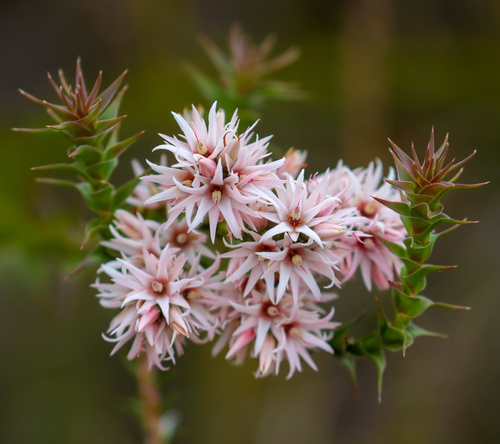
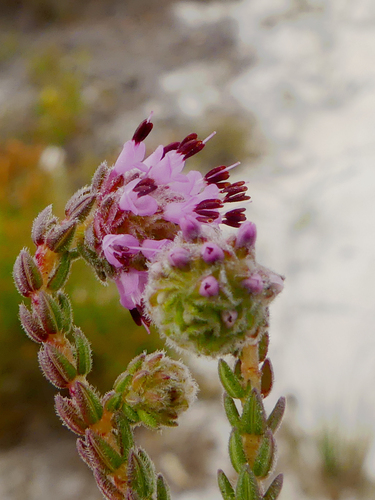
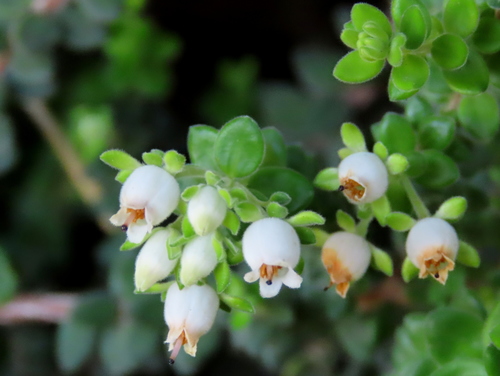
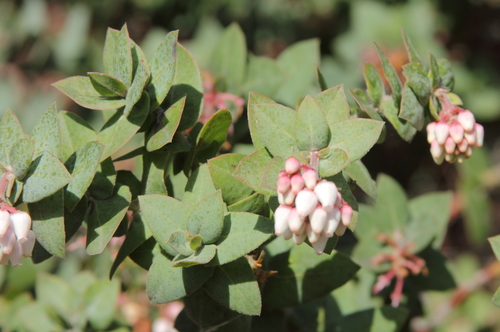
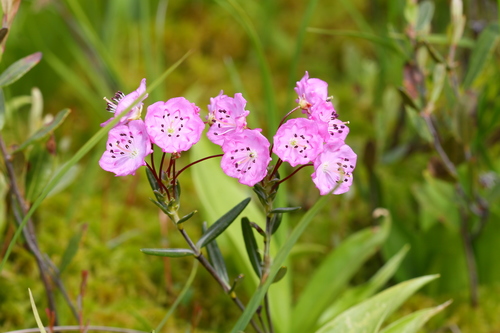
Kalmia polifolia Wangenh. flowers in April and is pollinated by bees. After pollinating this plant, bees produce poisonous honey. Its seeds ripen in September; the seeds are five-parted, round, and woody. This plant can grow up to two feet tall. Its leaves are arranged oppositely on branches, reaching 1 to 1.5 inches in length. Leaves are typically waxy with entire, revolute margins. Below each leaf base there are ridges, where part of the leaf appears curled around the stem circumference, a feature that is especially noticeable lower on the plant. The petiole base is pressed against the stem, and flowers grow in a single terminal cluster. Flowers are pink or purple, nearly cup-shaped, and around three-eighths of an inch in diameter.
Kalmia polifolia is common across Northern North America. It thrives in eastern U.S. states and Montana, and is found in every Canadian province except British Columbia, though it has been recorded at Rhododendron Lake near Vancouver Island. In Canada, it is very common in eastern Nova Scotia, where bog conditions are frequent. It has also been recorded in a bog in Surrey, England.
Every part of Kalmia polifolia is highly toxic to humans and animals. It is related to Kalmia angustifolia (lambkill), and is less toxic than that species. Some Indigenous groups have used the toxic leaves of this plant for suicide. According to Alaback et al., Kalmia polifolia contains grayanotoxin, which lowers blood pressure when ingested, and can cause respiratory problems, dizziness, vomiting, or diarrhea. According to Lewis and Elvin-Lewis, the active compounds in Kalmia polifolia are andromedotoxin and arbutin, which cause slowed pulse, lowered blood pressure, progressive paralysis, and death. Kalmia polifolia has poisoned cattle, goats, and sheep. Poisoning occurs when an animal consumes 0.3% of its body weight in the plant, while a dosage of 2% of the animal's body weight causes severe sickness. Affected goats show symptoms including depression, nausea, salivation, vomiting, and teeth grinding. Affected sheep show symptoms including depression, staggering, nausea, recumbency, salivation, and vomiting.
Kalmia polifolia can be used as medicine: topical applications treat skin wounds, skin disease, and skin inflammation, while internal use addresses bleeding and diarrhea. Caribou, which do not have specialized feeding habits and eat most plants (preferring fungi, green leaves of deciduous shrubs, and new spring sedge growth), often eat Kalmia polifolia in spring and summer. This plant makes up 11% of caribou's dietary dry-matter protein.