About Kadsura japonica (L.fil.) Dunal
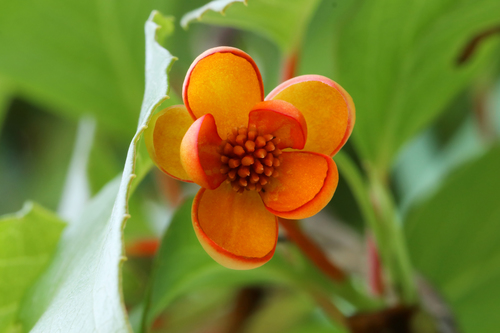
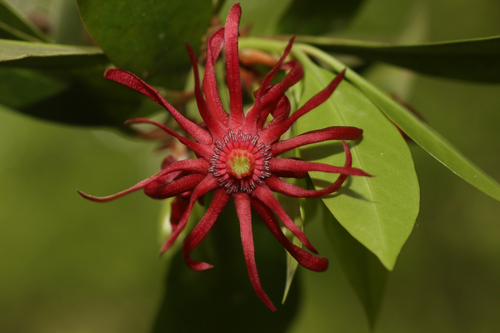
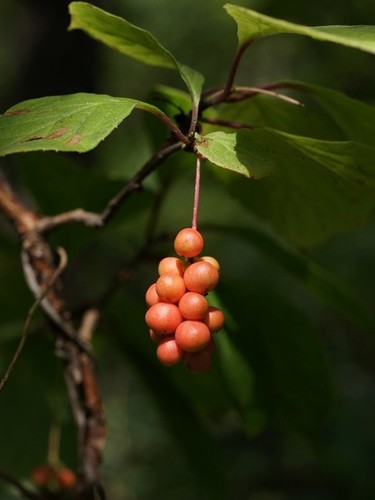
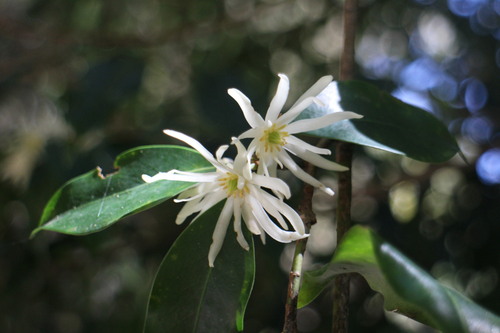
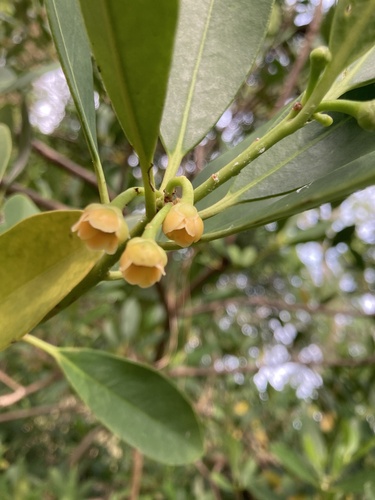
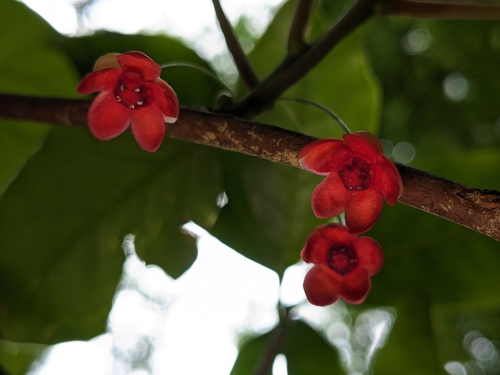
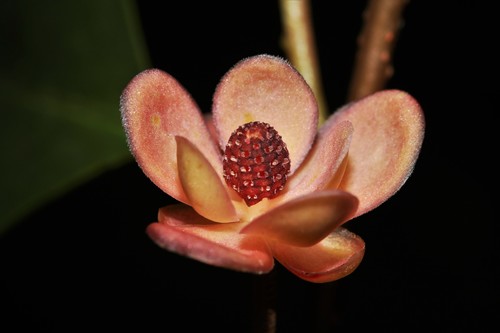
Kadsura japonica (L.fil.) Dunal is an ornamental climbing plant commonly cultivated in gardens, and can also be grown as an indoor plant. It is typically reported as dioecious (bearing separate male and female flowers on individual plants), but like other members of the Schisandraceae family, it can also be monoecious, and may change its sex expression over time. It reaches a mature height of 8 feet (2.4 m) to 15 feet (4.6 m). It is an evergreen species with variegated, shiny deep green leaves that have irregular white edges; the leaves turn slightly red in autumn. Each leaf has an acuminate apex, a petiole 0.6–2.3 cm long, and 5–8 secondary veins on each side of the midvein. It produces cup-shaped, white unisexual flowers in spring, followed by clusters of very bright scarlet red berries. Each fruit contains 1–3 seeds. In autumn, the plant's shoots grow very long and form layers, and it climbs naturally on woodland trees.
This species is native to eastern Asia, specifically Japan, southern China, southern Korea, and is found at elevations of 500–2000 m in Fujian Province and Taiwan of China. It naturally occurs in tropical and subtropical woodland habitats, and can grow in both full sun and partial shade. It prefers moderately fertile, neutral or acidic, well-drained soils, and generally does not require bright sunlight.
The fruit of Kadsura japonica is edible, and can be eaten raw or cooked. Extracts from the plant are used for hair dressing, and are also used in the production of traditional Japanese washi paper.