About Juniperus squamata Buch.-Ham. ex D.Don
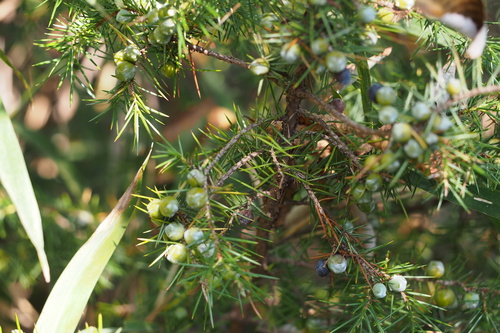
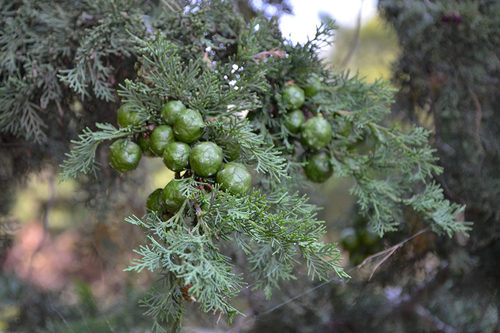
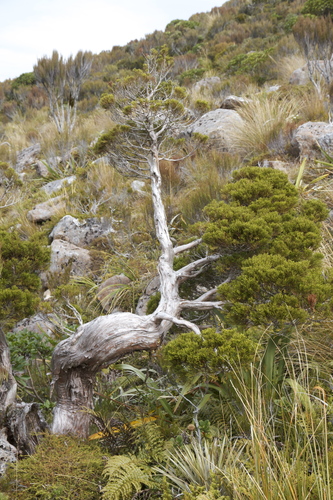
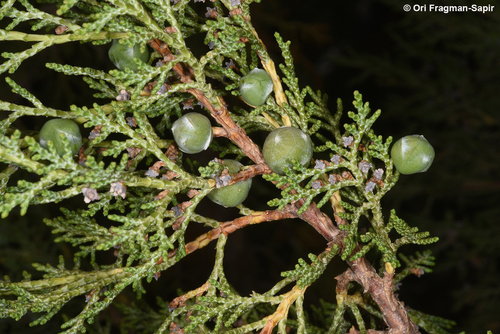
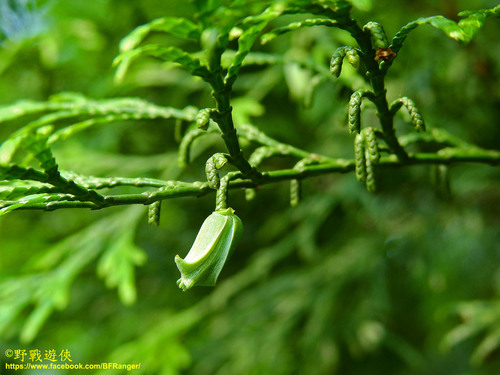
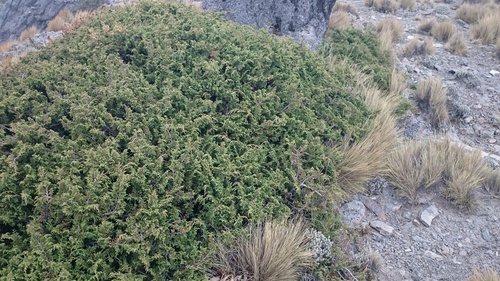
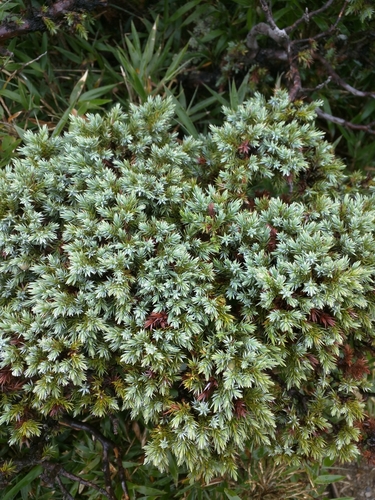
Juniperus squamata Buch.-Ham. ex D.Don is an evergreen shrub, rarely growing as a small tree. It reaches 2–10 metres (6+1⁄2–33 feet) tall, and only very rarely reaches 15 metres in height. It has flaky brown bark, and a crown ranging from a prostrate form to an irregularly conical shape. Its leaves are broad and needle-like, 3–9 millimetres (1⁄8–3⁄8 in) long. Leaves are arranged in six ranks in alternating whorls of three, and are often a strong glaucous blue-green color. The seed cones of this species are berry-like, shaped from globose to ovoid, 4–9 mm long and 4–6 mm in diameter. They are most often glossy black, each contains one seed, and they reach maturity in approximately 18 months. Male cones are 3–4 mm long, and shed their pollen in early spring. This species is largely dioecious, meaning pollen cones and seed cones grow on separate individual plants, though occasional monoecious individuals that produce both pollen and seed cones do occur. The species is native to a range extending from northeastern Afghanistan east to western Yunnan in southwestern China. Disjunct populations also occur further north into western Gansu, east to Fujian, and on Taiwan. It was introduced to the United States in 1964, after being exported from the Netherlands. It naturally grows at altitudes between 1,600 and 4,900 m (5,200 to 16,100 ft). Juniperus squamata is widely cultivated as an ornamental plant in Europe and North America, where it is valued for its bluish foliage and compact growth habit. Three of its cultivars have earned the Royal Horticultural Society's Award of Garden Merit: 'Blue Carpet', 'Blue Star', and 'Holger'.