About Juniperus pseudosabina Fisch. & C.A.Mey.
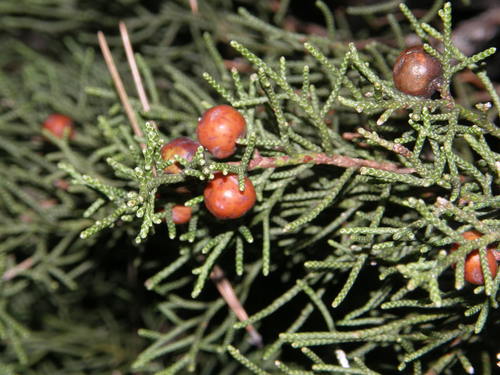
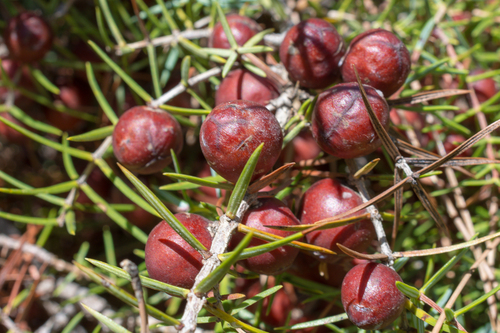
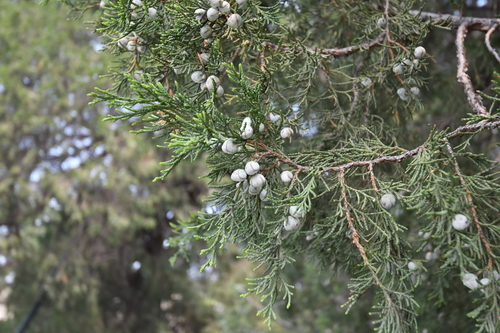
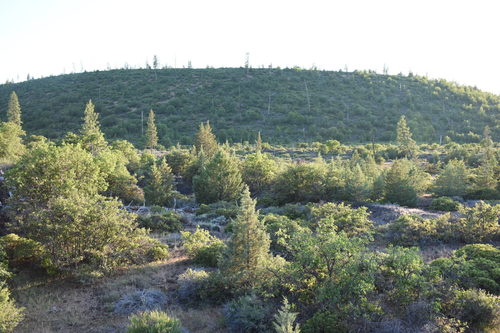
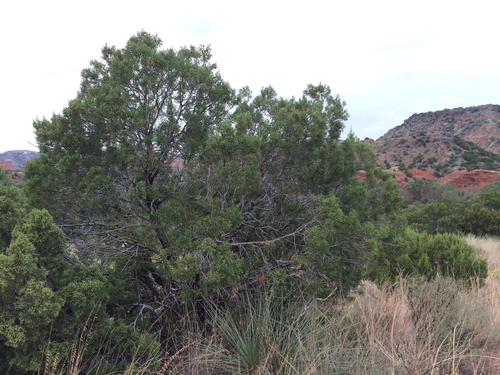
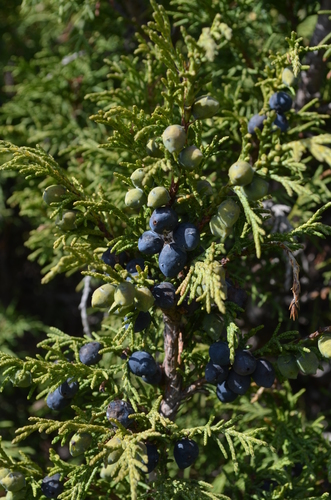
Juniperus pseudosabina Fisch. & C.A.Mey. varies in growth form, developing as either a shrub or a small tree that reaches 1 to 10 metres (3+1⁄2 to 33 feet) in height. It produces two distinct forms of leaves. Juvenile leaves are needle-like, and measure 4 to 8 millimetres (3⁄16 to 5⁄16 inch) long. Adult leaves are scale-shaped, 1.3 to 2 mm long, and grow on shoots that are 1.5 to 2 mm thick. Juvenile leaves occur most often on seedlings, but mature plants continue to grow both juvenile and adult leaves—this is especially common on shoots that have been damaged by browsing. This species is mostly dioecious, meaning male and female reproductive structures grow on separate individual plants, though some individuals produce both sexes. Its seed cones are berry-like, 8 to 14 mm long and 7 to 10 mm in diameter. They are blue-black with a pale waxy coating, hold a single seed each, and reach maturity after approximately 18 months. Male cones are 2 to 3 mm long, and release their pollen during late winter. This plant is native to mountainous areas of Central Asia, specifically northern Pakistan, northeastern Afghanistan, Tajikistan, Kyrgyzstan, eastern Kazakhstan, western China, western Mongolia, and south-central Russia. It usually grows at altitudes between 2,000 and 4,100 m (6,600 and 13,500 ft).