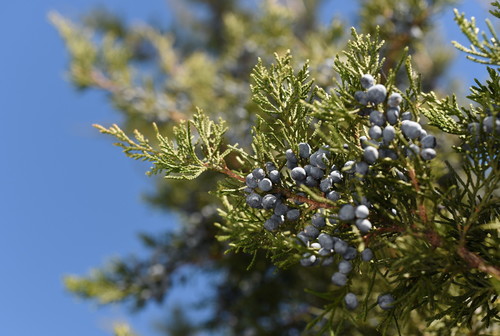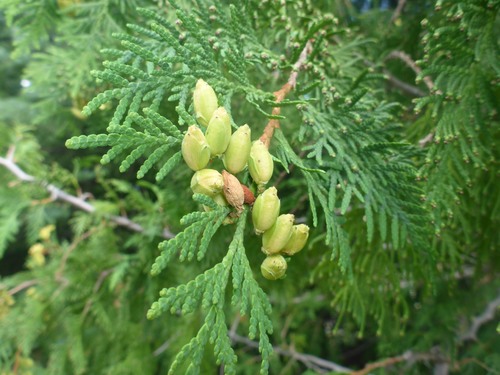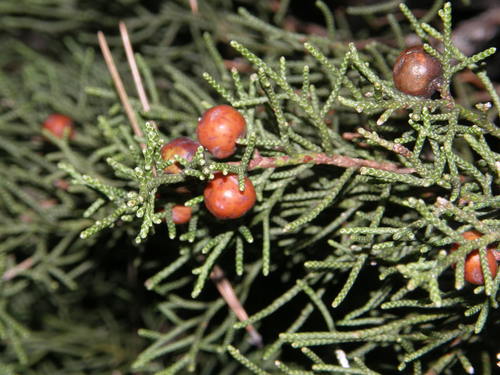
About Juniperus phoenicea subsp. turbinata (Guss.) Nyman
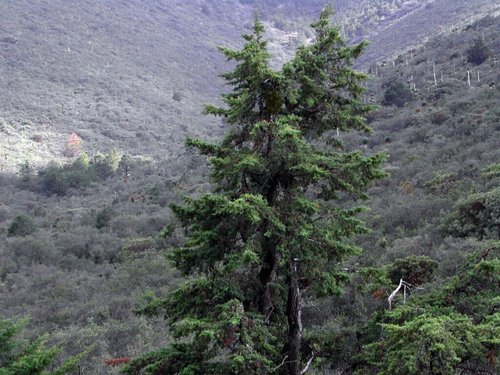
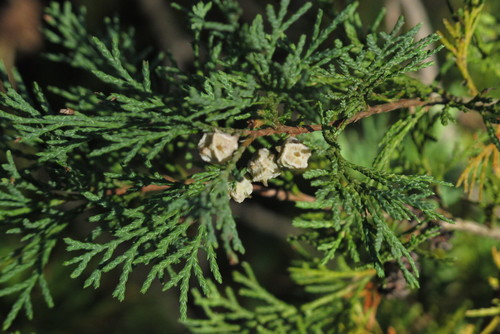
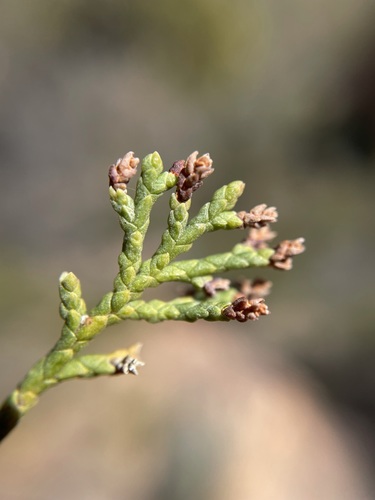
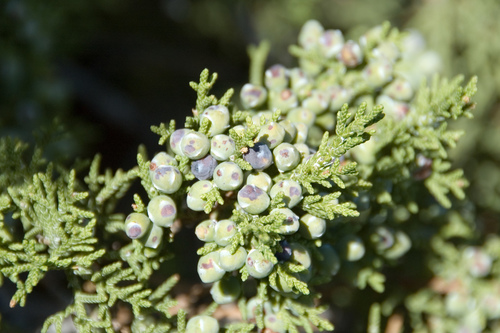
Juniperus phoenicea is a large evergreen shrub or small tree that grows 5–8 metres (16–26 feet) tall. It has a trunk up to 1–2 m (3+1⁄2–6+1⁄2 ft) in diameter, with a rounded or irregular crown. Its dark grayish-brown bark can be peeled in strips. It produces two forms of leaves: juvenile needle-like leaves 5–14 millimetres (1⁄4–1⁄2 in) long and 1 mm wide, found on seedlings, and adult scale-leaves 1–2 mm long, found on older plants. Adult leaves range in color from green to blue-green, and all leaves are arranged in opposite decussate pairs or whorls of three. The species is largely monoecious, though some individual plants are dioecious. Female cones are berrylike, 6–14 mm in diameter, and orange-brown, occasionally with a pinkish waxy bloom. They contain 3–8 seeds, mature in about 18 months, and are mainly dispersed by birds. Male cones are 2–4 mm long, and shed their pollen in early spring, after which pollen is dispersed by wind. This taxon is primarily distributed in the Western Mediterranean region, with its core range concentrated in Spain (principally eastern provinces) and Southern France. Additional, often isolated populations have been recorded in other Western Mediterranean areas, including the Sierra de Tramuntana in Mallorca and Cabo Espichel in Portugal. In Italy, it grows in the western Maritime Alps and the Apuan Alps, and has also been reported from Monte Albo in Sardinia. It generally occurs at elevations ranging from 50–100 m up to about 1,600–1,800 m, with the highest concentration of populations found between 400 and 1,200 m. The highest documented elevations for the species are 1,900 m in the Sierra Nevada and 1,970 m in the Sierra Mágina, both in Spain. Its distribution reflects a preference for inland, rocky, sub-mountainous habitats, often growing on calcareous soils. Juniperus phoenicea prefers a hot, arid climate with abundant sunlight, and grows on rocky or sandy ground. It favors moderately basic calcareous soils with a pH between 7.7 and 7.9, but can also grow on silicate soils. Despite having a shallow root system, it can survive with as little as 200 mm (8 in) of rain per year. It often forms scrubs and thickets alongside other plant species. Within its natural range of France and Spain, J. phoenicea has a generation length of 25 years, and was classified as a stable species on the 2016 IUCN Red List of Threatened Species. Its coastal habitats are most threatened by human activity from both permanent residents and tourists. Humans often introduce non-native plants including pines, black locust, French tamarisk, desert false Indigo, American agave, tree of heaven, and some South African succulent plants, usually to stabilize dunes. These introduced plants disrupt the region's natural vegetation. The species is also highly vulnerable to fire, as it is quite flammable and does not regenerate well after burning. This means new plants must be planted after fire damage to restore populations. The berrylike cones of J. phoenicea (commonly called juniper berries) are used as a seasoning in cooking and as a flavoring in alcoholic beverages, most notably gin. Juniper berries have also been used in traditional medicine to treat a range of conditions, but there is no high-quality clinical evidence that they have any beneficial effect. Extracts of juniper berries or wood tar have been used as an aromatic ingredient, particularly in cosmetics. However, a 2001 review notes that the safety of ointments made from J. phoenicea and related species has not been adequately demonstrated. Topically applied juniper extracts may cause allergic skin reactions, and should be avoided during pregnancy. The tree's essential oil is especially rich in the tricyclic sesquiterpene thujopsene, with heartwood containing an estimated 2.2% thujopsene. This high thujopsene content explains the superior natural durability of juniper wood. In 1960, biochemist Jarl Runeburg noted that J. phoenicea appears to be the most convenient source of thujopsene identified to date. Juniper wood is used for small manufactured objects and inlay work in carpentry. In parts of Africa, it is also used in building construction, and is primarily harvested for fuel and charcoal production.