About Juniperus oxycedrus subsp. macrocarpa (Sibth. & Sm.) Ball
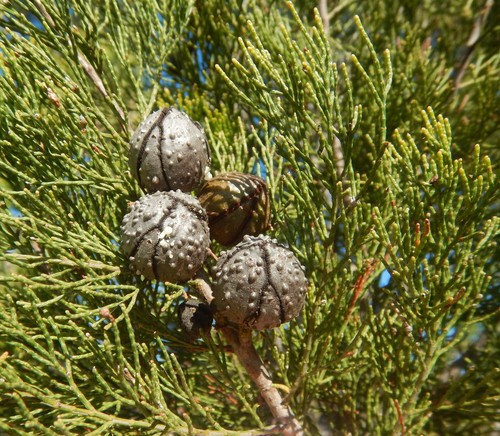
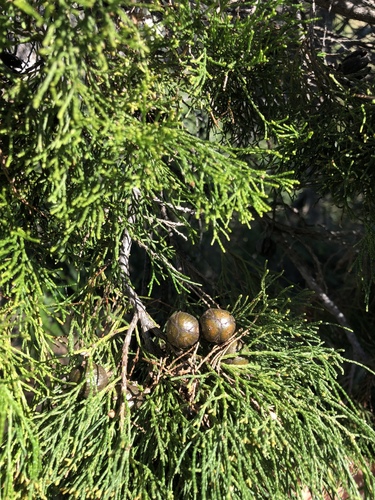
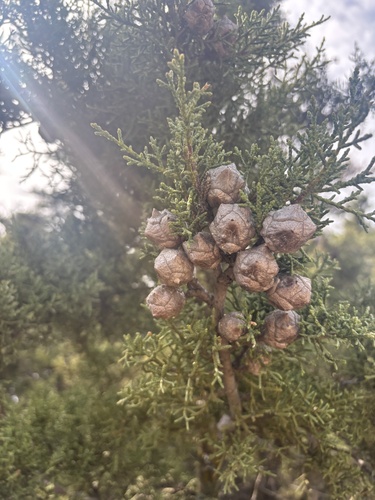
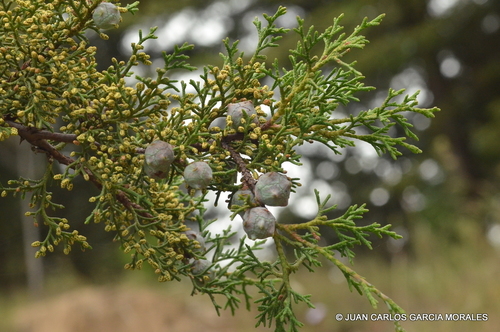
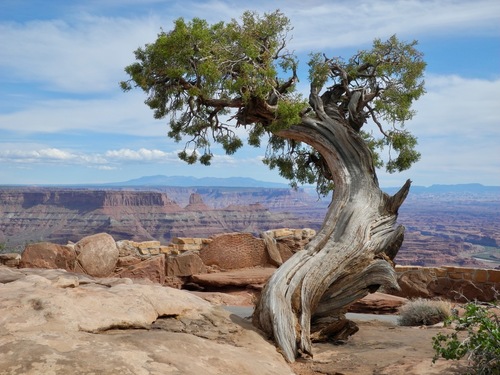
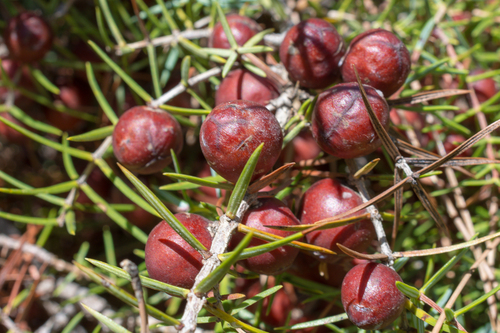
Juniperus oxycedrus varies widely in growth form, ranging from a spreading shrub 2–3 metres (6+1⁄2–10 feet) tall to a small erect tree 10–15 m (33–49 ft) tall. It bears needle-like leaves arranged in whorls of three. The leaves are green, 5–20 millimetres (1⁄4–3⁄4 inch) long and 1–2 mm (1⁄32–3⁄32 in) broad, with a double white stomatal band split by a green midrib on the inner surface. It is typically dioecious, meaning male and female reproductive structures grow on separate individual plants. The seed cones resemble berries; they are green when young, maturing to orange-red over 18 months, with a variable pink waxy coating. These cones are spherical, 7–12 mm (1⁄4–1⁄2 in) in diameter, formed from three or six fused scales arranged in 1–2 whorls, with three of the scales each holding a single seed. Seeds are dispersed when birds eat the cones: birds digest the fleshy cone scales and excrete the hard, intact seeds in their droppings. The pollen cones are yellow, 2–3 mm (1⁄16–1⁄8 in) long, and they fall away shortly after releasing their pollen in late winter or early spring. Cade oil, an essential oil produced through destructive distillation of this plant's wood, is a dark aromatic oil with a strong smoky scent. It is used in some cosmetics, traditional skin treatment medications, and incense. Rarely, cade oil has caused severe allergic reactions in infants.